Bhutan travel from India · Updated October 2026
How to Reach Bhutan from India: By Air and By Road (2026–2027)
Licensed operator No. 1052914
We meet Indian guests at Paro and Phuentsholing
Rules checked October 2026
The quick version
How do you reach Bhutan from India?
You can reach Bhutan from India in two ways: fly into Paro, Bhutan’s only international airport, from Delhi, Kolkata, Bagdogra, Guwahati or (in winter) Gaya; or travel overland to a border town, almost always Jaigaon in West Bengal, and walk or drive across into Phuentsholing. Indian citizens do not need a visa. You need an entry permit (free), a valid Indian passport or original Voter ID, and you pay a Sustainable Development Fee (SDF) of ₹1,200 per adult per night.
Flying is quickest: about 45 minutes from Bagdogra, a little over an hour from Kolkata and around two and a half hours from Delhi. The road is the cheapest way to reach Bhutan from India, but it costs you a day at each end, and the permit queue at Phuentsholing can be long in peak season.
We are a small, Bhutanese-owned team in Thimphu and we receive Indian guests at both Paro airport and the Phuentsholing gate every season. This guide collects what we tell families, couples and friends’ groups when they ask us how to get here: the routes, the paperwork, the new 2026 guide rules, real distances and indicative rupee costs. For the wider picture of the country, start with our Bhutan travel guide.
Bhutan from India: key facts (2026)
Visa for Indians
Not needed; free entry permit
Accepted ID
Indian passport (6+ months) or original Voter ID
Children under 18
Passport or original birth certificate
SDF for Indians
₹1,200 per adult per night
Child SDF
6–12 years half (₹600); under 6 free
International airport
Paro (PBH), 2,235 m
Airlines
Drukair and Bhutan Airlines only
Main land border
Jaigaon (WB) – Phuentsholing
Bagdogra to Phuentsholing
about 160–170 km, 4–5 hours
Phuentsholing to Thimphu
about 150–170 km, 5–6 hours
Currency
Ngultrum, 1:1 with the rupee
Licensed guide
Required beyond the border town
Time zone
Bhutan Time (UTC+6), 30 min ahead of IST
Choosing your route
Air or road: which is the best way to reach Bhutan from India?
By air
By road
Where you enter
Paro International Airport (PBH)
Phuentsholing (most travellers), Samdrup Jongkhar, Gelephu or Samtse
Indian starting points
Delhi, Kolkata, Bagdogra, Guwahati; Gaya in winter
Jaigaon (West Bengal), Darranga (Assam), Dadgari/Hatisar (Assam), Chamurchi (West Bengal)
Travel time
45 min to about 2.5 h in the air
A full day to the border, plus 5–6 h from Phuentsholing to Thimphu
Indicative cost
Roughly ₹20,000–55,000 return per person, depending on city and season
Roughly ₹1,500–9,000 per person to the border by train, bus or shared car
Best for
Short trips, older travellers, monsoon months, festival dates
Budget trips, families with time, Bhutan combined with North Bengal or Sikkim
Main risk
Paro weather delays, especially June–August
Long permit queues at Phuentsholing in October–November and March–April
Paperwork
Same: entry permit + SDF ₹1,200 per adult per night, no visa
Same: entry permit + SDF ₹1,200 per adult per night, no visa
Five things to know first
What do Indian travellers need to know before booking a trip to Bhutan?
01
No visa, but you need an entry permit
Free, issued by Bhutan’s Department of Immigration
02
Bring the right ID, and only the right ID
Passport or original Voter ID; nothing else
03
The SDF is ₹1,200 per adult per night
Charged per night, not per day of travel
04
Rupees work, but carry ₹100 notes
₹500 notes allowed within limits
05
Plan for a guide and a permit for every district
Thimphu and Paro alone are not the whole country
The question everyone asks
Do Indian tourists need a licensed guide in Bhutan in 2026?
This is the rule that surprises most Indian travellers, especially anyone who remembers driving freely around Bhutan before 2020. The current position is set out in Bhutan’s Tourism Rules and Regulations 2024, which say a tour guide is mandatory for all tours except up to the first designated checkpoint. In April 2026 the Department of Tourism issued a notification to clear up “differing interpretations”, especially on the Paro–Thimphu road. All tourists must be accompanied by a licensed guide at all times when visiting monuments and when travelling from Paro airport to other districts. The notification makes no exception for regional (Indian, Bangladeshi or Maldivian) visitors.
What this means in practice:
- Phuentsholing town, up to the Rinchending checkpoint about 5 km uphill, can be visited without a guide. Day trippers from Jaigaon do this every day.
- Beyond Rinchending, towards Thimphu, Paro and the rest of the country, plan on a licensed guide for the whole trip. The same applies at Gelephu, Samdrup Jongkhar and Samtse.
- Flying into Paro, your guide meets you at the airport and travels with you to Thimphu and beyond.
- If you drive your own car, a licensed Bhutanese guide is still required. The guide can ride with you.
- Trekking always needs a licensed trekking guide.
Bhutan uses its guides to look after visitors, so a guide is more than a minder. Ours sort out dzong opening hours, translate at village farmhouses, keep you on schedule for the Dochula pass and know which roads are closed for blasting that week. Most Indian families we host say afterwards that they would not have wanted to do it without one. Rules in Bhutan do change, though, and we keep this section updated. If you read something different elsewhere, check the date on it.
Flying to Paro
How do you reach Bhutan from India by air?
Paro airport sits at 2,235 m in a narrow valley ringed by ridges, and landings are flown visually, in daylight only, by a small number of specially certified pilots. That is why there are no night flights and why the schedule is sensitive to weather: low cloud and monsoon rain between June and August cause most of the delays. On the way home, never book a same-day onward connection from your arrival city in India. Leave a buffer night, or at least a very generous gap.
From Kolkata, flights take about 1 hour 10 minutes and run most days between the two Bhutanese airlines. This is the workhorse route for Indian travellers, and usually the cheapest reliable one. From Delhi the flight takes around 2 hours 20 minutes to 3 hours, depending on routing; some Bhutan Airlines services route through Kathmandu. Sit on the left (an A seat) flying into Paro from Delhi and, on a clear morning, you may see Everest, Lhotse, Makalu and Kanchenjunga.
From Mumbai, Bengaluru, Hyderabad, Chennai or Pune there is no direct flight. Fly to Kolkata or Delhi, stay overnight near the airport, and catch the morning flight to Paro the next day. Paro flights leave early, so trying to connect on the same day from another domestic flight is a gamble.
Bagdogra (for Siliguri, Darjeeling and Kalimpong) has Drukair flights twice a week, about 45 minutes in the air. It is an underrated option if you want to see the hills of North Bengal or Sikkim before or after Bhutan, or to fly in and drive out. Guwahati has a few Drukair flights a week, about an hour, and Drukair’s Singapore service also stops there. Gaya (Bodh Gaya) has seasonal winter flights, popular with Buddhist pilgrims; they appear in the 2026–27 winter schedule, but days change each season.
Book directly on the airlines’ own websites, drukair.com.bt and bhutanairlines.bt, or through us. Indian travellers usually pay regional fares that are lower than those for other foreign nationals. Aim to book 8–12 weeks ahead, and earlier for festival weeks and the October–November peak. Our sister guide to flights to Bhutan goes into aircraft, baggage and seat choices in more depth.
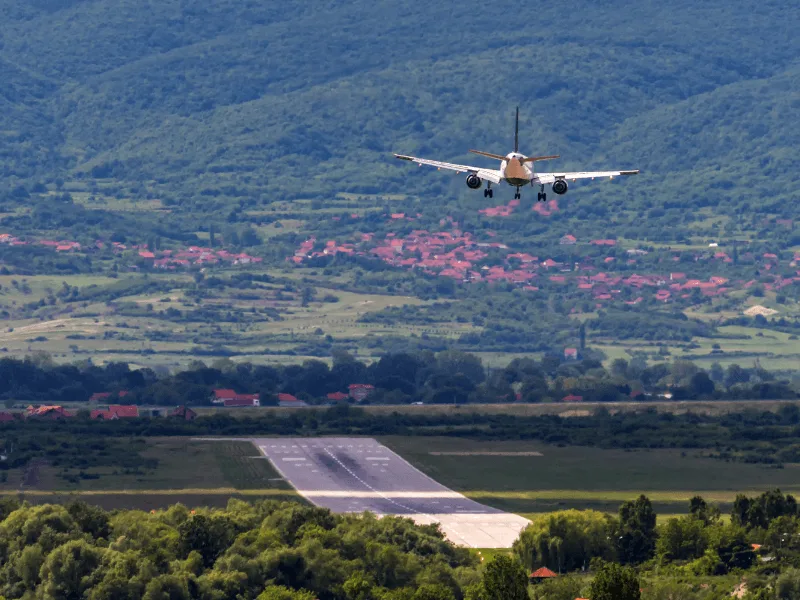
Indian cities with flights to Paro
Which Indian airports have flights to Bhutan?
From
Airlines
Flight time
How often (2026, approx.)
Indicative return fare
Kolkata (CCU)
Drukair, Bhutan Airlines
about 1 h 10 min
Most days between the two airlines
₹22,000–40,000
Delhi (DEL)
Drukair, Bhutan Airlines
about 2 h 20 min – 3 h
Several times a week; some via Kathmandu
₹30,000–55,000
Bagdogra (IXB)
Drukair
about 45 min
About twice a week
₹18,000–30,000
Guwahati (GAU)
Drukair
about 1 h
2–3 times a week
₹18,000–32,000
Gaya (GAY)
Drukair, Bhutan Airlines
about 1 h 20 min
Winter season only, roughly Nov/Dec–Feb/Mar
₹25,000–45,000
Landing in Paro
What happens when you land at Paro airport?
01
Walk across the tarmac
02
Immigration
03
SDF and permit check
04
Baggage and customs
05
Meet your guide
06
On to Paro or Thimphu
Overland from India
How do you reach Bhutan from India by road?
The road is how most Indian visitors reach Bhutan. It is also the cheapest way to reach Bhutan from India, especially for families and groups who split the cost of a car. The main crossing is Jaigaon–Phuentsholing, which handles the large majority of overland visitors. The other three, in Assam and West Bengal, make sense mainly if you are heading to central or eastern Bhutan.
The border is an open town border. You can walk through the gate from Jaigaon into Phuentsholing for shopping or a meal without a permit, as thousands of people do every day. The permit and the SDF only become relevant when you head uphill past the Rinchending checkpoint, about 5 km above town, or stay more than 24 hours.
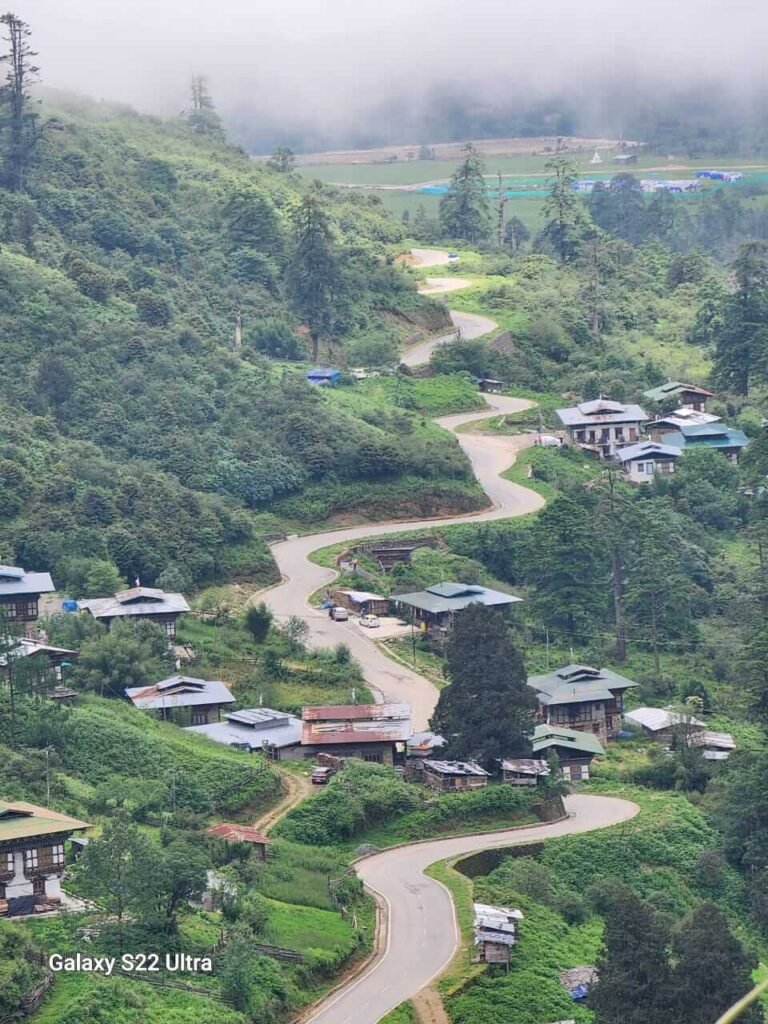
The drive up is the start of the trip, not just a transfer. In about five or six hours the highway climbs from around 300 m in the plains to roughly 2,300 m at Thimphu, through cloud forest, past waterfalls and the Chukha hydropower area, with Bhutanese roadside stalls selling chilli, cheese and oranges in season. On a clear day it is one of the great road journeys of the eastern Himalaya. In the monsoon it is slower, with occasional landslide delays.
If you have a week or more, our favourite plan for Indian guests is to fly in and drive out: land in Paro, travel east through the country, and leave by road via Phuentsholing for a train or flight home from North Bengal. You avoid doing the long climb on day one, and you see more of the country without retracing your steps.
Four ways in by land
Which India–Bhutan border crossings can tourists use?
Bhutan side
Indian side
Best for
Notes
Phuentsholing
Jaigaon, Alipurduar district, West Bengal
Thimphu, Paro, Punakha, western Bhutan
The main gateway. Busiest immigration office; arrive early in peak season.
Samdrup Jongkhar
Darranga / Mela Bazar, Assam
Eastern Bhutan: Trashigang, Mongar, Trashiyangtse, Merak–Sakteng
About 3 hours from Guwahati. Good for a west–east traverse ending in Assam.
Gelephu
Dadgari / Hatisar, Assam
Central Bhutan: Zhemgang, Trongsa, Bumthang
Shortest road to Bumthang. Site of the Gelephu Mindfulness City project.
Samtse
Chamurchi, West Bengal
Day visits; occasional onward travel
Least used by tourists; limited onward roads and services.
Reaching Jaigaon
How far is Bagdogra airport from the Bhutan border, and how else can you reach Jaigaon?
Starting point
Distance to Jaigaon
Time by road
How to do it
Hasimara railway station
about 18 km
30–40 min
Nearest station. Taxis and shared autos wait outside. Several trains from Kolkata (Sealdah/Howrah) and Guwahati stop here.
New Alipurduar / Alipurduar Jn
about 60–65 km
1.5 h
More trains stop here, including some overnight services from Kolkata.
Bagdogra airport (IXB)
about 160–170 km
4–5 h
Pre-booked car or taxi from the airport. Fly in by early afternoon to cross before dark.
New Jalpaiguri (NJP)
about 150–160 km
4–5 h
Well connected by train from across India. Taxis or shared cars to Jaigaon.
Siliguri bus terminus
about 150 km
4–4.5 h
State and private buses and shared Sumos to Jaigaon; the cheapest option.
Guwahati
about 450 km
9–10 h
Long drive or overnight bus. Consider Samdrup Jongkhar or Gelephu instead if heading east or central.
At the gate
How does the Phuentsholing entry permit process work?
Gate hours. Since 2023 the Phuentsholing pedestrian terminal has been allowed to stay open around the clock, while the main vehicle gate closes overnight (it has run roughly 6 am to 11 pm). The immigration office that issues tourist permits keeps office hours, and that is what matters for your plan. Aim to be at the office first thing in the morning on a working day.
How long it takes. On a quiet weekday the walk-in permit can take an hour or two. On busy days, especially Mondays, the days after Bhutanese or Indian public holidays, October–November and March–April, it can stretch to half a day. Bhutanese media reported that on one day in May 2026 nearly 1,900 walk-in tourists needed full processing at Phuentsholing. Travellers who had pre-cleared online moved much faster. Immigration counters have been moving into a renovated building with a proper waiting area. Even so, apply online in advance if you can, or let your tour operator do it for you.
The 24-hour SDF-free zone. Visitors who stay within the designated zone of a border town (Phuentsholing, Samtse, Gelephu or Samdrup Jongkhar) and leave Bhutan within 24 hours pay no SDF. At Phuentsholing the limit has been the Rinchending checkpoint. From September 2026, under a new arrangement reported by BBS, regional visitors on the 24-hour waiver can also visit Milarepa Lhakhang (about 15 km from Rinchending) and the Pachu community ecotourism site, as part of an approved package with a licensed guide. Within town you can visit the Zangtopelri Lhakhang, the crocodile breeding centre and the riverside, shop for Bhutanese textiles and eat an ema datshi for lunch.
Before the climb. Fill up the car and change money in Phuentsholing. Keep your permit somewhere you can reach easily: it will be checked at Rinchending and again at Chuzom, the junction where the Thimphu, Paro and Haa roads meet.
East, central and the future
What about Samdrup Jongkhar, Gelephu and the new India–Bhutan railway?
Samdrup Jongkhar (from Guwahati). Guwahati to the Darranga border is roughly 100–110 km, about three hours by road. From Samdrup Jongkhar it is roughly 180 km and a long day’s drive (six to seven hours) to Trashigang, the hub of the east. Eastern Bhutan sees few visitors. Its highlights include Trashigang and Mongar dzongs, the weaving villages around Khaling and Radhi, Trashiyangtse’s woodturners and, with a separate permit, the semi-nomadic Brokpa villages of Merak and Sakteng. A full west-to-east traverse, entering at Paro or Phuentsholing and leaving at Samdrup Jongkhar, needs 10–12 days. Our 13-day Bhutan tour from India is built around that kind of route.
Gelephu (from Assam). Gelephu faces Dadgari/Hatisar in Assam’s Chirang district, about 5–6 hours by road from Guwahati. It is the shortest road route into central Bhutan, through Zhemgang to Trongsa and on to Bumthang. Gelephu also has a domestic airport with Drukair flights to Paro. The area is being developed as the Gelephu Mindfulness City, a large special administrative region, and a new international airport is planned there. Neither changes travel plans for 2026–27.
The railway. India and Bhutan signed an agreement in September 2025 for two cross-border lines, fully funded by India at about Nu 40.3 billion (roughly ₹4,033 crore): Kokrajhar–Gelephu (about 69 km, a roughly four-year project) and Banarhat–Samtse (about 20 km, around three years). Both have been declared Special Railway Projects in India, with land acquisition and design first and construction expected to follow. There is no train into Bhutan today, and there will not be one for your 2026 or 2027 trip. For now, the train takes you to Hasimara, Alipurduar or New Jalpaiguri and the road does the rest.
Samtse (Chamurchi). The quietest of the four. It is fine for a day visit, but onward roads to the rest of Bhutan are slow and services are limited, so we rarely route guests this way.
Self-drive from India
Can you drive your own car or bike from India to Bhutan?
Documents to carry
The vehicle fee
Vehicle permit
Guide still required
What the roads are like
Fuel and practicalities
Travelling on a budget
What is the cheapest way to reach Bhutan from India?
On the Indian side, budget travel is easy. A sleeper or 3AC berth from Kolkata to Hasimara or New Alipurduar costs a few hundred to around two thousand rupees. Buses and shared Sumos from Siliguri to Jaigaon are cheaper still. A taxi from Hasimara to the gate costs a few hundred rupees.
Inside Bhutan, things work differently from Nepal or Sikkim. Government-regulated buses run between Phuentsholing and Thimphu daily (around 5–6 hours), shared taxis run between towns, and city taxis in Thimphu are inexpensive. But because tourists must be accompanied by a licensed guide beyond the border town, getting around Bhutan on buses on your own is not really an option for a tourist trip. The budget lever is sharing, not public transport: one car, one driver and one guide cost the same whether two or six people are in the vehicle.
How to keep a Bhutan budget trip from India affordable:
- Travel as a group of four to six and share a vehicle and guide.
- Come in the shoulder months (late February, early March, late November, December) or the monsoon, when hotels discount.
- Stay in clean, Department of Tourism-certified 2- and 3-star hotels or homestays rather than resorts.
- Keep to the western circuit (Phuentsholing, Thimphu, Punakha, Paro) on a five- to seven-day trip rather than rushing east.
- Eat Bhutanese food where locals eat; a set lunch with rice, ema datshi and dal is filling and inexpensive. See our guide to Bhutanese food.
- Remember the SDF is per night: a night spent in Phuentsholing on the way out costs the same SDF as anywhere else, unless you are only there within the 24-hour waiver.
If price is your main concern, read our honest take on whether Bhutan is expensive. For Indian travellers it is far cheaper than for anyone else, because the SDF is ₹1,200 a night rather than US$100.
Bhutan permit for Indians
How do Indians get a Bhutan entry permit?
01
Choose: online or walk-in
02
Prepare documents
03
List every district
04
Pay the SDF
05
Biometrics and stamp
06
Carry it everywhere
Validity, route permits and extensions
How long is the Bhutan permit for Indians valid, and how do route permits work?
Online applications. The Department of Immigration asks tourists to process permit applications online at immi.gov.bt, and states a processing time of about five working days once the application is endorsed. In practice, licensed tour operators and certified hotels submit most regional tourist applications, with every district listed, so a single permit covers the whole route. Apply at least a week or two ahead, and earlier in peak season.
Walk-in permits. The Embassy of India in Thimphu notes that a permit issued on arrival allows travel to Thimphu and Paro only. A route permit for anywhere else is obtained from the immigration office in Thimphu on working days (Monday to Friday). The Department of Immigration says route permits are processed within one working day of a complete application. They usually come through faster, but you should allow a morning for it. You need the application form, a copy of your entry permit, your itinerary and your ID.
Solo travellers and minors. Children under 18 travelling without a passport must carry their original birth certificate. Some travellers report that solo visitors applying in person have been asked for a signed undertaking. Your tour operator will tell you if one is needed.
Validity and extensions. Make sure the permit dates match your plan, including the day you leave. If plans change, for example after a flight cancellation, apply to immigration for an extension before the permit expires; overstaying is treated seriously. The Thimphu office is closed on weekends and Bhutanese public holidays, which matters if your plans change on a Friday.
Our Bhutan visa and permit process page explains how we handle paperwork for international guests, and the FAQs cover the common questions.
Bhutan travel cost for Indians
How much does a trip to Bhutan from India cost?
Cost item
A) 5 days / 4 nights by road, couple
B) 4 days / 3 nights by air from Kolkata, couple
Getting there
₹5,000 car Bagdogra/NJP → Jaigaon (train to NJP extra)
₹56,000 return flights, 2 × ~₹28,000
SDF (₹1,200 × 2 people × nights)
₹9,600 (4 nights)
₹7,200 (3 nights)
Car and driver in Bhutan
₹18,000 (4 days × ~₹4,500)
₹16,000 (4 days, incl. airport transfers)
Licensed guide
₹10,000 (4 days × ~₹2,500)
₹10,000 (4 days × ~₹2,500)
3-star hotels, double room
₹16,000 (4 nights × ~₹4,000)
₹13,500 (3 nights × ~₹4,500)
Meals and entry fees
₹10,000
₹8,000 (incl. Tiger’s Nest, Nu 1,000 each)
5% GST on Bhutanese services
about ₹2,200
about ₹2,000
Approximate total
about ₹70,800 (₹35,400 per person)
about ₹1,12,700 (₹56,350 per person)
Bhutan per day cost for Indians
What does Bhutan cost per day for an Indian traveller?
₹1,200
SDF per adult per night
₹600
SDF per child aged 6–12
₹0
SDF if you leave a border town within 24 h
₹4,000–7,000
Per person per day, budget, 4 sharing
₹7,000–12,000
Per person per day, mid-range couple
₹4,500
Per night for your own car beyond the border
Indicative per-person daily figures include SDF, a share of car, driver and guide, a 3-star or comparable hotel, meals and entry fees, but not your travel to the border or flights. For the full breakdown of fees for every nationality, see our Bhutan travel cost guide.
Seasons for Indian travellers
When is the best time to visit Bhutan from India?
Season
What it is like
Good to know
Spring (Mar–May)
Rhododendrons and magnolias, mild days, the Paro Tshechu festival (usually late March or April)
Indian school holidays in May push up demand; book hotels and flights early.
Monsoon (Jun–Aug)
Lush green valleys, waterfalls, fewer visitors, lower hotel rates
Leeches on trails, landslide delays on the Phuentsholing road, more Paro weather delays.
Autumn (Sep–Nov)
Clear skies, mountain views, harvest season, Thimphu Tshechu (usually late Sept or Oct)
Peak season; Puja holidays bring long queues at Phuentsholing. Apply for permits online.
Winter (Dec–Feb)
Crisp, sunny days, cold nights, black-necked cranes in Phobjikha, quiet monasteries
Dochula festival on 13 December; Black-necked Crane Festival in Gangtey around 11 November. Snow can briefly close high passes.
From our guides
Twelve practical tips for Indian travellers to Bhutan
Fly in, drive out
Keep a buffer night
Carry ₹100 notes
Put every district on your permit
Plan in hours, not kilometres
Don’t try Bhutan in three days
Climb Tiger’s Nest late in the trip
Buy a local SIM
Dress for dzongs
Pack layers
Mind the tobacco and drone rules
Don’t overstay
Sample plan 1
A 6-day Bhutan trip from Kolkata by road
00
Kolkata to the Dooars
Overnight train
01
Phuentsholing to Thimphu
About 150–170 km, 5–6 h
02
Thimphu
Capital day
03
Dochula and Punakha
About 72 km, 2.5–3 h
04
Punakha to Paro
About 125 km, 4–4.5 h
05
Tiger’s Nest
5–6 h hike
06
Paro to Phuentsholing and home
About 140–150 km, 5 h
Sample plan 2
A 4-day Bhutan trip from Delhi by air
Day 1: Delhi to Paro, on to Thimphu. Morning flight (left-side seat for the Himalaya). Your guide meets you at Paro; visit Rinpung Dzong and drive to Thimphu, about an hour. Evening at the Memorial Chorten, where older Thimphu residents walk their circuits.
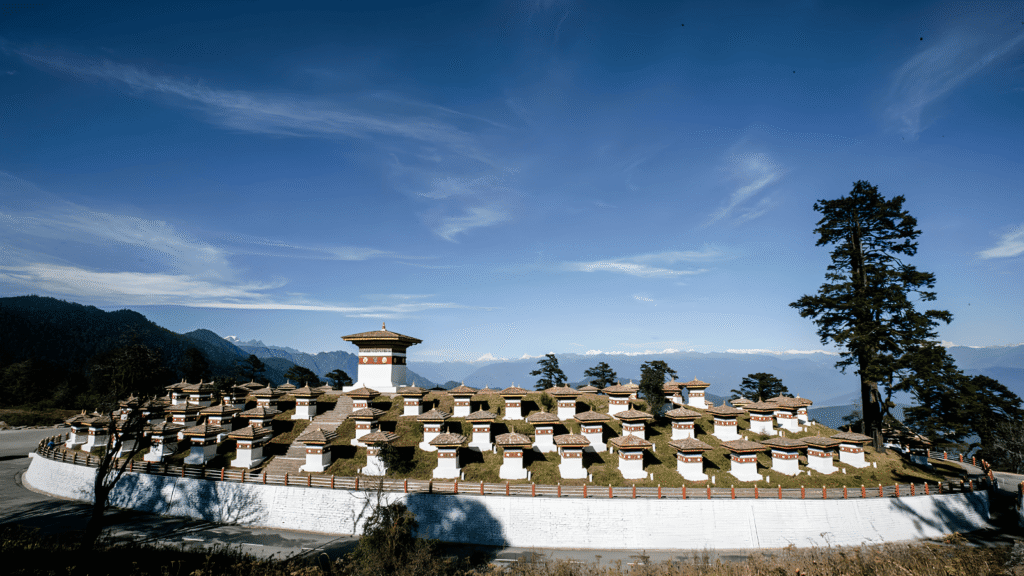
Day 2: Thimphu and Dochula. Buddha Dordenma, the takin preserve, the Centenary Farmers’ Market and Tashichho Dzong; drive up to Dochula for the view of the high Himalaya on a clear day, then back to Thimphu.
Day 3: Tiger’s Nest. Drive to Paro early and hike to Taktsang. Afternoon at Kyichu Lhakhang, one of the oldest temples in the country, and a farmhouse dinner.
Day 4: Fly home. Morning flight from Paro to Delhi. Do not book an onward connection the same afternoon.
If you can add a day, spend it in Punakha. If you can add three, go over the Pele La to Phobjikha. Our ready-made Bhutan cultural tours and the 7-day Bhutan package tour from Bagdogra airport are good starting points; we adjust either for Indian guests.
The bottom line
Under five days? Fly. A week or more? Take the road, or fly in and drive out.
From Kolkata you are in Paro in about 70 minutes. From North Bengal, the road through Jaigaon is the cheapest way to reach Bhutan from India. The paperwork is the same either way. Work through it in this order: check your ID (passport or Voter ID; birth certificates for children), apply for the permit with every district listed and pay the SDF, book hotels, then book your flight or train, and arrange your guide and car. If you would rather hand all of that to people who do it every week, we are happy to help.
Questions Indian travellers ask us
How to reach Bhutan from India: frequently asked questions
Short, direct answers, checked against the Department of Immigration, the Department of Tourism and the Embassy of India in Thimphu in October 2026. Have a question we have not covered? Ask us.
Do Indians need a passport to visit Bhutan?
Do Indians need a visa for Bhutan in 2026?
What is the SDF fee in Bhutan for Indians?
Can I visit Bhutan without paying the SDF?
What is the cheapest way to reach Bhutan from India?
How far is Bagdogra airport from the Bhutan border?
Which Indian airports have flights to Bhutan?
How long does the Phuentsholing entry permit take?
Is a guide mandatory for Indian tourists in Bhutan?
Can I drive my own car from India to Bhutan?
How long is the Bhutan permit for Indians valid?
Can I use Indian rupees in Bhutan?
Is there a train to Bhutan?
What is the best month to visit Bhutan from India?
How many days are enough for a trip to Bhutan from India?
Is Bhutan safe for Indian women travelling solo?
Can I bring cigarettes, drones or pets into Bhutan?
Plan your trip to Bhutan from India
Tell us where you are starting from, and we will plan the rest
- Licensed operator, licence No. 1052914
- Bhutanese-owned, based in Thimphu
- Reply within 48 hours
Plan my trip to Bhutan
Free itinerary and itemised quote