The Kingdom's Heart THIMPHU
The world’s most unique capital — where ancient monasteries share a skyline with golden Buddhas, and daily life unfolds without a single traffic light.
Introduction
Thimphu: The Capital the World Has Never Seen Before
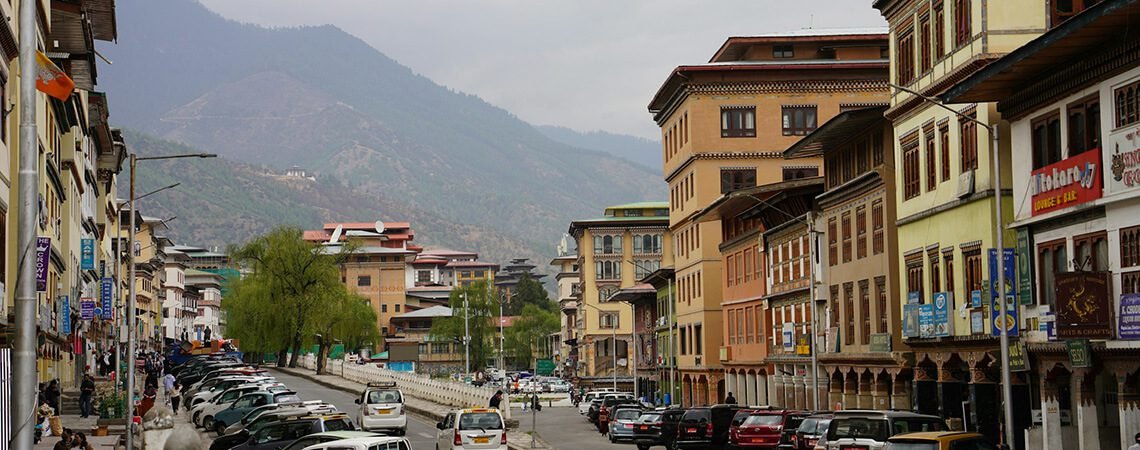
There are capital cities, and then there is Thimphu. Nestled in the folds of the Himalayas at an elevation ranging from 2,248 to 2,648 metres above sea level, Bhutan’s capital is, by every measure, unlike any other city on earth. It has no traffic lights — a traffic officer in white gloves guides vehicles at the main intersection instead. It has no towering glass skyscrapers — Bhutanese law requires every building to be constructed in traditional architectural style. And it governs itself not by Gross Domestic Product but by Gross National Happiness — a philosophy that measures national progress through well-being, cultural preservation, environmental health, and good governance.
Thimphu is the political, economic, cultural, and spiritual centre of the Kingdom of Bhutan. The Royal Family resides here. Parliament meets here. The Head Abbot of Bhutan — the Je Khenpo — lives here. And yet, despite all this importance, Thimphu moves at a pace that feels more like a contemplative mountain town than a national capital.
“Thimphu doesn’t try to impress you with its size. It impresses you with its soul — the butter lamps burning at dawn, the monks debating under ancient trees, the monks and office workers walking the same streets in harmony.”
With a population of just over 100,000 people, Thimphu is intimate enough to explore on foot yet rich enough in history, culture, and natural beauty to fill a week of discovery. The Wang Chhu (Thimphu Chhu) river runs alongside the city, forested ridges frame every vista, and on clear mornings the snow-capped peaks of the Himalayas shimmer on the northern horizon. At Kingdom of Happiness Tours, Thimphu is where almost every one of our Bhutan itineraries begins — and for good reason. This is the key that unlocks the entire kingdom.
Why Thimphu
Why Thimphu Is Unlike Any Capital on Earth
🚦 No Traffic Lights
Thimphu is famously the world's only capital city without traffic lights. A white-gloved traffic officer manually directs vehicles at the main junction — a practice so loved by locals that a trial traffic light was removed by popular demand.
🏛 Architecture Law
Every building in Bhutan must follow traditional Bhutanese architectural guidelines — whitewashed walls, wooden lattice windows, sloping roofs. The result is a capital that looks unlike any city in the world.
😊 Gross National Happiness
Bhutan is the only nation on earth to officially measure national success through Gross National Happiness (GNH). Thimphu is the seat of this philosophy — you feel it in the pace of life, the cleanliness, and the warmth of its people.
👘 Traditional Dress Daily
Bhutanese people wear their national dress — the Gho for men and the Kira for women — to work, school, and government offices every day. Thimphu is one of the few cities where traditional clothing is genuinely everyday attire.
🌲 72% Forest Cover
Bhutan's constitution mandates that at least 60% of land remain under forest cover forever. Thimphu is surrounded by forests and hiking trails — it is one of the greenest capital cities on the planet.
🙏 Living Buddhist Culture
Buddhism is not a museum exhibit in Thimphu — it is the living fabric of daily life. Monks chant in monasteries steps from the city centre. Residents circumambulate the Memorial Chorten every morning and evening as a matter of daily routine.
History
A Brief History of Thimphu
Thimphu’s history as Bhutan’s capital is surprisingly recent, but the valley itself has been a site of human habitation and spiritual significance for many centuries.
15th Century
Simtokha Dzong, built in 1629 just south of modern Thimphu, becomes the first of Bhutan's great fortress-monasteries and marks the beginning of Thimphu's historical significance as a strategic and spiritual site.
1641 – Tashichho Dzong Founded
The Zhabdrung Ngawang Namgyal extends and consolidates Tashichho Dzong, establishing the template for Bhutan's governance that continues today.
1907 – The Wangchuck Dynasty
Ugyen Wangchuck is crowned the first hereditary King of Bhutan, with Tashichho Dzong becoming the seat of royal power.
1952 – Capital Declared
Under the Third King, Jigme Dorji Wangchuck, Thimphu is officially declared the capital of Bhutan.
1974 – National Memorial Chorten Built
The National Memorial Chorten is constructed in memory of the Third King and becomes one of Thimphu's most beloved landmarks.
2008 – Constitutional Monarchy
Bhutan transitions from an absolute monarchy to a constitutional democratic monarchy.
Today
Thimphu continues to balance tradition and modernity while remaining one of the world's most unique capital cities.
Top Attractions
Top 10 Must-Visit Attractions in Thimphu
Paro deserves more than a single day. Here are the other must-visit sites in one of Bhutan’s richest districts:
01
Buddha Dordenma — Thimphu's Golden Guardian
Iconic Landmark · Spiritual Site
Towering 51.5 metres tall, the Buddha Dordenma is one of the largest Buddha statues in the world. Crafted from bronze and plated in shimmering gold, it gazes out over the entire Thimphu valley from a hilltop above Kuenselphodrang Nature Park. Inside the statue, 125,000 smaller Buddha statues are enshrined, each made of bronze and gold. The views from the base of Buddha Dordenma — across the valley, over the dzong rooftops, and toward the distant Himalayas — are among the finest panoramas in all of Thimphu. Visit at sunrise or sunset for an unforgettable experience. The surrounding nature park is a wonderful place to walk and breathe.
02
Tashichho Dzong — The Fortress of Auspicious Religion
Seat of Government · Monastery · Architecture
The grandest building in Thimphu, Tashichho Dzong has served as the seat of Bhutan's government since 1952. This magnificent whitewashed fortress-monastery houses the King's throne room, the offices of the Secretariat and key ministries, and the central monk body. The dzong's towering golden roofs, intricately painted wooden facades, and immaculate courtyards represent the pinnacle of Bhutanese architecture. During the Thimphu Tshechu festival, the dzong's main courtyard transforms into a spectacular stage for masked cham dances. Visitors may enter in the evenings; a guided tour from Kingdom of Happiness Tours brings every detail to life.
03
National Memorial Chorten — The City's Spiritual Heart
Sacred Stupa · Pilgrimage Site
Built in 1974 in memory of Bhutan's beloved Third King, Jigme Dorji Wangchuck, the National Memorial Chorten is a Tibetan-style stupa centrally located in Thimphu. Unlike other stupas, it does not enshrine human remains but rather sacred Buddhist relics, texts, and images representing the Buddha's mind. The whitewashed exterior, crowned with an elaborate golden spire representing the crescent moon and sun, is one of Thimphu's most recognisable sights. Each day, hundreds of Thimphu residents — young, old, monks, office workers — circumambulate the chorten clockwise, spinning prayer wheels and chanting mantras. Join them for a profound glimpse into living Bhutanese Buddhist practice.
04
Changangkha Lhakhang — Thimphu's Ancient Guardian Temple
12th-Century Temple · City Views
Perched on a ridge above the city, Changangkha Lhakhang is one of the oldest temples in Thimphu, established in the 12th century. It is dedicated to Chenrezig (Avalokitesvara), the Bodhisattva of Compassion, and is a favourite pilgrimage site for new parents who bring their newborn children here to receive blessings and names. The temple commands magnificent views over the Thimphu valley and is typically less crowded than other major sites. It offers an authentic, quietly atmospheric spiritual experience away from the city's bustle.
05
Motithang Takin Preserve — Meet Bhutan's National Animal
Wildlife · National Animal · Nature
The Takin — a strange, wonderful creature that looks like a cross between a goat and a wildebeest — is Bhutan's national animal, and the Motithang Takin Preserve in Thimphu is the best place on earth to see one up close. Bhutanese legend holds that the Takin was created by the Buddhist saint Drukpa Kunley (the "Divine Madman") from the bones of a goat and a cow. The preserve is set within a forest park, and the takins roam relatively freely in a natural habitat. The surrounding Motithang area also offers pleasant walking trails with city views.
06
National Institute for Zorig Chusum — Watch Traditional Arts Come Alive
Arts & Crafts · Cultural Experience
This is Bhutan's foremost school for traditional arts and crafts — the Thirteen Arts (Zorig Chusum) — which include painting, sculpture, weaving, embroidery, woodcarving, silversmithing, and more. Visitors can watch students learning these centuries-old skills in open workshops. It is one of the most educational and visually captivating stops in Thimphu — a living classroom where ancient artistic traditions are passed from master to apprentice exactly as they have been for hundreds of years.
07
Simtokha Dzong — Bhutan's Oldest Surviving Dzong
Historic Fortress · 17th Century
Built in 1629 by the Zhabdrung Ngawang Namgyal, Simtokha Dzong is the oldest intact dzong (fortress-monastery) in Bhutan. Located just south of Thimphu city, it now houses a school for Buddhist studies. The dzong's exterior walls are adorned with over 300 bas-relief images of Buddhist saints and deities — an extraordinary example of 17th-century Bhutanese craftsmanship. Visiting Simtokha is a journey back to the founding of the Bhutanese nation.
08
National Library of Bhutan — Guardian of Ancient Wisdom
Library · Cultural Heritage · Manuscripts
The National Library of Bhutan holds one of the most remarkable collections of Buddhist manuscripts in the Himalayan world — ancient texts written on handmade paper, in traditional Dzongkha and Tibetan script, some hundreds of years old. The library building itself is a beautiful example of traditional Bhutanese architecture. For those interested in Buddhist scholarship, history, or Bhutanese culture at depth, this is a genuinely unmissable stop.
09
National Folk Heritage Museum — Bhutan's Rural Soul
Museum · Traditional Life · Culture
This intimate museum recreates a traditional Bhutanese farmhouse in its full detail — from the ground-floor cattle pen to the upper-floor family quarters, kitchen, prayer room, and grain stores. It is a beautiful, immersive portrait of traditional Bhutanese rural life as it was lived for centuries. Artefacts, tools, textiles, and household items bring daily life vividly to life. One of the most authentic and moving cultural experiences in Thimphu.
10
Dochula Pass — 108 Chortens & Himalayan Panorama
Mountain Pass · Scenic Views · Day Trip
Located 30 km east of Thimphu on the road to Punakha, Dochula Pass sits at 3,150 metres and is one of the most photographed landscapes in Bhutan. The pass is graced by 108 chortens (Druk Wangyel Chortens) built by the Royal Mother in 2004 to honour the Bhutanese soldiers who fought in a counter-insurgency operation. On clear mornings (best in October–November), the pass offers a jaw-dropping panoramic view of the entire eastern Himalayan range, including peaks above 7,000 metres. The adjacent Druk Wangyel Lhakhang temple adds a spiritual dimension to this already extraordinary location.
11
Simply Bhutan – Experience Bhutanese Culture First-Hand
Simply Bhutan is an interactive living museum where visitors can immerse themselves in Bhutanese culture through hands-on experiences. Rather than simply viewing exhibits, you'll have the opportunity to wear the elegant Bhutanese national dress (Gho or Kira), learn the art of traditional archery, taste the locally brewed rice wine known as Ara, and try your hand at age-old rural activities. It's one of the best places to experience authentic Bhutanese hospitality and traditions in a fun and engaging setting.
12
Simply Bhutan – Experience Bhutanese Culture First-Hand
The Royal Textile Academy preserves and promotes Bhutan's rich textile traditions, which have been passed down through generations. The museum features beautifully handcrafted fabrics, intricate embroidery, and ceremonial garments, including royal wedding attire and traditional costumes from different regions of Bhutan. Visitors can also observe skilled artisans at work, offering a fascinating insight into one of Bhutan's most treasured cultural arts.
13
Centenary Farmers' Market – A Taste of Everyday Bhutan
One of the liveliest places in Thimphu, the Centenary Farmers' Market offers a wonderful opportunity to experience daily Bhutanese life. Every weekend, farmers from across the country gather to sell fresh organic vegetables, seasonal fruits, aromatic herbs, local cheeses, dried chilies, spices, and handmade products. Strolling through the colorful market allows visitors to interact with local people, sample regional delicacies, and experience the vibrant atmosphere of Bhutan's capital beyond its tourist attractions.
14
Day Hike to Tango & Cheri Monasteries
Nature lovers and spiritual seekers alike will enjoy the scenic hike to Tango and Cheri Monasteries, located just outside Thimphu. The peaceful forest trail winds through pine and rhododendron forests, crossing small streams before reaching these historic monasteries perched on the mountainside.Cheri Monastery, established in 1620 by Zhabdrung Ngawang Namgyal, is regarded as one of Bhutan's most important meditation centres, while Tango Monastery remains an active Buddhist institute where monks pursue advanced religious studies. Along the way, visitors are rewarded with spectacular views of the surrounding valleys, making this one of Thimphu's most rewarding outdoor experiences.
Destination Guide
Paro Valley: The Gateway to Bhutan's Magic
Bhutanese festivals — known as Tshechus — are among the most extraordinary cultural events in Asia. These are not performances staged for tourists; they are genuine, living religious ceremonies that Bhutanese communities have performed for centuries to earn merit, receive blessings, and celebrate the dharma. In Thimphu, two major festivals draw visitors from across the world.
Thimphu Tshechu — The Grand Festival
The Thimphu Tshechu is the largest and most celebrated festival in Bhutan, held annually in late September or October over three days in the courtyard of Tashichho Dzong. Monks and laypeople in elaborate costumes perform sacred cham dances — choreographed mask dances depicting lessons from Buddhist scripture, the subduing of demons, and the deeds of Guru Rinpoche. Thousands of Bhutanese people from across the country converge on Thimphu in their finest traditional dress. The atmosphere is electric, joyful, and deeply spiritual all at once. The festival culminates in the unfurling of a massive sacred thangka (Thongdrel) at dawn on the final day — a moment believed to grant liberation to all who behold it.
Thimphu Drupchen
A ten-day religious ceremony performed by the central monk body at Tashichho Dzong, the Thimphu Drupchen is a more contemplative and deeply religious event that precedes the Tshechu. It involves continuous ritual prayers, ceremonies, and offerings performed by hundreds of monks. Witnessing part of the Drupchen offers a profoundly intimate window into Bhutanese monastic life.
🗓 Festival Planning Tip
Festival dates follow the Bhutanese lunar calendar and change each year. The Paro Tshechu (March/April) and Thimphu Tshechu (Sept/Oct) are the two most spectacular events in Bhutan. Both sell out accommodation months in advance. Kingdom of Happiness Tours can secure your festival package well ahead — contact us early.
Food & Drink
Thimphu Food Guide: A Taste of Bhutanese Cuisine
Bhutanese cuisine is one of the most distinctive and underappreciated food cultures in Asia. Thimphu is the best place in the country to explore it — from traditional farmhouse cooking to modern Bhutanese restaurants. The defining characteristic of Bhutanese food is chilli. In Bhutan, chilli is not a condiment or a spice — it is a vegetable, and it appears in almost every dish.
Must-Try Bhutanese Dishes
| Dish | Description | Heat Level |
|---|---|---|
| Ema Datshi | Bhutan's national dish — a rich, creamy stew of chillies and local cheese. | 🌶️🌶️🌶️ Very Hot |
| Kewa Datshi | Potatoes and cheese stew — a milder, comforting variation. | 🌶️ Mild |
| Shamu Datshi | Wild mushroom and cheese stew — earthy and aromatic. | 🌶️ Mild-Medium |
| Red Rice | Bhutan's staple grain served with most meals. | None |
| Phaksha Paa | Stir-fried pork with dried red chillies. | 🌶️🌶️ Hot |
| Jasha Maroo | Spicy minced chicken with ginger and garlic. | 🌶️ Medium |
🍽 Dining Tip from Kingdom of Happiness Tours
Most Bhutan tour packages include all meals at your hotel or guesthouse. We strongly recommend asking your guide to take you to a local Thimphu restaurant for at least one authentic Bhutanese meal — the difference from hotel food is significant. Our guides know the best spots.
Markets & Shopping
Thimphu's Markets: Shopping, Culture & Community
Kaja Throm (Weekend Market) — The People's Market
Formerly known as the Centenary Farmers Market, Kaja Throm (literally “food market”) was renovated and relaunched in September 2023 as a landmark of sustainable agricultural development. Located along the banks of the Wang Chhu river, this two-storey market hosts around 400 stalls and is at its most vibrant from Thursday to Sunday. Farmers travel from across Bhutan to sell their produce here: organic vegetables, fresh fruits, fiery dried chillies in every form, wild honey, ground roasted barley (tsampa), local pickles, dried yak cheese, incense, and more. Wandering Kaja Throm is one of the most authentic and sensory-rich experiences in Thimphu.
Thimphu Handicrafts Market
Located on the other side of an old footbridge from the weekend market, the Handicrafts Market is the best place in Bhutan to buy traditional crafts, textiles, and souvenirs. Look for hand-woven thangkas (Buddhist scroll paintings), wooden prayer wheels, traditional masks, hand-woven fabrics, incense, and local artwork. Always bargain respectfully — vendors expect it.
Clock Tower Square
The heart of downtown Thimphu, Clock Tower Square is the city’s main public gathering space, flanked by traditional-style shop-houses, restaurants, and cafes. The four-sided clock tower features hand-painted Bhutanese art on each face. It is the best place to sit, people-watch, and absorb the rhythm of Thimphu’s daily life over a cup of suja or sweet tea.
🛍 What to Buy in Thimphu
- Hand-woven textiles & fabrics (kira, gho pieces)
- Thangka paintings (ask for certificate of authenticity)
- Wooden prayer wheels & ritual items
- Traditional masks & sculptures
- Bhutanese postage stamps (world-famous for creativity)
- Organic dried chilli & red rice
- Incense sticks & butter lamps
- Local herbal teas & honey
🚫 Important Shopping Tips
- Antiques more than 100 years old cannot be exported — ask for documentation
- Wildlife products (skins, feathers, bones) are strictly illegal
- Tobacco has strict regulations in Bhutan
- Always check for the government-approved craft mark on textiles
- Credit cards accepted in most shops; carry small cash for markets
- Your guide can help identify authentic handicrafts
Hiking & Nature
Hiking & Nature in & Around Thimphu
Thimphu is surrounded by forest-covered ridges, mountain trails, and pristine alpine environments. The city itself is one of the greenest capitals in the world — and within an hour of the centre, you can be deep in blue pine forests, crossing yak meadows, or approaching ancient hilltop monasteries.
🥾 Hiking Tips for Thimphu
- Acclimatise first. Thimphu sits between 2,248 and 2,648 m. Spend your first day in the city before attempting any significant hike. Altitude sickness is real.
- Start early. Mornings are clearest for views and cooler for climbing. Afternoon clouds and mist are common in summer months.
- Hire a guide. For longer treks like Phajoding or the Druk Path, a licensed guide is both required and essential. Kingdom of Happiness Tours provides expert trekking guides.
- Pack layers. Even in summer, mountain temperatures drop quickly above 3,000 m. A fleece and windproof jacket are always wise.
- Carry water. Hydration is more important at altitude. Always carry at least 1.5 litres per person for any hike longer than 2 hours.
- Respect monastery rules. Always remove shoes, cover shoulders and knees, walk clockwise, and follow your guide’s instructions at any religious site.
When to Visit
Best Time to Visit Thimphu
Thimphu can be visited year-round, but the experience varies significantly with the seasons. Here is what to expect in each:
🌸 SPRING (MAR–MAY) — BEST
Rhododendrons bloom across the hillsides. Clear skies and mild temperatures. The magnificent Paro Tshechu (March–April) is within easy reach. Ideal conditions for hiking and sightseeing.
🌧️ MONSOON (JUN–AUG) — WET
The landscape turns lush and intensely green. Heavy rain is common, trails become muddy, and mountain views are often obscured. Tourism is quieter and cheaper. Possible but requires flexibility.
🍁 AUTUMN (SEP–NOV) — BEST
The premier season. Crystal-clear skies, golden forests, and Bhutan’s most spectacular events: the Thimphu Tshechu (Sept–Oct) and the superb views from Dochula Pass. Book well in advance.
❄️ WINTER (DEC–FEB) — PEACEFUL
Cold but often brilliantly sunny and uncrowded. Snow occasionally dusts the ridges above the city. The Druk Wangyel Tshechu (December) at Dochula Pass is a unique winter festival worth seeking.
Itinerary Ideas
Suggested Itineraries: 1, 2 & 3 Days in Thimphu
⏱ 1 Day in Thimphu — The Essential Experience
Begin at the National Memorial Chorten at 8 AM to witness the morning circumambulation ritual. Then visit Changangkha Lhakhang for quiet spiritual atmosphere and city views.
Explore Tashichho Dzong and the surrounding area. Lunch at a local Thimphu restaurant — try ema datshi and red rice for an authentic introduction.
Drive up to Buddha Dordenma for panoramic valley views. Then visit the National Institute for Zorig Chusum to watch traditional arts being practised.
Stroll through Clock Tower Square and explore the weekend Kaja Throm Market. Dinner at a local restaurant.
🗓 2 Days in Thimphu — Deeper Discovery
Day 1: Follow the 1-day itinerary above, including the National Memorial Chorten, Changangkha Lhakhang, Tashichho Dzong, Buddha Dordenma, and Clock Tower Square.
Day 2: Morning drive to Dochula Pass (30 km) for the 108 chortens and Himalayan panorama. Afternoon return to Thimphu to visit Simtokha Dzong, the National Folk Heritage Museum, and the National Library. Optional evening: walk up to Tango or Cheri Monastery.
📅 3 Days in Thimphu — Full Immersion
Day 1 & 2: As above.
Day 3: A half-day hike to Phajoding Monastery (3,600 m) for extraordinary views and monastery atmosphere. Afternoon visit to the Motithang Takin Preserve to meet Bhutan’s national animal. Evening: traditional Bhutanese hot stone bath (dotsho) for sore muscles — one of Bhutan’s most wonderful wellness traditions.
💡 Custom Itinerary
Every Kingdom of Happiness Tours itinerary is tailored to your pace, interests, and fitness level. We combine Thimphu with Paro, Punakha, and beyond for the complete Bhutan experience. Contact us to build your perfect trip.
Practical Information
Practical Travel Information for Thimphu
Common Questions
Frequently Asked Questions About Thimphu
Absolutely. Thimphu is the spiritual, cultural, and political centre of one of the most extraordinary countries on earth. Between the Buddha Dordenma, Tashichho Dzong, Memorial Chorten, local markets, and mountain hiking, you could spend 3–4 days in Thimphu and not exhaust its depth. It is the essential starting point for any Bhutan journey.
A minimum of 2 full days covers the major highlights. Three days allows for a day trip to Dochula Pass and a morning hike. As part of most Kingdom of Happiness Tours itineraries, Thimphu is paired with Paro (and sometimes Punakha) for a 5–7 day experience of western Bhutan.
Thimphu famously rejected traffic lights in favour of white-gloved traffic officers manually directing vehicles. A set of traffic lights was briefly installed but removed after public protests — Bhutanese residents felt the lights were cold and impersonal compared to the human touch. It is one of the most charming facts about the city.
Thimphu can be visited throughout the year, with each season offering a unique experience. The valley has a pleasant climate compared to many Himalayan destinations, making it a wonderful destination in every season.
However, the best time to visit Thimphu is during Spring (March–May) and Autumn (September–November) when the weather is most comfortable, skies are clearer, and the surrounding mountains are at their most beautiful.
🌸 Spring (March–May) – Best for Nature & Culture
- Comfortable temperatures with fresh mountain air
- Beautiful blooming flowers and green landscapes
- Ideal time for sightseeing, hiking, and exploring monasteries
- Perfect season to experience Bhutan’s vibrant festivals
🍂 Autumn (September–November) – Best Overall Season
- Clear blue skies and excellent mountain views
- Pleasant weather for outdoor activities and photography
- Great time to explore Thimphu’s landmarks, markets, and cultural sites
- One of the busiest travel seasons due to ideal conditions
❄️ Winter (December–February)
- Cooler days with fewer tourists
- Beautiful clear views of snow-covered mountains
- A good choice for travellers looking for a peaceful experience
🌧️ Summer & Monsoon (June–August)
- Thimphu remains open and accessible
- The valley becomes lush and green
- Occasional rainfall may affect mountain views, but it is still a good time for travellers who prefer fewer crowds
Yes. Bhutan and Thimphu in particular are among the safest destinations in Asia for solo female travelers. Crime rates are extremely low, locals are warm and respectful, and the tourism infrastructure is well-organised. A small solo traveller surcharge applies to the SDF, but safety is not a concern.
YOUR JOURNEY BEGINS HERE
Discover Thimphu with Kingdom of Happiness Tours
Let Bhutan’s most trusted travel specialists craft your perfect Thimphu experience — and a complete journey through the Kingdom of Happiness.