Dagala Thousand Lakes Trek Genuinely Fewer Lakes, Genuinely More Solitude
“Dagala Thousand Lakes” is, by most honest accounts, more poetry than arithmetic. Multiple guides who have walked this route for years describe the name as local legend rather than a literal count — one elderly horseman from the Dagala area, recalling what his own parents told him, put the historical number closer to 105 lakes. What you will genuinely see is a smaller, real cluster of named alpine lakes around the Labatama Valley — Utsho Tsho, Relitsho, Setsho, Hentsho and Jagetsho — on a trail far quieter than Bhutan’s better-known Druk Path.
An Honest Name for a Trek That Genuinely Delivers
We want to be upfront about something before describing this trek: there are not, in any literal sense, a thousand lakes along this route. Multiple experienced guides who have walked it for years describe the name as coming from local legend rather than an actual survey — one elderly horseman from the Dagala area, recounting what he’d heard from his own parents, put the historical number closer to 105 lakes. What you will genuinely see is a real cluster of named alpine lakes around the Labatama Valley: Utsho Tsho, Relitsho, Setsho, Hentsho and Jagetsho, each with its own character and, for several of them, a real local story attached.
The trek begins at Genekha, a small but genuine village roughly two hours’ drive south of Thimphu — not a name invented for marketing, but the actual trailhead used by every credible operator running this route. From there the trail climbs through oak forest and meadows to Gur, then over Pagalabtsa Pass (approximately 4,170 to 4,250 metres) into the Labatama Valley, where you camp for two nights beside the turquoise Utsho Tsho at 4,300 metres — a lake genuinely known for its golden trout.
What makes this trek genuinely worth choosing isn’t an exaggerated lake count — it’s the fact that almost no one else walks it. The Druk Path, Bhutan’s other short moderate trek, is far better known and considerably busier. Dagala covers similar ground in difficulty and duration but offers real solitude: experienced guides who’ve walked both routes describe entire days on Dagala without encountering another trekking group at all.
“A name that promises a thousand lakes and delivers genuine solitude instead is, if anything, the better trade — this is one of the few places in Bhutan where you can walk for days and have the mountains entirely to yourself.”
The descent crosses Dala Tsho and a high viewpoint saddle before reaching Panka, then a final day over smaller passes to Talakha Goemba, a genuine working 15th-century monastery, before the drop into Chamgang where your vehicle meets you.
🐟 Golden trout fishing at Utsho Tsho
If fishing genuinely interests you, tell us in advance and we’ll arrange the local permit for your rest day at Labatama.
Tour at a Glance
Everything you need to know about this Dagala Thousand Lakes Trek at a glance.
🗓️ Duration
7 Days / 6 Nights
📍Route
Genekha-Gur-Labatama-Talakha
⛩️ Focus
Named Alpine Lakes
🚐 Transport
Private Vehicle
⛺ Accommodation
Full-Service Camping
👥 Group Size
1-10 Trekkers
💰 Starting Price
From USD $1,680
🧑🏫 Throughout
Private Guide
The Genuine Lakes — What You'll Actually See
Each lake on this trek has a real name and, according to local guides, a real story worth asking about when you arrive.
🐠 Utsho Tsho (Gewa Tsho)
4,300m, the “Turquoise Lake” and your main camp for two nights, genuinely known for golden trout.
🌊 Relitsho
A short hike from the main Labatama campsite, one of the destinations on the dedicated exploration day.
🏞️ Setsho
Reached via a small ridge walk from camp, genuinely worth the detour on a clear day.
💧 Hentsho & Jagetsho
The furthest lakes from camp, for trekkers wanting a fuller exploration day; an optional, demanding climb to “Jomo” peak (5,050m) starts near Jagetsho.
Some itineraries also offer the optional climb to “Jomo” peak above Jagetsho Lake for those with extra energy on the rest day — a genuinely demanding but rewarding side trip with panoramic views in every direction.
The Real Route, Day by Day Distance and Elevation
No vague “scenic mountain trails” placeholders — here is the genuine route this itinerary follows.
| Day | Route | Distance | Camp Alt. |
|---|---|---|---|
| Day 2 | Genekha → Gur, via lookout point | ~10km, 5-6 hrs | 3,350m |
| Day 3 | Gur → Labatama, via Pagalabtsa Pass | ~12km, 6-7 hrs | 4,300m |
| Day 4 | Rest & lake exploration day at Labatama | Optional day hikes | 4,300m |
| Day 5 | Labatama → Panka, via Dala Tsho saddle | ~11km, 5-6 hrs | ~4,000m |
| Day 6 | Panka → Talakha → Chamgang | ~10km, 5-6 hrs | Drive to Paro |
Distances and timings vary slightly between operators and seasonal trail conditions; we confirm exact daily plans closer to departure based on current trail and weather reports.
Why a Genuinely Quieter Trek Beats a Busier One
Even without the literal thousand lakes, this trek delivers real, distinctive value.
Genuine Solitude
Far less marketed than the Druk Path, this route offers real quiet — entire days where you may not encounter another trekking group.
Real Named Lakes With Real Stories
Utsho Tsho's golden trout and the genuinely named surrounding lakes give this trek substance beyond generic "alpine scenery."
Genuine Mountain Views
Jomolhari, Jichu Drake, and on the clearest days, Kanchenjunga, are all visible from the high points on this route.
A Working 15th-Century Monastery
Talakha Goemba is a real, active monastery on the descent — not a stop invented to pad the itinerary.
A Built-In Acclimatisation Day
The Labatama rest day genuinely matters at 4,300m, reducing altitude risk before the final descent.
A Genuinely Manageable Length
At 7 days, this trek delivers real high-altitude reward without the extended commitment of longer routes.
What Makes This Trek Different
Most operators describe Dagala in vague “scenic mountain trek” language. We tell its actual story, including the honest truth about its name.
We Tell You the Truth About the Name
We won't let you believe there are literally a thousand lakes — we explain honestly what the trek actually delivers.
Genuine Lake Legends, Properly Told
Utsho Tsho's golden trout, the named Labatama lakes — all verified against multiple experienced guide sources.
Talakha Goemba Included Properly
This genuine 15th-century monastery is given real time on the descent, not rushed past.
A Guide Who Knows This Quieter Route
We assign guides with genuine experience on Dagala specifically, not generalist Druk Path knowledge.
Full-Service Camping Support
A complete crew accompanies the trek, with hot meals and proper equipment at every campsite.
Full Support Before, During & After
Visa, SDF, all bookings — handled entirely. We remain available throughout your trip and after you return home.
7-Day Dagala Thousand Lakes Trek Itinerary — Day by Day
Every campsite, every lake, every reason this route is sequenced this way — described in full.
DAY 1
Arrival Day – Paro
📍 Paro International Airport - Rinpung Dzong - Trek Briefing
Arrival in Paro, with visits to Rinpung Dzong and Kyichu Lhakhang, one of Bhutan’s oldest temples, before final trek preparation and gear check with your guide.
Paro International Airport arrival
Rinpung Dzong
DAY 2
Trek Begins – Genekha to Gur
📍Drive to Genekha - The Genuine Trailhead
Drive roughly two hours south of Thimphu to Genekha village, the real starting point of this trek. Cross the suspension bridge and climb through oak forest, passing a lookout point at roughly 3,220 metres, before reaching the quiet, pine-ringed camp at Gur (3,350m), used historically by yak herders.
📍 A Real Trailhead, Not a Marketing Name
Genekha is a small but genuine village, the actual starting point every credible operator uses for this route.
Genekha trailhead
DAY 3
Gur to Labatama, via Pagalabtsa Pass
📍Crossing the Trek's Highest Point
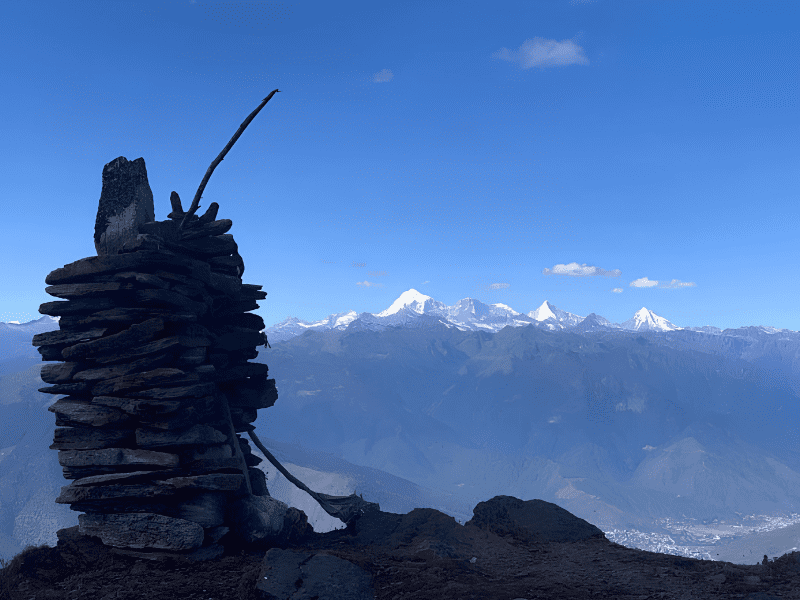
A longer day along high ridges through wild asparagus and rhododendron-dotted meadows (in season), crossing Pagalabtsa Pass at roughly 4,170 to 4,250 metres, marked by a large stone cairn, with genuine views of Kanchenjunga and the full Dagala mountain range. Descend past yak herder camps into the Labatama Valley, arriving at the turquoise Utsho Tsho.
🐟 Utsho Tsho – The Turquoise Lake
Genuinely known for golden trout, this lake at 4,300 metres is your camp for the next two nights and the trek’s true centrepiece.
Pagalabtsa Pass
DAY 4
Explore the Labatama Lakes – Rest Day
📍A Full Day Among the Genuine Named Lakes
A full day to explore the genuinely named surrounding lakes — Relitsho, Setsho, Hentsho and Jagetsho — with optional fishing at any lake with your local permit, and an optional, more demanding climb to “Jomo” peak (5,050m) for those with extra energy.
⛰️ Why This Rest Day Genuinely Matters
Labatama sits at 4,300m; proper acclimatisation here reduces altitude risk for the days ahead, while giving you real time among lakes most visitors to Bhutan never see.
Relitsho, Setsho, Hentsho, Jagetsho
DAY 5
Labatama to Panka, via Dala Tsho
📍One of the Trek's Best Viewpoints
Climb along the western side of Dala Tsho to a high saddle (roughly 4,460 to 4,520m) — genuinely one of the best viewpoints of the entire trek, with Everest, Kanchenjunga, Jomolhari and Jichu Drake all potentially visible on a clear day. Descend past yak herder huts to the Doccha Chhu river valley, following it to camp at Panka.
Dala Tsho saddle viewpoint
DAY 6
Trek Ends – Panka to Talakha to Chamgang
📍A Genuine 15th-Century Monastery on the Descent
Cross several smaller passes, keeping an eye out for the blue poppy, Bhutan’s national flower, if travelling in June-July. Climb to the final pass, Tale La (roughly 4,180m), with views back over the Dagala range, before visiting Talakha Goemba, a genuine working 15th-century monastery, on the final descent through oak and rhododendron forest to Chamgang.
🏯 A Real, Working Monastery
Talakha Goemba is not a stop invented to pad the itinerary — monks here still chant at dawn, and this is a genuine, active religious site rather than a ruin.
Tale La ~4,180m
Talakha Goemba 15th century
DAY 7
Departure
📍Departure · Final Day · Airport Transfer
After breakfast, check out from your hotel and transfer to Paro International Airport for your departure flight. As your Dagala Thousand Lakes Trek adventure comes to an end, take with you unforgettable memories of pristine alpine lakes, breathtaking Himalayan vistas, remote mountain trails, and the rich cultural heritage of Bhutan.
We hope this remarkable trekking experience has left you inspired by the beauty and tranquility of the Land of the Thunder Dragon. Wishing you a safe journey home, and we look forward to welcoming you back for another adventure in Bhutan.
Note: this itinerary fits the trek itself into days 2-7 with arrival on day 1; some travellers extend with a Tiger’s Nest day in Paro before or after — let us know if you’d like this added.
Why Book With Us?
We provide well-organized Bhutan trekking experiences with expert local guides, safe logistics, and comfortable camping to ensure a smooth and memorable journey in the Himalayas.
What’s Included
What's Included & Excluded
Complete transparency — exactly what your trek covers.
✓ Included in This Tour
- All meals throughout — hotel meals in Paro, full camping board on trek
- 1 night at a comfortable hotel in Paro before and after the trek
- 4 nights full-service camping, including tents and dining tent
- Full trekking support crew — guide, cook, and pack horse handlers
- Private vehicle and driver for all road transfers
- Government Sustainable Development Fee (SDF)
- One-time non-refundable Bhutan visa processing fee
- All monument entry fees
- Full support before, during and after your trek
✕ Not Included
- International flights to/from Paro International Airport
- Personal trekking gear (sleeping bag, trekking poles, boots)
- Local fishing permit fee at Utsho Tsho (arranged on request)
- Bottled drinks and alcoholic beverages
- Travel and medical insurance (strongly recommended)
- Personal expenses — laundry, phone calls, shopping
- Tips and gratuities for guide, cook and support crew (appreciated, entirely your choice)
- Unforeseen costs from weather delays or route changes
This Journey Is Made for You If —
🤫 You Want Genuine Solitude
Far less marketed than Bhutan's other moderate treks, Dagala offers real quiet, even by Bhutanese standards.
🐟 You're Interested in Fishing or Real Lake Stories
Golden trout at Utsho Tsho and genuinely named surrounding lakes offer substance beyond generic scenery.
⏳ You Have Less Than a Week for Trekking
At 7 days, this trek fits genuine high-altitude reward into a realistic, well-paced timeframe.
🏔️ Mountain Views Genuinely Matter to You
Jomolhari, Jichu Drake and, on clear days, Kanchenjunga are all visible from this route's high points.
🆕 You're Newer to Multi-Day Trekking
Genuinely accessible for fit beginners with prior hiking experience, without the extended demands of longer routes.
✅ You Want an Honest Name, Not Marketing Inflation
If you'd rather know upfront that this isn't literally a thousand lakes, this is built on exactly that principle.
Why Book Your Dagala Thousand Lakes Trek With Kingdom of Happiness Tours?
We offer well-organised Bhutan trekking experiences with expert local guides, safe logistics, and comfortable camping — and we tell you honestly what this trek’s name actually means.
We Tell You the Truth About the Name
We will never let you believe there are literally a thousand lakes — we explain the real story instead.
Completely Private, Always
Every trek we run is private for your specific party — no merging with strangers.
Genuinely Researched Content
Every distance, lake name, and historical detail on this page is accurate and verifiable.
A Guide Who Knows This Quieter Route
We assign guides with genuine experience on Dagala specifically.
Full-Service Camping Support
A complete crew accompanies your trek, with proper meals and equipment at every campsite.
Full Support Before, During & After
Visa, SDF, all bookings — handled entirely, with support throughout your trip and after you return.
Book Your Dagala Thousand Lakes Trek
Complete the form below and our team will confirm availability and send you full itinerary and pricing details within 24 hours.
We recommend enquiring at least 4-6 weeks ahead, particularly for spring (April-June) and autumn (September-October) departures.
USD $1,680
📞 +975 16108730
💬 WhatsApp: +975 16108730
✉ hello@kingdomofhappinesstours.com
Trek Highlights
- Utsho Tsho — the Turquoise Lake, golden trout
- Pagalabtsa Pass — Kanchenjunga views
- Talakha Goemba — 15th century
- Genuinely uncrowded trail
- Built-in acclimatisation rest day
- All meals, transport, visa, SDF included
🏞️ Best Trekking Season
April-June and September-October. The route can become snow-blocked from November to March.
Frequently Asked Questions
Honest, complete answers about this genuinely quieter trek.
It is a moderate trek — genuinely more accessible than treks like Jomolhari, but with real elevation gain and a maximum altitude of around 4,300 to 4,520 metres. Good general fitness is needed, and the rest day at Labatama is built in specifically to help with acclimatisation. It suits fit beginners as well as more experienced trekkers looking for a shorter, quieter route.
Genuinely fewer than the name suggests — the “thousand lakes” is widely understood locally to be more legend than literal count. One elderly horseman from the Dagala area, recalling what his own parents told him, put the historical number at around 105. What you will actually see and visit on this trek are several named lakes around Labatama — Utsho Tsho, Relitsho, Setsho, Hentsho, and Jagetsho — each genuinely worth the visit in its own right.
April to June and September to October offer the best conditions. Spring brings blooming rhododendrons and, in June-July specifically, sightings of the blue poppy, Bhutan’s national flower. Autumn typically brings the clearest skies for mountain views. The route can become snow-blocked at higher elevations from November through March, so we don’t recommend trekking during that window.
Some prior hiking experience is genuinely helpful, particularly for the longer second day crossing Pagalabtsa Pass, but this is not a trek that requires significant prior high-altitude experience. Reasonable overall fitness and a willingness to walk 5 to 7 hours on the longer days are what matter most.
Yes — full-service camping is included throughout the trek, with a cook and support crew preparing meals at every campsite. Comfortable hotel accommodation is used in Paro before and after the trek itself.
Walk a Trek Honest Enough to Admit Its Own Name Is a Legend
Six days. A turquoise lake genuinely known for golden trout. A 15th-century monastery still active today. A trail so quiet you may not see another trekking group for days. This is the real Dagala Thousand Lakes Trek — honestly described, not inflated.
“Gross National Happiness is more important than Gross National Product.” — His Majesty Jigme Singye Wangchuck, Fourth King of Bhutan