Merak and Sakteng Trek Into Bhutan's Last Semi-Nomadic Frontier
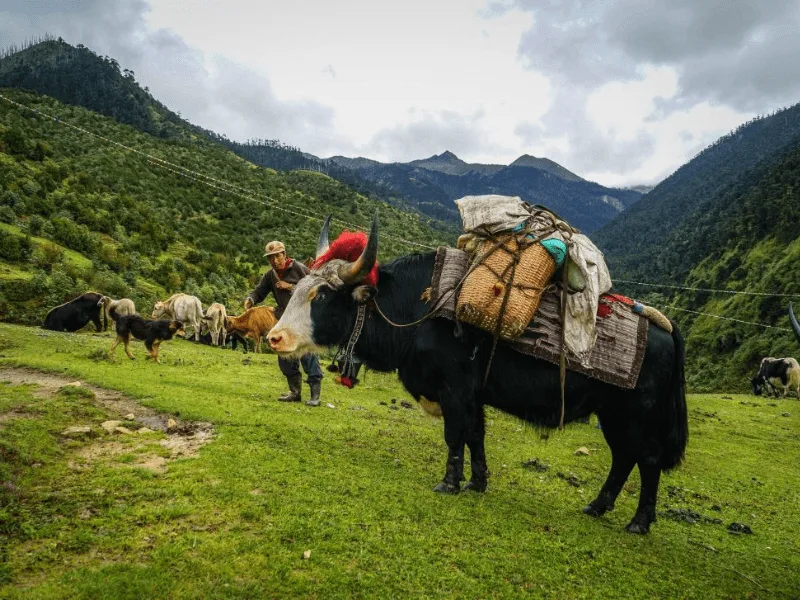
The Brokpa people of Merak and Sakteng trace their migration to this region back to Tsona in southern Tibet, centuries ago, and to this day herd yaks between winter valleys and summer alpine pastures much as their ancestors did. Their most distinctive marker — a hat woven from yak hair with five long fringes radiating outward, designed specifically to drain off rain like a built-in roof — is found nowhere else in Bhutan. This region only opened to international tourism in 2009, and a 2018 relaxation of restrictions, paired with new domestic flights to Trashigang, has only recently made it genuinely accessible.
A Genuinely Different People, in Bhutan's Most Remote Corner
Merak and Sakteng sit at roughly 3,500 metres in Trashigang District, in the far eastern reaches of Bhutan, and are home to the Brokpa — semi-nomadic yak herders whose ancestors migrated here from Tsona in southern Tibet, generations ago. The Brokpa are genuinely distinct from the rest of Bhutan’s population: they speak their own dialect, hold their own deities, and follow customs found nowhere else in the kingdom. Their most recognisable feature is a hat called the tsipee charko, woven entirely from yak hair, with five long tentacle-like fringes radiating from the crown specifically designed to drain rainwater away from the face and neck — a genuinely functional piece of highland engineering, not simply decorative dress.
Every winter, Brokpa families undertake what is called the Drukkor, or grain journey, descending to lowland villages where they maintain long-standing relationships with host families, living together for weeks while bartering yak butter, cheese, and dried meat for maize and grain — a barter economy that continues largely unchanged from centuries past. Sakteng itself comprises roughly 250 households across three main villages — Sakteng, Tengma, and Borang — with residents known as Saktengpa, sharing the Brokpa language, dress, and spiritual customs of neighbouring Merak.
The trek crosses Nachungla Pass at 4,153 metres, the route’s highest point, through juniper and rhododendron forest, within the Sakteng Wildlife Sanctuary — a roughly 700 square kilometre protected area home to red pandas, Himalayan black bears, musk deer, and over 200 bird species, alongside the blue poppy, Bhutan’s national flower. Local legend also holds this remote sanctuary as territory of the migoi, Bhutan’s version of the yeti.
“This region was off-limits to travellers until relatively recently. What changed wasn’t the Brokpa’s way of life — it was simply the rules that, for decades, kept the rest of the world from seeing it.”
This 18-day itinerary takes the complete journey from western Bhutan through the central regions to Trashigang, before the trek itself into Merak and Sakteng — giving genuine time to both the standard cultural circuit and this remarkable, recently-accessible highland culture.
🐑 Time your trip for the Jomo Kuengkhar Festival
Held each autumn, this two-day festival features the rare naked Terchham dance and graceful Ache Lhamo performances — genuinely worth aligning your trip dates around.
Tour at a Glance
Everything you need to know about this Merak and Sakteng Trekat a glance.
🗓️ Duration
18 Days / 17 Nights
📍 Route
Paro–Central Bhutan–Trashigang–Merak–Sakteng
🐑 Focus
Brokpa Highland Culture
⛺ Accommodation
Hotels + Full Camping
🚙 Throughout
Guide, Cook & Support Crew
👥 Group Size
2 – 10 Trekkers
💰 Starting Price
From USD $5,650 Per Person
🛂 Documents Needed
Entry Permit + Special Area Permit
Who Are the Brokpa? — A Genuinely Distinct Bhutanese Culture
The Brokpa are believed to have migrated from Tsona, in what is now the Tibet Autonomous Region, generations ago, settling in the high valleys of Merak and Sakteng. Unlike the majority Ngalop and Sharchop populations elsewhere in Bhutan, the Brokpa maintain their own distinct language, deities, and material culture, with a lifestyle built around seasonal yak herding between lower winter pastures and higher summer grazing grounds.
🧶 The Tsipee Charko (Yak-Hair Hat)
Woven entirely from yak hair, with five long fringes designed to channel rainwater away from the wearer’s face — genuinely functional highland clothing engineering, unique to this region of Bhutan.
👗 Traditional Dress
Brokpa men wear yak-hair garments and leather vests cinched with a kera belt; women wear raw silk adorned with colourful motifs, coral necklaces, and ribbons — markedly different from the gho and kira worn elsewhere in Bhutan.
🐂 The Drukkor — Annual Grain Journey
Each winter, Brokpa families travel to lowland villages, living for weeks with regular host families and bartering yak products like butter, cheese and dried meat for maize and grain — a genuine barter economy continuing largely as it has for centuries.
🎶 Women’s Ceremonial Songs
Brokpa women are especially known for soulful singing — melodies dedicated to gods, nature, youth, and the passage of time, performed at marriages and other significant occasions.
A Genuinely Recent Opening to the Outside World
Merak and Sakteng’s accessibility to international visitors is a remarkably recent development. The region was officially closed to tourism for decades, opening only in 2009, with a further relaxation of restrictions in 2018 that, combined with new domestic flights connecting Paro to Trashigang, has made the journey genuinely practical for the first time. This means the Brokpa culture you encounter on this trek has had minimal exposure to international tourism compared to almost anywhere else in Bhutan — a genuine rarity in any corner of the modern Himalayas.
We mention this history because it genuinely matters for understanding what you are experiencing — this is not a “remote village” performance staged for visitors, but a community whose first sustained contact with international tourism is recent enough to still feel genuinely novel to both sides.
Why This Specific Trek Is Worth the Distance
The journey east is genuinely long. Here is what it delivers in return.
A Genuinely Distinct Bhutanese Culture
The Brokpa's Tibetan origins, their own language, and their unique yak-hair clothing make this trek culturally unlike anything else in standard Bhutan itineraries.
Recent, Limited Tourism Exposure
Having opened to visitors only in 2009, Merak and Sakteng offer a genuinely uncommon level of cultural freshness for international trekkers.
The Sakteng Wildlife Sanctuary's Genuine Biodiversity
Red pandas, Himalayan black bears, musk deer, and over 200 bird species inhabit this protected area — genuine wilderness, not a managed safari park.
The Jomo Kuengkhar Festival
A genuine, rarely-witnessed autumn festival featuring the naked Terchham dance and Ache Lhamo performances — a real cultural event, not staged for tourists.
Historic Temples Along the Route
Borangtse Lhakhang, Guru Goenpa, Labrang Lhakhang, and Gango Tashi Choling — the latter preserving the remains of its 15th-century founder — add genuine religious heritage to the cultural journey.
A Complete Cross-Section of Bhutan En Route
Reaching Merak and Sakteng means traversing nearly the entire length of the country, passing through western, central, and eastern Bhutan in a single comprehensive journey.
What Makes This Trek Different
Most operators describe Merak and Sakteng in vague “remote highland village” language. We tell the genuine cultural story.
The Real Brokpa Story, Properly Told
The Tibetan migration from Tsona, the genuine function of the yak-hair hat, the Drukkor grain journey — all verified against multiple sources, not generic "unique culture" language.
A Complete West-to-East Route
Paro, the central regions, and Trashigang are all properly covered before the trek itself, not rushed past on the way to Merak.
A Guide With Genuine Brokpa Cultural Knowledge
We assign guides with real familiarity with this specific, recently-opened region's customs and history.
Full-Service Camping Support
A complete crew — guide, cook, and pack animal handlers — accompanies the trek, with hot meals at every campsite.
Festival-Timed Departures on Request
We can align your trip with the Jomo Kuengkhar Festival in autumn if your dates allow.
Full Support Before, During & After
Visa, SDF, all bookings — handled entirely. We remain available throughout your trip and after you return home.
18-Day Merak and Sakteng Trek Itinerary — Day by Day
Every village, every cultural detail, every reason this route is sequenced this way — described in full.
DAY 1
Arrival Day · Paro
📍Paro International Airport · Sightseeing
Arrival and sightseeing in the Paro Valley, including Rinpung Dzong and Ta Dzong, now the National Museum.
Paro International Airport arrival
DAY 2
Tiger’s Nest Day
📍Hiking to Paro Taktsang — Tiger's Nest Monastery
The hike to Paro Taktsang, built around the cave where Guru Rinpoche is said to have meditated in the 8th century.
Tiger’s Nest hike
DAY 3
DAY 4
Thimphu → Punakha
📍Dochula Pass · Punakha Dzong
Drive to Punakha via Dochula Pass, visiting Punakha Dzong, built in 1637.
Dochula Pass
Punakha Dzong
DAY 5
Punakha → Trongsa
📍Drive via Pelela Pass to Trongsa
The drive to Trongsa, visiting Trongsa Dzong, the largest fortress in Bhutan and ancestral seat of the monarchy.
Trongsa Dzong
DAY 6
Trongsa → Bumthang
📍Drive to Bumthang via Yotongla Pass
Continuing east toward Bumthang, Bhutan’s spiritual heartland.
Yotongla Pass
DAY 7
Bumthang Sightseeing
📍Kurjey Lhakhang · Jambay Lhakhang
A day at Bumthang’s ancient temples, including Kurjey Lhakhang, built around the cave where Guru Rinpoche is said to have healed King Sindhu Raja in 810 AD.
Kurjey Lhakhang
DAY 8
Bumthang → Mongar
📍Crossing Thrumshingla Pass Into Eastern Bhutan
The long crossing into eastern Bhutan via Thrumshingla Pass, the second-highest pass in the country.
DAY 9
Mongar → Trashigang
📍Drametse Lhakhang · Arrival in Trashigang
A stop at Drametse Lhakhang, origin site of the UNESCO-recognised Drametse Ngacham mask dance, before reaching Trashigang.
DAY 10
Trail Begins · Chaling → Merak
📍Drive to Chaling · Trek Through Shaktimi Meadow Toward Merak
Drive from Trashigang to Chaling, passing through Rangjung town and Radhi village, known for its bura silk weaving. The trek begins above Chaling School, climbing gradually through open grazing pasture toward Mendula Pass (3,354m), with yak and sheep grazing along the route.
🐑 The First Glimpses of Brokpa Territory
Yak herders’ huts dotting the hillside and grazing animals along the trail are your first genuine introduction to the pastoral economy that defines life in this region.
DAY 11
Donmong Chu → Merak
📍Following the River Bends to Merak Village
The trail mostly follows the river bends toward Gangu village, the only stretch with a gradual ascent, continuing roughly 45 minutes further to reach Merak — a small village predominated by the Brokpa, whose primary activity remains the raising of yaks and other livestock.
DAY 12
Merak Village Day
📍Cultural Immersion in Merak
A full day in Merak itself, with time to observe and respectfully engage with Brokpa daily life, traditional dress, and yak herding practices, and to visit nearby chortens and smaller cultural sites.
DAY 13
Merak → Nachungla Pass → Sakteng
📍The Trek's Highest Point — Nachungla Pass (4,153m)
A genuinely demanding day, roughly 6 hours, beginning with a gradual climb to the first short pass before ascending through juniper and rhododendron forest to Nachungla Pass at 4,153 metres — the trek’s high point. A challenging climb, but one offering real pride and panoramic views on completion.
⛰️ Earning the View
Crossing Nachungla Pass genuinely separates the casual traveller from those willing to put in real effort to reach Sakteng — a fitting physical threshold between Bhutan’s two most culturally distinct Brokpa villages.
DAY 14
Sakteng Village Day
📍Exploring Sakteng — A Distinct Character From Merak
A day exploring Sakteng, immediately distinct in character from Merak — clustered houses roofed with corrugated iron, set in a wide valley surrounded by mountains on all sides. Time to visit the village and, with luck, spot red pandas in the surrounding trees.
DAY 15
Sakteng → Joenkhar Teng
📍A Longer Day Through Broadleaf Forest
Leaving Sakteng with a short climb to the hill above the village’s west end, before descending to the river and following it through broadleaf forest to camp in a meadow near Joenkhar Teng village (around 1,800m) — home to both Brokpa and Sharchopa residents, with a community school and outreach clinic.
DAY 16
Trek Ends · Joenkhar Teng → Phongmay → Trashigang
📍Crossing Suspension Bridges to Phongmay · Rangjung Monastery
The final trekking day: a short climb from Joenkhar Teng, crossing suspension bridges to reach Phongmay, where your transport meets you for the drive to Trashigang. En route, a stop at Rangjung Monastery, founded by His Eminence Garab Rinpoche.
DAY 17
Trashigang → Paro
📍Domestic Flight or Overland Return
Return to Paro by domestic flight (where seasonal flight schedules allow) or the overland route, retracing the journey west.
DAY 18
Departure Day
📍Final Breakfast · Paro International Airport Departure
A final breakfast before transfer to Paro International Airport, carrying with you a genuinely rare insight into one of the Himalayas’ last semi-nomadic cultures.
Why Book With Us?
We specialize in remote Bhutan trekking adventures, providing expert guides, safety-focused planning, and full logistical support for high-altitude expeditions.
What’s Included
What's Included & Excluded
Complete transparency — exactly what your trek covers.
✓ Included in This Tour
- All meals throughout — hotel meals and full camping board on trek
- Hotel accommodation across the western, central and eastern circuit
- Full-service camping for the trek itself, including tents and dining tent
- Full trekking support crew — guide, cook, and pack animal handlers
- Private vehicle and driver for all road transfers
- Tiger’s Nest hike with guide
- Government Sustainable Development Fee (SDF)
- One-time non-refundable Bhutan visa processing fee
- All monument and dzong entry fees
- Full support before, during and after your trek
✕ Not Included
- International flights to/from Paro International Airport
- Optional domestic flight Trashigang–Paro if used over overland route
- Personal trekking gear (sleeping bag, trekking poles, boots)
- Bottled drinks and alcoholic beverages
- Travel and medical insurance (strongly recommended)
- Personal expenses — laundry, phone calls, shopping
- Tips and gratuities for guide, cook and support crew (appreciated, entirely your choice)
- Unforeseen costs from weather delays, road closures or flight cancellations
This Trek Is Made for You If —
🐑 You Want Genuine Cultural Distinctiveness
The Brokpa's Tibetan heritage and unique dress offer something genuinely different from standard Bhutanese cultural tourism.
⏳ You Have Significant Time Available
This is a genuine 18-day commitment, reflecting the real distance to reach and properly experience Bhutan's far eastern frontier.
🦊 You're a Wildlife Enthusiast
The Sakteng Wildlife Sanctuary's red pandas, black bears, and rich birdlife offer genuine wilderness encounters.
📸 You Want Genuinely Rare Photography Opportunities
Brokpa traditional dress, remote highland villages, and landscapes most visitors never reach offer a genuinely distinctive photographic record.
🏔️ You're Fit and Ready for a Real Physical Challenge
Nachungla Pass at 4,153m and several demanding trekking days require genuine fitness and ideally prior trekking experience.
✅ You Want Accurate, Researched Cultural Content
If you'd rather understand the genuine history and customs of the Brokpa than receive vague "remote village" language, this tour is built on exactly that principle.
Why Book Your Merak and Sakteng Trek With Kingdom of Happiness Tours?
We specialise in remote Bhutan trekking adventures, providing expert guides, safety-focused planning, and full logistical support for this genuinely high-altitude, culturally significant expedition.
We Explain the Real Brokpa Culture
The Tsona migration story, the genuine function of traditional dress, the Drukkor grain journey — explained accurately, not generically.
Completely Private, Always
Every trek we run is private for your specific party — no merging with strangers.
A Guide With Genuine Eastern Bhutan Knowledge
We assign guides with real familiarity with this recently-opened region.
Genuinely Researched Content
Every date, cultural detail, and historical fact on this page is accurate and verifiable.
Full-Service Camping Support
A complete crew accompanies your trek, with proper meals and equipment at every campsite.
Full Support Before, During & After
Visa, SDF, all bookings — handled entirely, with support throughout your trip and after you return.
Book Your Merak and Sakteng Trek
Complete the form below and our team will confirm availability and send you full itinerary and pricing details within 24 hours.
Given this trek’s remote logistics and length, we recommend enquiring at least 10–12 weeks ahead, particularly if you wish to align with the Jomo Kuengkhar Festival.
USD $5,650
📞 +975 16108730
💬 WhatsApp: +975 16108730
✉ hello@kingdomofhappinesstours.com
Trek Highlights
- Genuine Brokpa cultural immersion
- Nachungla Pass — 4,153m highest point
- Sakteng Wildlife Sanctuary
- Tiger’s Nest hike included
- Complete western, central & eastern Bhutan circuit
- All meals, transport, visa, SDF included
🐑 Best Trekking Season
March–May (spring blooms) and September–November (clearest skies, possible Jomo Kuengkhar Festival).
Frequently Asked Questions
Honest, complete answers about this genuinely remote, recently-opened trek.
Yes, genuinely so — this is a moderate to challenging high-altitude trek, crossing Nachungla Pass at 4,153 metres, with several demanding daily walking sections. We recommend this route primarily for trekkers with prior multi-day hiking experience and a good level of fitness.
Prior trekking experience is genuinely valuable for this route, given its altitude and sustained daily walking. If you have limited experience, please discuss your fitness level honestly with us when you enquire — we may suggest additional preparation or recommend a less demanding alternative trek.
Yes — for the trekking portion specifically, full-service camping is included, with quality tents, a dining tent, and hot meals prepared by an accompanying cook at every campsite. The western, central, and eastern sightseeing portions of this 18-day journey use comfortable hotels instead.
Spring (March to May) offers rhododendron blooms throughout the route, while autumn (September to November) typically brings the clearest skies and the possibility of timing your trip around the Jomo Kuengkhar Festival, usually held in autumn at Sakteng. We recommend telling us if festival timing matters to you when you enquire.
Meet the Last Semi-Nomadic Highlanders of Bhutan
Eighteen days. A people whose ancestors walked here from Tibet generations ago. A hat woven from yak hair, engineered to shed the rain. A pass at 4,153 metres separating two genuinely distinct highland villages. This is Bhutan’s last frontier, opened to the world only since 2009, accurately described and properly explored.
“Gross National Happiness is more important than Gross National Product.” — His Majesty Jigme Singye Wangchuck, Fourth King of Bhutan