
Bhutan Travel Guide · Updated for 2027
Best Time to Visit Bhutan in 2027
Season by season and month by month: the weather, the 2027 festival dates, the best trekking windows and the fees to know before you book. Written by our team in Thimphu.
By Chencho Gyeltshen, founder · Kingdom of Happiness Tours, Thimphu · Updated October 2026
The short answer
When should you visit Bhutan in 2027?
There is no bad month to visit Bhutan, only different trips. Autumn and spring are the classic seasons for clear views and festivals. Winter and the monsoon are quieter and more personal. Here is how we advise our own guests.
Best overall
October & November
Clear post-monsoon skies, Himalayan views, harvest colours and the big autumn festivals, including Thimphu Tshechu on 10–12 October 2027.
Best for blooms & festivals
March & April
Rhododendrons flower on the mountain passes, and Paro Tshechu falls early this year, on 18–22 March 2027.
Best for quiet & space
Dec–Feb & Jun–Aug
Fewer visitors and easier hotel availability. Winter brings black-necked cranes to Phobjikha; summer brings deep-green valleys and rain.
New for 2027
What's different this year
- Paro Tshechu is early: 18–22 March 2027, so spring festival trips start in March, not April.
- Thimphu Tshechu moves to 10–12 October 2027 (it was in September in 2026).
- The Sustainable Development Fee of US$100 per night is set until 31 August 2027. Check the rate for travel after that date.
- Since 1 January 2026, Bhutan applies a 5% Goods and Services Tax (GST) on most goods and services.
Bhutan's four seasons
What each season feels like
Bhutan rises from about 100 metres in the southern foothills to over 7,000 metres on the northern border, so the weather depends as much on altitude as on the month. Paro and Thimphu sit at roughly 2,200–2,400 metres, Punakha is lower and warmer at around 1,200 metres, and Bumthang and Phobjikha are higher and colder at about 2,600–3,000 metres.
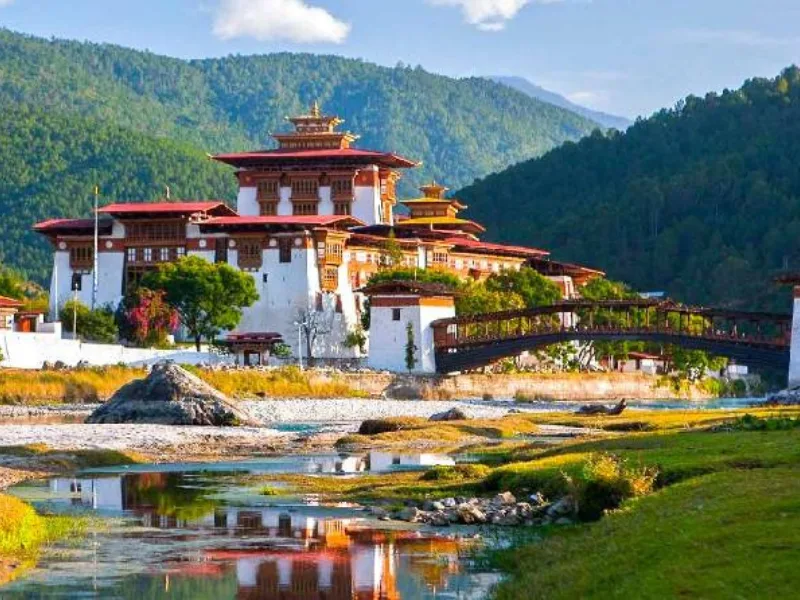
March – May
Spring: blooms and festivals
The valleys warm up, rhododendrons and magnolias flower on the high passes, and skies are mostly clear until haze and showers build in May. Spring is festival season, led in 2027 by Paro Tshechu (18–22 March) and Ura Yakchoe in Bumthang (18–22 April).
- Weather: mild days, cool nights, more showers in May
- Crowds: busy, especially around Paro Tshechu
- Best for: festivals, Tiger's Nest, Druk Path Trek, flowers
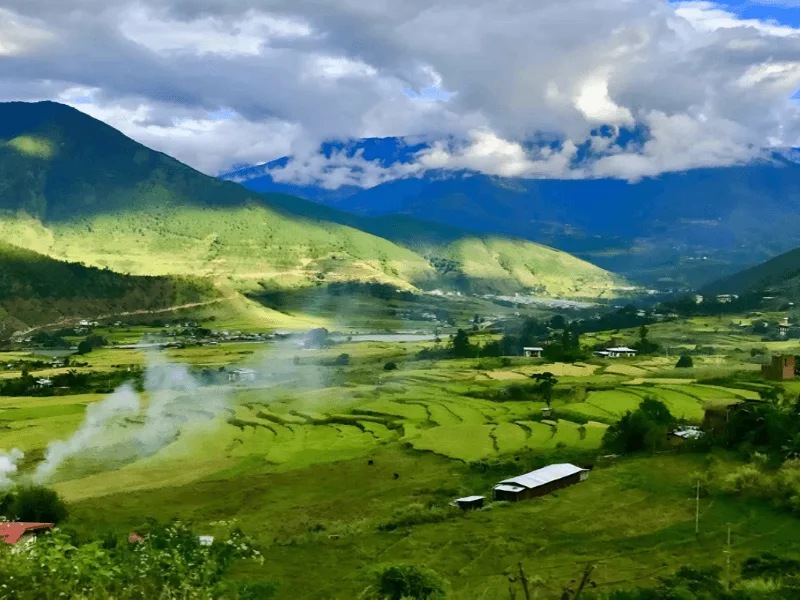
June – August (rains into September)
Summer: the green monsoon
The monsoon usually reaches Bhutan in early June, and Bhutan’s weather service notes that June to September brings about 72% of the year’s rain. Valleys turn deep green, rice is planted, and monasteries are wonderfully quiet. Bumthang holds Nimalung (12–14 June) and Kurjey (14 June) tshechus.
- Weather: warm and humid, rain most days, views often in cloud
- Crowds: the quietest time of year
- Best for: valley culture tours, nature, unhurried travel
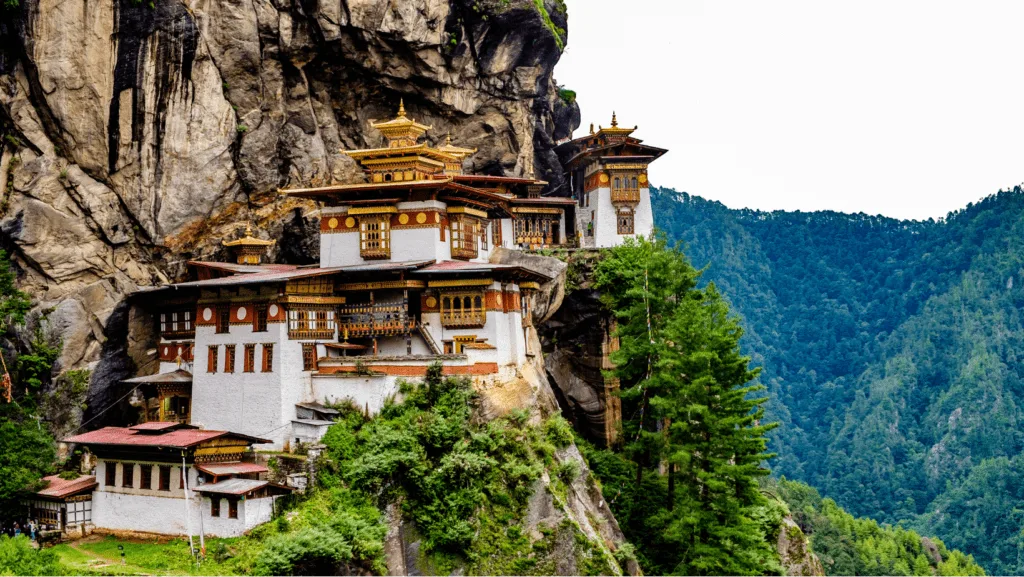
September – November
Autumn: clear skies and harvest gold
The rains ease through September and leave behind the clearest air of the year. October and November bring crisp mornings, golden rice terraces and the best chance of seeing the snow peaks from Dochula. It is also Bhutan’s busiest festival season, from Thimphu Tshechu in October to Jakar and Jambay Lhakhang in November.
- Weather: dry and clear, cool evenings, colder by late November
- Crowds: the busiest time of year; book early
- Best for: first visits, high treks, festivals, photography
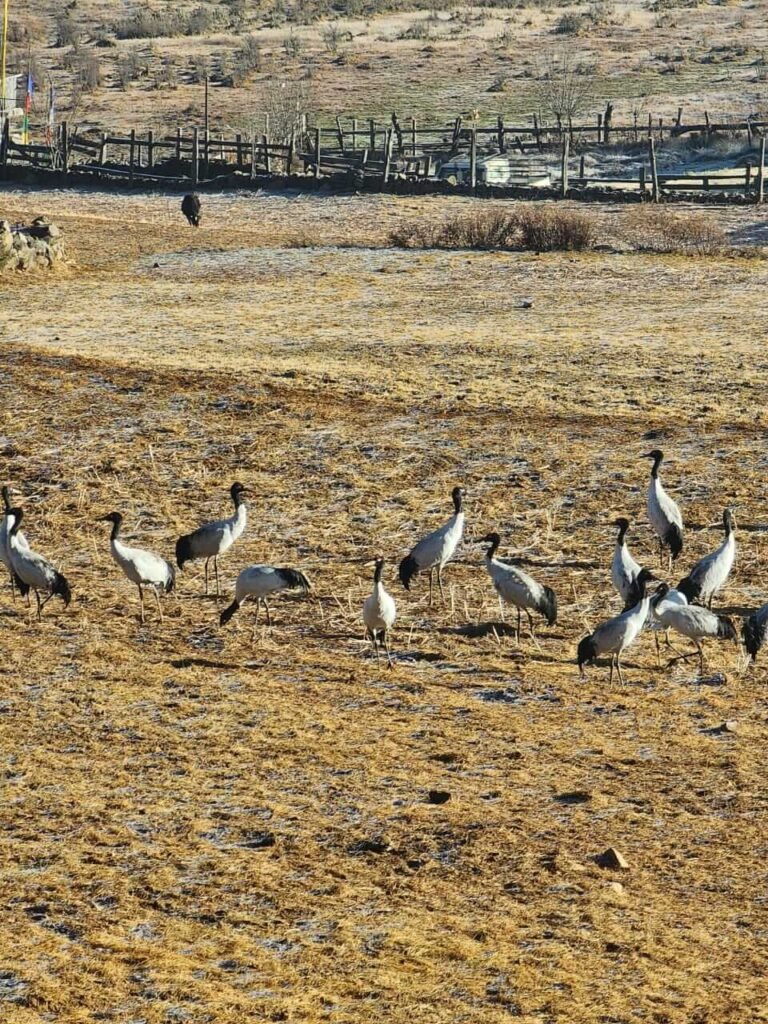
December – February
Winter: cranes and calm
Days are bright and dry, nights are cold, and the high passes can get snow. Punakha’s lower valley stays mild. Endangered black-necked cranes winter in Phobjikha and Bumthang, and February brings the Punakha Drubchen and Tshechu (13–18 February 2027).
- Weather: sunny, dry days, frosty nights, snow on passes
- Crowds: quiet, apart from Punakha in February
- Best for: cranes, Punakha, quiet monasteries, low hikes
Month by month
Your 2027 Bhutan calendar
Peak means the best weather and the busiest hotels. Quiet means fewer visitors and more flexibility. Festival dates are tentative 2027 dates and may shift slightly.
Quiet
January
The coldest month, with clear skies and frosty nights. Very few visitors. Punakha’s lower valley stays mild, and cranes are in Phobjikha.
Great
February
Punakha Drubchen (13–15 Feb) and Punakha Tshechu (16–18 Feb). Days start to warm and cranes are still in the valleys.
Peak
March
Paro Tshechu (18–22 Mar), plus Talo, Gasa and Zhemgang tshechus (16–18 Mar). Early rhododendrons. Most cranes leave by mid-March.
Peak
April
Rhododendron season. Domkhar Tshechu (16–18 Apr), Ura Yakchoe (18–22 Apr) and the Rhododendron Festival at Lamperi (22–23 Apr). Excellent for treks.
Good
May
Warm, green and calmer after the spring festivals. Haze and afternoon showers increase toward June. Good for Bumthang and the Druk Path.
Quiet
June
The monsoon arrives in early June. Lush valleys and Bumthang’s Nimalung (12–14 Jun) and Kurjey (14 Jun) tshechus.
Quiet
July
The heart of the monsoon. Rain most days and occasional road delays, but Paro, Thimphu and Punakha are peaceful and green.
Quiet
August
Still monsoon and at its greenest. Rice terraces glow and monasteries feel calm. Pack a good rain jacket.
Good
September
Rains ease through the month and skies usually clear by late September. Tour of the Dragon bike race in Bumthang (5 Sep).
Peak
October
The clearest skies of the year. Wangdue (8–10 Oct), Thimphu (10–12 Oct) and Gangtey (13–15 Oct) tshechus, and the Jhomolhari Mountain Festival (14–15 Oct).
Peak
November
Crisp and clear. Jakar Tshechu (6–9 Nov), Black-necked Crane Festival (11 Nov) and Jambay Lhakhang Drup (14–17 Nov). Cranes are arriving.
Good
December
Cold, dry and bright. Mongar and Trashigang tshechus (6–9 Dec) and Druk Wangyel Tshechu at Dochula (13 Dec).
Festivals
Bhutan festival dates 2027
Tshechus honour Guru Rinpoche, who brought Buddhism to Bhutan in the 8th century. Monks and lay dancers perform sacred cham mask dances in the dzong courtyards, and families come in their finest gho and kira. Visitors are welcome; dress modestly and follow your guide’s lead on photography.
Please note: these are tentative 2027 dates from the schedule shared by the Association of Bhutanese Tour Operators. Festivals follow the Bhutanese lunar calendar, so we confirm final dates with every booking before you buy flights.
Please note: these are tentative 2027 dates from the schedule shared by the Association of Bhutanese Tour Operators. Festivals follow the Bhutanese lunar calendar, so we confirm final dates with every booking before you buy flights.
February – June 2027
- 13–15 Feb · Punakha Drubchen — Punakha Dzong
- 16–18 Feb · Punakha Tshechu — Punakha Dzong
- 20 Feb · Tharpaling Thongdrol — Bumthang
- 16–18 Mar · Talo Tshechu — Punakha
- 16–18 Mar · Gomphu Kora — Trashiyangtse
- 18–22 Mar · Paro Tshechu — Rinpung Dzong, Paro
- 16–18 Apr · Domkhar Tshechu — Bumthang
- 18–22 Apr · Ura Yakchoe — Ura, Bumthang
- 22–23 Apr · Rhododendron Festival — Lamperi, near Dochula
- 12–14 Jun · Nimalung Tshechu — Bumthang
- 14 Jun · Kurjey Tshechu — Bumthang
October – December 2027
- 8–10 Oct · Wangdue Tshechu — Wangdue Phodrang
- 10–12 Oct · Thimphu Tshechu — Tashichho Dzong, Thimphu
- 13–15 Oct · Gangtey Tshechu — Gangtey Goenpa, Phobjikha
- 14–15 Oct · Jhomolhari Mountain Festival — Thimphu district
- 6–8 Nov · Haa Tshechu — Haa
- 6–9 Nov · Jakar Tshechu — Jakar Dzong, Bumthang
- 11 Nov · Black-necked Crane Festival — Gangtey Goenpa, Phobjikha
- 14–17 Nov · Jambay Lhakhang Drup — Bumthang
- 6–8 Dec · Mongar Tshechu — Mongar
- 7–9 Dec · Trashigang Tshechu — Trashigang
- 13 Dec · Druk Wangyel Tshechu — Dochula Pass
★ marks the three festivals our guests ask about most. Rooms near Paro and Thimphu sell out first, so plan these early.
By travel style
The best time for the trip you have in mind
First-time visitors
Best: October–November or late March–April
Clear days for the Tiger’s Nest hike, Dochula’s mountain views and Punakha Dzong, with comfortable temperatures for walking.
Trekking
Best: April–May and October–November
High routes such as the Jomolhari and Snowman treks need settled autumn weather. Avoid high treks in the monsoon and in deep winter, when passes can be snowbound.
Festivals
Best: February, March–April, October–November
Build your dates around one main tshechu, then add quieter valleys. Paro and Thimphu are the grandest; Punakha, Ura and Jakar feel more local.
Birding & black-necked cranes
Best: November–February
According to the Royal Society for Protection of Nature, the first cranes reach Bhutan in late October and most leave by mid-March. Phobjikha is the main winter home.
Photography
Best: October–November and April
Autumn gives the sharpest mountain light; spring gives blossoms and festival colour. The monsoon suits moody valley and monastery images.
Wellness & quiet travel
Best: December–February and June–August
Fewer visitors, more choice of hotels and guides, and time to sit in a temple without a crowd. Ideal for yoga, meditation and slow travel.
Plan your 2027 trip
Fees, rules and what to pack
Costs and rules to know
- Sustainable Development Fee: US$100 per person per night, set by the Department of Tourism until 31 August 2027. Children aged 6–12 pay 50%; children 5 and under are exempt.
- Indian nationals pay an SDF of ₹1,200 per person per night and need an entry permit rather than a visa.
- Visa: US$40 per person, applied for online before you travel. We handle the application with your booking.
- GST: a 5% Goods and Services Tax has applied to most goods and services since 1 January 2026.
- Book early: for October, Paro Tshechu and Thimphu Tshechu, we suggest booking 3–6 months ahead.
More detail: Bhutan travel cost guide · Bhutan visa process
What to pack by season
- Spring: layers, a light rain jacket, sun hat and sunscreen.
- Monsoon: waterproof jacket, quick-dry clothes, an umbrella and shoes with good grip.
- Autumn: a warm fleece for evenings and sturdy walking shoes.
- Winter: down jacket, thermals, hat and gloves. Nights are cold, even when days are sunny.
- All year: long sleeves and long trousers or skirts for dzongs and temples, and comfortable shoes for the Tiger's Nest hike.
FAQ
Questions travellers ask us
Still deciding? Send us your dates and interests and we’ll tell you honestly what Bhutan is like that week.
What is the best month to visit Bhutan in 2027?
For most travellers, October. The monsoon has cleared, the mountains are usually visible, temperatures are comfortable and Thimphu Tshechu runs on 10–12 October 2027. If you prefer flowers and spring festivals, choose late March or April.
When is Paro Tshechu in 2027?
The tentative dates are 18–22 March 2027, earlier than in many years, so plan a March trip. The final day usually begins before dawn with the unveiling of the giant thongdrel thangka.
When is Thimphu Tshechu in 2027?
The tentative dates are 10–12 October 2027 at Tashichho Dzong. The Thimphu Drubchen comes just before it, around 5 October.
Is the monsoon a bad time to visit Bhutan?
Not at all, as long as you expect rain. June to September brings most of Bhutan’s rainfall, so views can be hidden and roads occasionally delayed. In return you get green valleys, quiet monasteries and summer festivals in Bumthang. We avoid high-altitude treks in this season.
When can I see black-necked cranes?
From late October to mid-March, mainly in Phobjikha Valley, with smaller numbers in Bumthang and the east. December and January are reliable months. The Black-necked Crane Festival at Gangtey Goenpa is on 11 November.
Will the Sustainable Development Fee change in 2027?
The Department of Tourism has set the SDF at US$100 per person per night until 31 August 2027. The government has not yet announced the rate for travel after that date. If you are planning for September 2027 or later, ask us for the latest position before you pay.
How far ahead should I book?
For October and the big festivals, 3–6 months ahead. For quieter months, 6–8 weeks is usually enough. Visas are processed online once your trip is confirmed and paid.
Let's plan your 2027 journey
Not sure which month suits you?
Tell us when you can travel and what you’d love to see. Our team in Thimphu will suggest the best dates, festivals and route for you, with no obligation to book.