Bhutan Adventure Travel

The most complete destination guide to the Kingdom of Happiness — from the iconic valleys of the west to the forgotten monasteries of the east, with everything you need to choose wisely and travel deeply.

📍 12 Major Destinations

🗺 4 Regions of Bhutan

🏯 20+ Dzongs & Monasteries

🥾 Best Trekking Destinations

20

Districts

50+

Temples & Dzongs

4

Distinct Regions

30+

Trekking Routes

72%

Forest Cover
Why Bhutan?

Bhutan Is Not One Destination — It Is Many

Most travellers arrive in Bhutan thinking of it as a single destination — a small mountain kingdom with one famous monastery, one dramatic dzong, one celebrated valley. Within days, they discover that this understanding was incomplete. Bhutan is a country of extraordinary internal diversity: from the subtropical warmth of Punakha (1,200 m) to the wind-scoured alpine passes of the Snowman Trek (5,400 m+); from the cosmopolitan energy of Thimphu to the bronze-age authenticity of a Laya highlander village.

This guide covers every significant destination in Bhutan — the famous and the hidden, the accessible and the remote, the perfect for first-timers and the rewards of return. Use it to build the itinerary that matches exactly what you are looking for — whether that is a five-day cultural circuit or a three-week adventure across the full width of the kingdom.

Bhutan at a Glance

38,394

KM² Area

800K+

Population

1,200M

Lowest (Punakha)

7,570M

Gangkhar Puensum

5

Domestic Airports

51%

Protected Area

Destination Region Altitude Best For Best Time Days Needed
Paro Western 2,200 m Tiger's Nest, Dzongs, Cultural Tours
Spring Autumn
2–3 days
Thimphu Western 2,648 m Capital City, Culture, Museums
Year-Round
2–3 days
Punakha Western–Central 1,200 m Punakha Dzong, Festivals, Rafting
Spring Winter
1–2 days
Haa Valley Western 2,670 m Hidden Valley, Twin Temples, Trekking
Spring Autumn
1–2 days
Phobjikha Valley Central–Western 3,000 m Black-Necked Cranes, Nature, Monastery
Oct–Nov
1–2 days
Wangdue Phodrang Central–Western 1,350 m Dzong Architecture, Gateway Hub
Year-Round
Half day–1 day
Bumthang Central 2,600 m Spiritual Heartland, Oldest Temples
Spring Autumn
3–5 days
Trongsa Central 2,216 m Largest Dzong, Crossroads of Bhutan
Year-Round
1–2 days
Gasa Northern 2,770 m Hot Springs, Remote Trek, Laya Gateway
Spring
Trek-based
Mongar Eastern 1,620 m Gateway to East, Hillside Township
Autumn
1–2 days
Trashigang Far Eastern 1,070 m Cultural Heartland of East Bhutan
Autumn Spring
2–3 days
Lhuentse Northern–Eastern 1,280 m Remote Castle Dzong, Weaving Village
Autumn
1–2 days
Region 01 · Most Visited

Western Bhutan

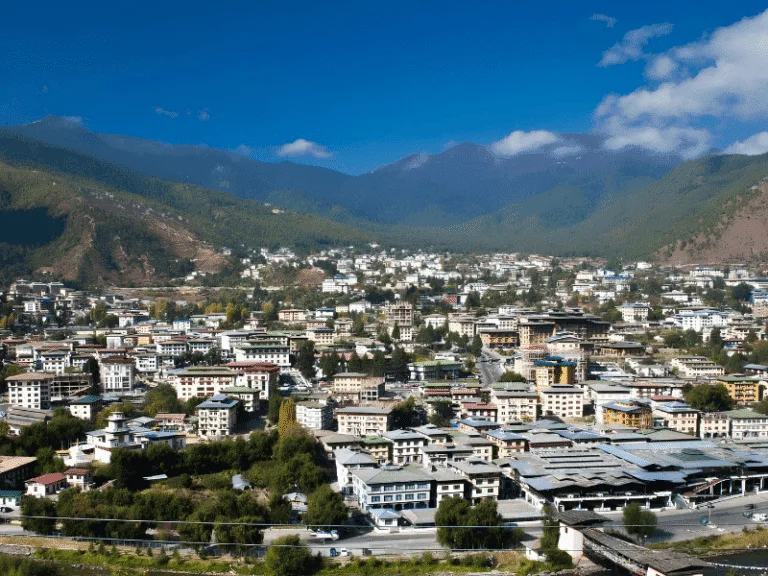
Western Bhutan is the gateway, the heartland, and the showpiece of the kingdom. The vast majority of visitors begin their journey here — flying into Paro, exploring Thimphu, crossing to Punakha, and venturing south to Haa. This region contains Bhutan’s most iconic landmarks: Tiger’s Nest, Punakha Dzong, the Buddha Dordenma, and the country’s only international airport. It is also, by any measure, one of the most beautiful mountain landscapes in Asia.

Paro Taktsang
Western Bhutan · Paro District
2,200 m · 65 km from Thimphu

Paro

🏆 Most Iconic

⛩ Tiger’s Nest

Bhutan’s gateway and most famous destination — home to Tiger’s Nest Monastery (Paro Taktsang), Rinpung Dzong, the National Museum, and more than 155 temples and monasteries. The Paro Valley is breathtakingly beautiful in every season, and the annual Paro Tshechu festival (March–April) is the most celebrated event in Bhutan. Tiger’s Nest — perched 900 metres above the valley floor at 3,120 m — is the single most iconic image in all of Bhutan and the hike every visitor must do.

  • Tiger’s Nest Monastery (Paro Taktsang) — the definitive Bhutan experience
  • Rinpung Dzong — spectacular festival venue and architectural masterpiece
  • Paro Tshechu Festival — March/April, five days of sacred Cham dances
  • National Museum of Bhutan (Ta Dzong) — six floors of Bhutanese history and art
  • Kyichu Lhakhang — one of the oldest temples in Bhutan (7th century)

🗓 Best: Mar–May, Sep–Nov

⏱ 2–3 Days

✈ Airport Here
Thimphu
Western Bhutan · Capital City
2,648 m · Capital

Thimphu

🏛 Capital City

No Traffic Lights

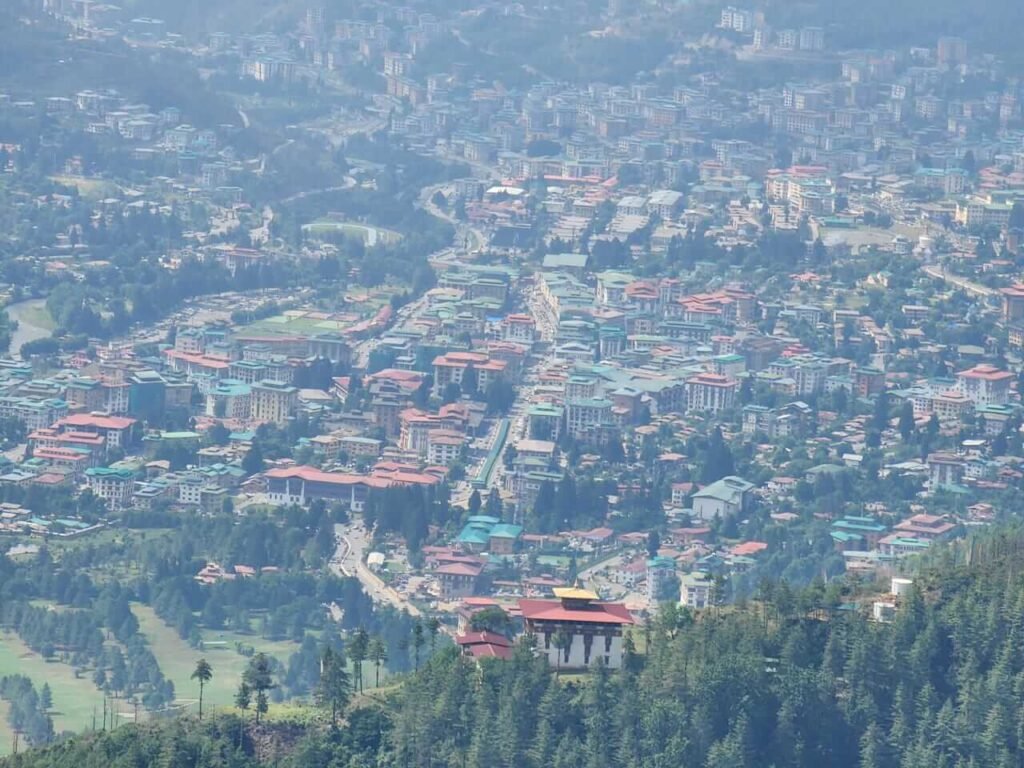
The world’s most unique capital — a city without traffic lights, where traditional dress is worn to work daily, where the streets of a national government share space with monks and yak-cart vendors. Thimphu is simultaneously the most modern and the most traditionally Bhutanese city in the kingdom — home to the Buddha Dordenma, Tashichho Dzong, the Memorial Chorten, and the Motithang Takin Preserve. The Thimphu Tshechu (September–October) is Bhutan’s largest festival.

  • Buddha Dordenma — 51.5-metre golden Buddha overlooking the entire valley
  • Tashichho Dzong — seat of the Royal Government; architectural masterpiece
  • National Memorial Chorten — spiritual heart of Thimphu; daily pilgrimage site
  • Thimphu Tshechu — Bhutan’s largest annual festival (September–October)
  • Kaja Throm Weekend Market — best local market in Bhutan (Thu–Sun)

🗓 Best: Year-Round

⏱ 2–3 Days

🏛 Capital City
Punakha
Western–Central Bhutan · Punakha District
1,200 m · Former Capital

Punakha

🏯 Most Beautiful Dzong

No Traffic Lights

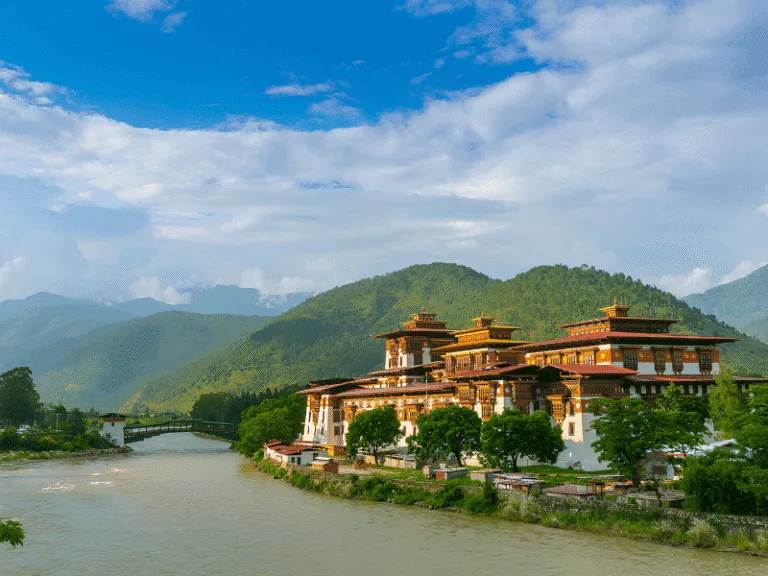
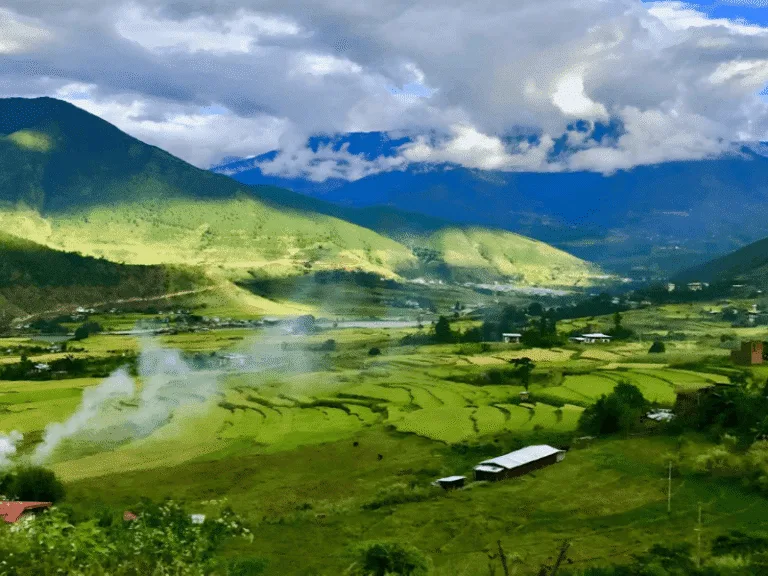
Bhutan’s most romantic valley — where the Palace of Great Happiness (Punakha Dzong) rises from the confluence of two sacred rivers, jacaranda trees bloom purple in March, and the warmest winter temperatures in western Bhutan make this a year-round destination. The Punakha Dromchoe and Tshechu festivals (February) are among Bhutan’s most dramatic cultural events. River rafting on the Mo Chhu and Pho Chhu rivers is thrilling and scenic. Chimi Lhakhang fertility temple draws pilgrims from across the world.

  • Punakha Dzong — most magnificent fortress-monastery in Bhutan
  • Punakha Dromchoe & Tshechu — February; most dramatic festival experience
  • Chimi Lhakhang (Fertility Temple) — 15-minute walk through rice paddies
  • Khamsum Yulley Namgyal Chorten — hilltop monument with 360° valley views
  • River rafting on Mo Chhu & Pho Chhu — Bhutan’s best whitewater adventure

🗓 Best: Feb–Apr, Winter

⏱ 1–2 Days

🌡 Warmest Valley
haa valley
Western Bhutan · Haa District
2,670 m · Opened 2002

Haa Valley

🏔 Hidden Gem

BBC Top 25 — 2025

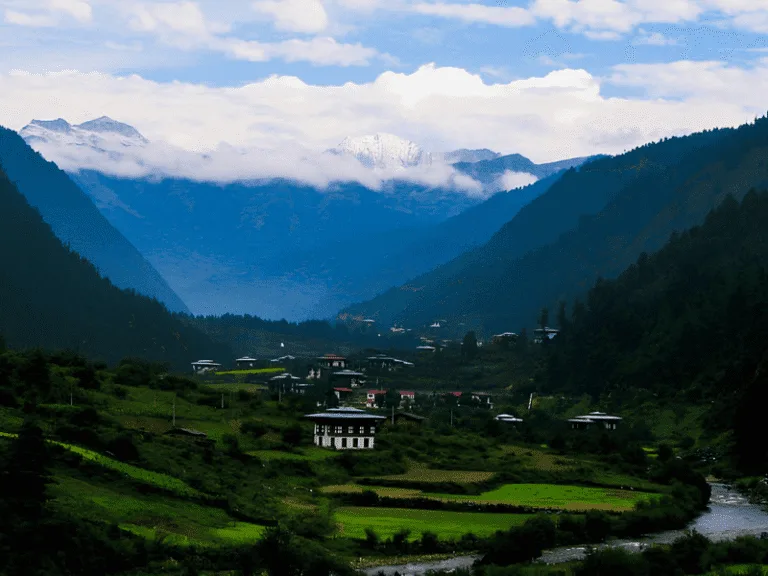
Bhutan’s most authentic hidden frontier — closed to international tourists until 2002, and still among the least-visited districts in the kingdom. Famous for the twin 7th-century temples of Lhakhang Karpo (White Temple) and Lhakhang Nagpo (Black Temple), the dramatic Chele La Pass (3,988 m — the highest motorable road in Bhutan), the three guardian mountains of Meri Puensum, and the September Haa Summer Festival celebrating nomadic herder culture. Named by BBC Travel as one of the world’s Top 25 Best Places to Visit in 2025.

  • Chele La Pass (3,988 m) — highest motorable road in Bhutan; Himalayan panorama
  • Lhakhang Karpo & Nagpo — twin 7th-century temples; unique two-pigeon legend
  • Haa Summer Festival (Sep 19–21, 2026) — nomadic herder culture celebration
  • Haa Panorama Hiking Trail — 11 km through 3 gompas; valley vistas
  • White Blue Poppy (Meconopsis Superba) — found only in Haa; blooms May–June

🗓 Best: Sep, Apr–May

⏱ 1–2 Days

🎟 Restricted Permit
🗺 Western Bhutan Circuit Tip

The classic western Bhutan circuit —Paro → Thimphu → Punakha → Haa— can be done in 6–8 days and covers the greatest concentration of iconic landmarks in Bhutan. Adding Phobjikha (1 extra day via the Dochula Pass–Wangdue Phodrang road) creates the ideal 7–9 day introduction to the kingdom. This circuit works for first-timers and experienced Asia travelers alike.

Region 02 · Spiritual Heartland

Central Bhutan

Central Bhutan is the kingdom’s spiritual and cultural core — less visited than the western circuit but infinitely rewarding for those who make the journey. The four valleys of Bumthang, the crossroads fortress of Trongsa, the wildlife haven of Phobjikha, and the historic gateway of Wangdue Phodrang are all found here, connected by dramatic mountain roads that cross passes above 3,000 metres.

Bumthang Valley
Central Bhutan · Bumthang District
2,600 m · 4 Valleys

Bumthang Valley — Bhutan's Spiritual Heartland

🙏 Spiritual Heartland

Oldest Temples in Bhutan
🍺 Red Panda Brewery

Bumthang is where Bhutan’s soul resides. A constellation of four interlinked highland valleys — Choekhor, Chumey, Tang, and Ura — Bumthang is home to more sacred sites than any other district in Bhutan. Here you will find Jambay Lhakhang (founded 659 CE — one of the oldest Buddhist temples in Bhutan), Kurjey Lhakhang (where Guru Rinpoche left his body imprint in the 8th century), Tamshing Lhakhang with its 500-year-old murals painted by Pema Lingpa himself, and the mystical Mebartsho (Burning Lake) where the great saint discovered sacred treasures. Bumthang is also famous for its buckwheat cuisine, the Red Panda Brewery and Swiss Cheese Factory, hand-woven yathra textiles, and the most extraordinary festival calendar in Bhutan — including the Jambay Lhakhang Drup (October) with its night-time fire ceremony, one of the most spectacular events in all of Asia.

  • Kurjey Lhakhang — body imprint of Guru Rinpoche; holiest site in Bumthang
  • Jambay Lhakhang — founded 659 CE; one of Bhutan’s oldest temples
  • Mebartsho (Burning Lake) — Tang Valley; where Pema Lingpa found sacred treasures
  • Jambay Lhakhang Drup (Oct 26–29, 2026) — fire ceremony; most dramatic festival in Bhutan
  • Red Panda Brewery — brewery tour + tasting; Swiss cheese factory
    Ogyen Choling Palace Museum — remote Tang Valley; living aristocratic history
  • Ura Village (3,100 m) — ancient stone village; intimate Ura Yakchoe Festival

🗓 Best: Sep–Nov, Mar–May

⏱ 3–5 Days Minimum

✈ Domestic Flight
Phobjikha Valley
Central–Western Bhutan · Wangdue District
3,000 m · Glacial Valley

Phobjikha Valley

🦢 Black-Necked Cranes

Historic Crossroads

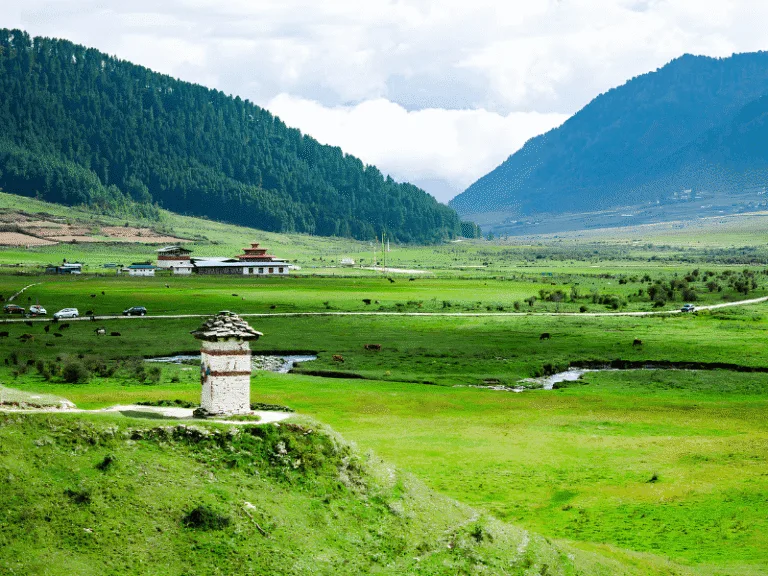
A broad glacial bowl ringed by forested ridges — Phobjikha is Bhutan’s most extraordinary wildlife destination and one of its most peaceful places. Each October, over 500 endangered black-necked cranes (fewer than 11,000 globally) migrate from Tibet to spend winter in the valley’s marshlands. Gangtey Monastery (founded 1613) presides above on a forested ridge, and the legendary Black-Necked Crane Festival (November 11) celebrates their arrival with dancing monks and children in crane costumes. The Gangtey Nature Trail is one of Bhutan’s finest walks.

  • Black-Necked Crane Festival (Nov 11, 2026) — most unique festival in Bhutan
  • Gangtey Monastery — 17th-century Nyingma monastery above the valley
  • Gangtey Nature Trail — 5–6 km walk through forest, meadow, and village
  • Crane watching at the Information Centre (Oct–Feb)

🗓 Best: Oct–Feb (cranes)

⏱ 1–2 Days

🦢 Conservation Zone
Trongsa
Central Bhutan · Trongsa District
2,216 m · Historic Crossroads

Trongsa

🏯 Largest Dzong

Historic Crossroads

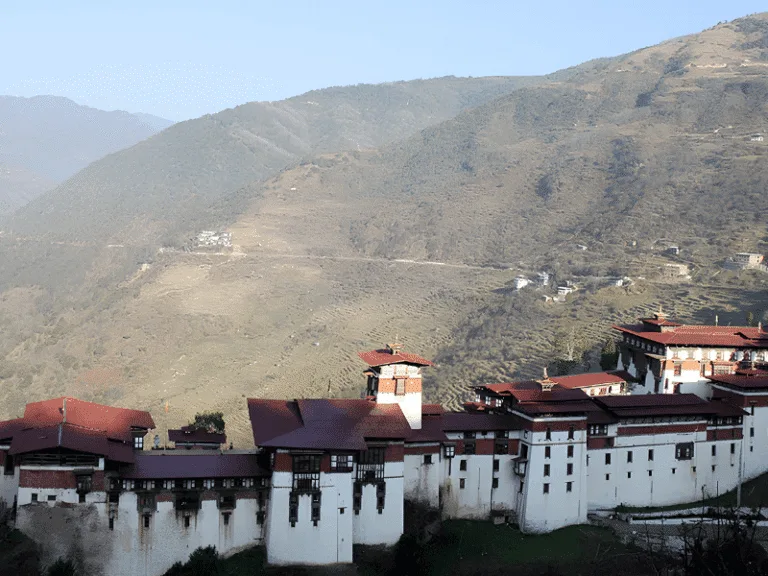
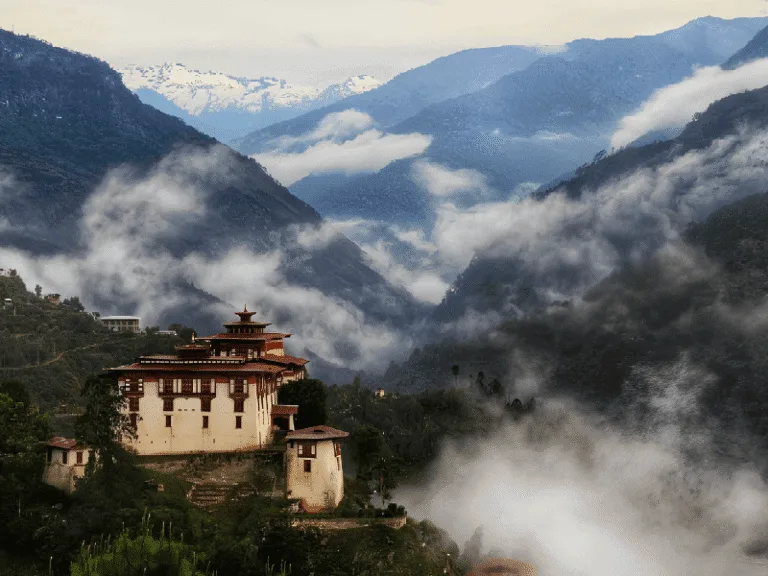
Trongsa sits at the geographic and historic centre of Bhutan — the crossroads through which all east-west travel must pass. Trongsa Dzong is the largest and most imposing dzong in Bhutan — a multi-storey fortress-monastery cascading down a ridge above the Mangde Chhu river gorge, its 25+ temples connected by steep internal staircases. The ancestral home of the Bhutanese royal family, Trongsa is where every Crown Prince traditionally begins their governance role. The nearby Ta Dzong watchtower houses a superb royal heritage museum. The Chendebji Chorten (on the road from Wangdue Phodrang) is a beautiful stop en route.

  • Trongsa Dzong — largest dzong in Bhutan; breathtaking river gorge setting
  • Ta Dzong Museum — royal heritage collection in a hilltop watchtower
  • Chendebji Chorten — Nepalese-influenced stupa on the east-west highway
  • Trans Bhutan Trail passes through — epic trekking corridor

🗓 Best: Year-Round

⏱ 1–2 Days

🗺 Gateway to East
Wangdue Phodrang
Central–Western Bhutan
1,350 m · Gateway Hub

Wangdue Phodrang

🌿 Large District

Gateway Hub

Often experienced as a transit stop between the western circuit and Phobjikha or Bumthang, Wangdue Phodrang deserves more than a passing glance. The recently reconstructed Wangdue Phodrang Dzong (originally built 1638, gutted by fire 2012, reopened 2022) now stands dramatically above the confluence of the Dang Chhu and Punatsang Chhu rivers. The district is Bhutan’s second-largest and encompasses Phobjikha Valley, is bordered by three national parks, and is home to rare wildlife including red panda, snow leopard, and blue sheep. The Wangdi Tshechu (September) is a fine regional festival.

  • Wangdue Phodrang Dzong — reconstructed 2022; dramatic river confluence setting
  • Adjacent to Phobjikha Valley — the gateway to the crane valley
  • Jigme Singye Wangchuck National Park — surrounding wilderness
  • Wangdi Tshechu (Sep 19–21, 2026) — regional festival

🗓 Best: Year-Round

⏱ Half day–1 Day

🌿 2nd Largest District
Region 03 · Remote & Wild

Northern Bhutan

Northern Bhutan is the kingdom’s wild frontier — a vast swath of high-altitude Himalayan terrain stretching from Gasa’s natural hot springs to the permanent snowfields of Gangkhar Puensum (7,570 m — the world’s highest unclimbed mountain) and the legendary routes of the Snowman Trek. This is not a destination for casual visitors but for serious trekkers and those who seek Bhutan at its most primeval.

Gasa & Natural Hot Springs
Northern Bhutan · Gasa District
2,770 m · Remote

Gasa & Natural Hot Springs

♨️ Hot Springs

Remote Trek

Gasa is the gateway to Bhutan’s wild northern frontier — a remote district where the Gasa Dzong (one of the smallest and most dramatically positioned fortresses in Bhutan) commands a ridge above a deep river gorge, and where natural hot springs (Gasa Tshachu) bubble from the earth at various temperatures, visited by both Bhutanese pilgrims and trekkers. Gasa is reached by road (3.5 hours from Punakha) or as part of the Laya–Gasa Trek — and serves as the jumping-off point for journeys into the high Himalayan wilderness of Laya village (3,700 m) and eventually the epic Snowman Trek.

  • Gasa Natural Hot Springs (Tshachu) — multiple temperature pools; therapeutic
  • Gasa Dzong — dramatically positioned fortress above a river gorge
  • Gateway to Laya village (3,700 m) and Royal Highlander Festival
  • Starting point for Laya–Gasa Trek and Snowman Trek

🗓 Best: Sep–Nov, Mar–May

⏱ 3–5 Days Minimum

✈ Domestic Flight
Snowman Trek
Northern Bhutan · Lunana
4,000–5,400 m+ · Most Remote

Lunana & the Snowman Trek

🏔 Snowman Trek

Most Remote

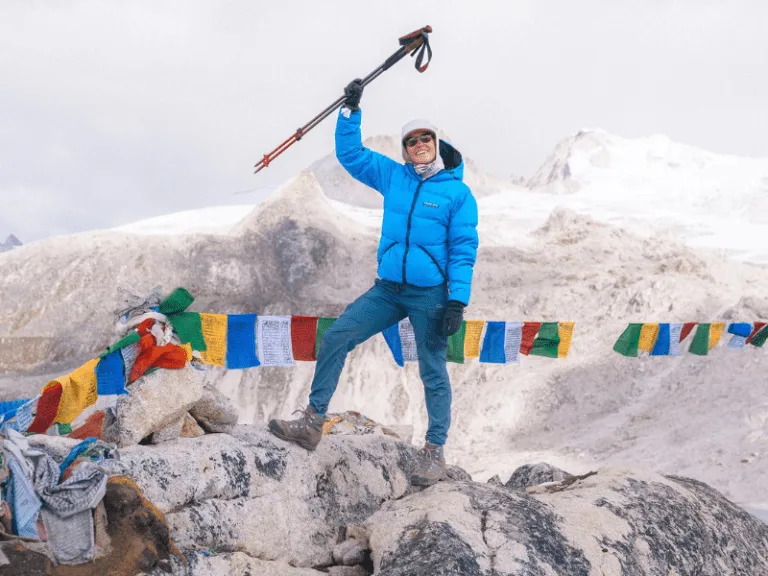
Lunana is one of the most remote inhabited regions on earth — a cluster of high-altitude villages beyond the snowfields of the Himalayan main range, accessible only via the legendary Snowman Trek (25+ days, crossing passes above 5,000 m) or short domestic flight to Bumthang followed by extensive trekking. The villages of Lunana — Laya, Thanza, Chozo — are home to yak-herding communities living in ways unchanged for centuries. Only 50–100 travellers reach Lunana each year. The Snowman Trek is widely regarded as one of the most challenging and spectacular walks on earth.

  • Snowman Trek — 25+ days; most challenging trek in Bhutan (passes 5,000 m+)
  • Laya Village (3,700 m) — yak-herding community; Royal Highlander Festival
  • Gangkhar Puensum (7,570 m) — world’s highest unclimbed mountain
  • Fewer than 100 visitors per year — extreme solitude and wilderness

🗓 Best: Sep–Oct (trek season)

⏱ 25+ Days Trek

🏔 Expert Only

Region 04 · The Last Frontier

Eastern Bhutan

Eastern Bhutan is the kingdom’s most authentic and least-visited region — a landscape of subtropical forests, hilltop dzongs, traditional weaving villages, and a culture that has preserved its deepest character through centuries of geographic isolation. The journey east is long (2–3 days from Paro by road, or a short domestic flight to Bumthang or Trashigang), but the rewards — genuinely uncrowded festivals, living craft traditions, pristine wildlife sanctuaries, and some of the warmest community hospitality in Bhutan — are extraordinary.

Mongar
Eastern Bhutan · Mongar District
1,620 m · Gateway to East

Mongar

🌄 Eastern Gateway

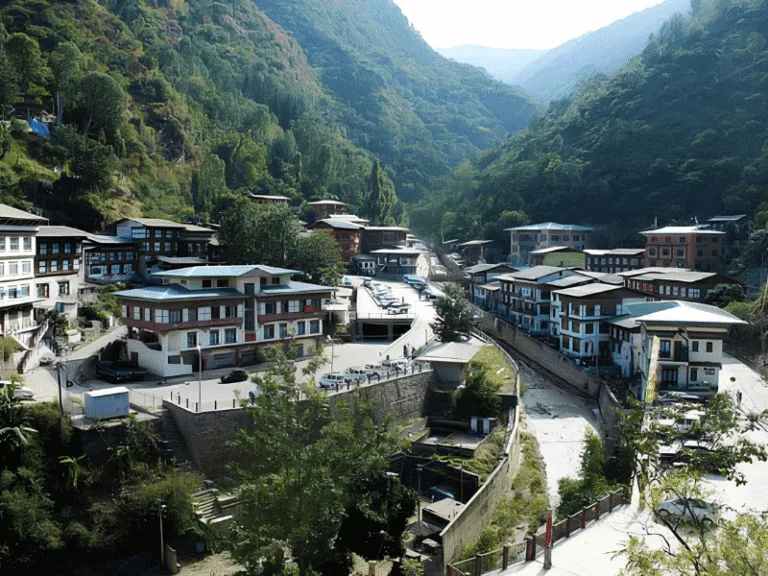
Mongar is the natural gateway and overnight stop for travellers journeying east — a pleasant hillside township set amid forested ridges, with a compact dzong, excellent valley views, and warm local hospitality. The Mongar Tshechu (November 17–19, 2026) is an intimate festival little-known to international visitors but deeply authentic in atmosphere. The journey to Mongar passes through spectacular mountain scenery, crossing the Thrumshingla Pass (3,800 m) — the boundary between central and eastern Bhutan.

  • Mongar Dzong — compact fortress with fine valley views
  • Mongar Tshechu (Nov 17–19) — intimate, uncrowded festival
  • Gateway from Bumthang via Thrumshingla Pass (3,800 m)

🗓 Best: Autumn

⏱ 1–2 Days
Trashigang
Far Eastern Bhutan · Trashigang District
1,070 m · Cultural Hub of East

Trashigang

Cultural Heart of East

300-Year Fortress

Trashigang is the cultural and administrative capital of eastern Bhutan — a town perched dramatically above the Gamri river gorge, dominated by the formidable Trashigang Dzong (built 1659), which has been the political stronghold of eastern Bhutan for over 300 years. The surrounding area encompasses Radhi Village (famous for its wild silk textiles), Sakteng Wildlife Sanctuary (home to the yeti-like migoi and the rare Sakteng butterfly), and a string of deeply traditional festivals including the Trashigang Tshechu (November) and the unique Kholong Tshechu — the “fighting festival,” oldest in eastern Bhutan.

  • Trashigang Dzong — 300-year fortress above the Gamri river gorge
  • Radhi Village — traditional raw silk weaving; extraordinary textiles
  • Sakteng Wildlife Sanctuary — home to rare wildlife and endangered butterflies
  • Trashigang Tshechu (Nov 18–20, 2026) — authentic eastern festival

🗓 Best: Autumn

⏱ 2–3 Days
Trashi Yangtse & Chorten Kora
Far Eastern Bhutan · Trashi Yangtse
1,750 m · Easternmost Corner

Trashi Yangtse & Chorten Kora

Chorten Kora Pilgrimage

Bhutan’s easternmost corner — a new district (bifurcated from Trashigang in 1992) of extraordinary cultural depth. Chorten Kora is a large white stupa modelled on the Boudhanath in Nepal, around which pilgrims from both Bhutan and Arunachal Pradesh (India) circumambulate for two days each spring in one of the most culturally unique events in the kingdom — the only festival where Bhutanese and Indian tribal communities gather together in a shared sacred act. The Gomkora Lhakhang (where Guru Rinpoche meditated in a rock) is another remarkable sacred site.

  • Chorten Kora — large stupa; cross-border pilgrimage event with India’s Arunachal Pradesh
  • Gomkora Lhakhang — sacred cave temple where Guru Rinpoche meditated
  • Trashi Yangtse traditional crafts — wooden bowls and bamboo products

🗓 Best: Spring (Chorten Kora)

⏱ 1–2 Days
Northern–Eastern Bhutan · Lhuentse District
1,280 m · Ancestral Royal Homeland

Lhuentse

Royal Ancestral Home
Remote Castle Dzong

Lhuentse is the ancestral homeland of the Bhutanese royal family — a remote northern district where Lhuentse Dzong rises like a castle from a sheer rock face above the Kuri Chhu river. The dzong’s dramatic position — accessible only by a long approach along the narrow river valley — is one of the most striking sights in Bhutan. The district is renowned for some of the finest hand-woven kira textiles in Bhutan, and the journey there — through deep gorges and pine forests — is itself a remarkable experience.

  • Lhuentse Dzong — castle fortress on a sheer rock face; royal ancestral home
  • Finest hand-woven kira textiles in Bhutan — purchased directly from weavers
  • Journey through the Kuri Chhu gorge — one of Bhutan’s most dramatic drives

🗓 Best: Autumn

⏱ 1–2 Days
✈ Getting to Eastern Bhutan

Eastern Bhutan is 2–3 days by road from Paro — a spectacular journey along the east-west highway crossing multiple mountain passes. Alternatively, take a domestic flight from Paro or Bumthang to

Trashigang (Yonphula Airport)

, reducing travel time significantly. Kingdom of Happiness Tours designs complete eastern Bhutan circuits combining Trongsa, Bumthang, Mongar, Trashigang, and Trashi Yangtse — 12–14 day itineraries that provide the deepest immersion in Bhutanese culture available anywhere in the kingdom.

Adventure Destinations

Bhutan Trekking Destinations

Bhutan’s trekking routes are among the finest in the Himalayas — passing through pristine alpine wilderness, ancient monastery trails, and high-altitude landscapes that remain genuinely untouched. All treks require a licensed operator and guide.

🏔

Druk Path Trek

5 Days · Moderate · Max 4,200m · Paro to Thimphu

The most popular multi-day trek in Bhutan — a beautiful high-altitude route through pine forest, alpine meadows, and sacred lakes connecting Paro to Thimphu. Passes through pristine wilderness with spectacular views of the Himalayan range. An ideal first Bhutan trek for moderately fit walkers.

🏔

Jomolhari Trek

8–9 Days · Moderate–Hard · Max 4,800m · Paro-based

Bhutan’s most famous trek — an 8–9 day journey to the base of Mt. Jomolhari (7,326 m) from Paro, passing through stunning alpine scenery, remote yak-herding camps, and ancient monastery ruins. The dramatic ice wall of Jomolhari at dawn from base camp is one of the great mountain sights in the Himalayas.

🏔

Dagala Thousand Lakes Trek

5–6 Days · Moderate · Max 4,500m · Thimphu-based

A lesser-known gem — a 5–6 day trek from Thimphu to the extraordinary Dagala plateau, scattered with over a thousand high-altitude lakes. Remote, rarely crowded, and extraordinarily beautiful. Excellent birdwatching throughout.

🏔

Haa–Paro Sagala Trek

2–3 Days · Moderate · Max 4,500m+ · Haa to Paro

One of western Bhutan’s most rewarding short treks — crossing the Sagala Pass between Haa and Paro valleys through spectacular high-altitude terrain. A perfect add-on to a Haa Valley visit, with the pass views ranking among the finest in western Bhutan.

🏔

Bumthang Owl Trek

3–4 Days · Moderate · Bumthang

A wonderfully atmospheric circular trek through Bumthang’s high meadows, pine forests, and traditional herding villages. Excellent for experiencing the spiritual heartland from above — ridge-top views over all four Bumthang valleys.

🏔

Snowman Trek

25+ Days · Expert Only · Max 5,400m+ · Paro to Bumthang

The world’s most challenging trek — 25+ days crossing the remote Lunana region of northern Bhutan via passes above 5,000 metres. Only 50–100 people complete it each year. One of the last genuinely wild trekking experiences on earth. Not for the inexperienced under any circumstances.

Sample Routes

Suggested Destination Circuits

Bhutan’s trekking routes are among the finest in the Himalayas — passing through pristine alpine wilderness, ancient monastery trails, and high-altitude landscapes that remain genuinely untouched. All treks require a licensed operator and guide.

5

Days — Classic Western Bhutan

The perfect first-time Bhutan trip — iconic highlights, manageable pace, memorable moments.

ParoThimphuPunakhaParo

7

Days — Western Circuit

The most popular itinerary — adds Phobjikha and Haa Valley for a complete western experience.

ParoThimphuPunakhaPhobjikhaHaaParo

10

Days — Western + Central

The ideal introduction to Bhutan's full character — iconic west + spiritual heartland of Bumthang.

ParoThimphuPunakhaTrongsaBumthangPhobjikhaParo 

14

Days — Full Country Circuit

Experience the full diversity of Bhutan — from western icons to the living traditions of the east.

ParoThimphuPunakhaBumthangMongarTrashigangPhobjikhaParo

12

Days — Festival Circuit (Autumn)

Combine multiple festivals in one trip — the ultimate cultural journey through Bhutan.

Punakha (Feb)Paro Tshechu (Mar)Bumthang (Oct)Phobjikha (Nov 11)

8

Days — Druk Path Trek + Culture

Combine Bhutan's most popular trek with the essential cultural highlights of Paro and Thimphu.

Paro Druk Path Trek (5 days) ThimphuPunakhaParo

FAQ: Choosing Your Bhutan Destinations

Real answers about Bhutan tour packages, visa, SDF, trekking, costs, and booking — written by Bhutanese locals who know this kingdom inside out.

For a first-time visitor to Bhutan, the western circuit of Paro, Thimphu, and Punakha provides the most powerful introduction to the kingdom — covering Tiger’s Nest, Punakha Dzong, the capital city, and some of the finest cultural and natural scenery in Asia. A minimum of 5–7 days is recommended for this circuit. Adding Phobjikha (crane valley) in October–November or Haa Valley (summer–autumn) deepens the experience significantly without requiring much extra time.

This is genuinely difficult to answer — Bhutan is extraordinarily beautiful throughout. However, the destinations most consistently named by visitors as the most visually spectacular are: Punakha Dzong (the fortress at the river confluence, especially during jacaranda bloom in March); Tiger’s Nest (the cliff-face monastery above Paro Valley); Phobjikha Valley (the glacial bowl with hundreds of cranes in winter); and the Trongsa Dzong above the Mangde Chhu gorge. For landscape beauty, Bumthang in autumn (golden fields, ancient temples) is the choice of many experienced Bhutan travelers.

A well-paced 7-day Bhutan trip can comfortably cover 4–5 destinations in the western and central regions: Paro (2 nights), Thimphu (2 nights), Punakha (1–2 nights), and Phobjikha or Haa (1 night). It is important not to over-pack an itinerary — Bhutan’s mountain roads mean travel between destinations takes longer than the map distances suggest, and the real value of visiting Bhutan is in the depth of experience at each place rather than the number of places ticked off.

Absolutely — Eastern Bhutan is arguably the most authentic and rewarding part of the kingdom for travellers seeking genuine cultural immersion rather than the “greatest hits” of western Bhutan. The festivals (Trashigang Tshechu, Mongar Tshechu, Chorten Kora) are less crowded and more intimate; the craft traditions (wild silk in Radhi, kira weaving in Lhuentse) are extraordinary; and the sense of traveling somewhere genuinely remote and unchanged is powerful. The commitment required — 2–3 extra travel days and ideally 12–14 days total — is proportionate to the reward.

Phobjikha Valley (October–February) is the best single wildlife destination for most visitors — offering reliable sightings of 500+ endangered black-necked cranes. The surrounding Jigme Singye Wangchuck National Park and the northern district of Gasa offer encounters with Himalayan black bear, red panda, and snow leopard for trekkers. Sakteng Wildlife Sanctuary in far eastern Bhutan is home to some of the rarest species in Asia. Bhutan’s extraordinary 72% forest cover means wildlife encounters are possible almost anywhere in the country.


Covering the full width of Bhutan — from Paro in the west to Trashi Yangtse in the east — requires a minimum of 14–18 days and is best done as a dedicated east-west circuit. Domestic flights (Paro–Bumthang, Paro–Trashigang) can reduce travel time significantly. A realistic “see everything important” trip would include: Paro + Haa, Thimphu, Punakha, Phobjikha, Trongsa, Bumthang, Mongar, Trashigang, and Trashi Yangtse. Kingdom of Happiness Tours designs custom full-country circuits of this kind regularly.

 
Kingdom of Happiness Tours · Licensed by Tourism Council of Bhutan

Let Us Build Your Perfect Bhutan Destination Journey

Every Kingdom of Happiness Tours itinerary is crafted around exactly the destinations, experiences, and pace that match you — not a template. Tell us what calls to you, and we will design the perfect journey through the kingdom.