Why Bhutan Festivals Are Like Nothing Else on Earth
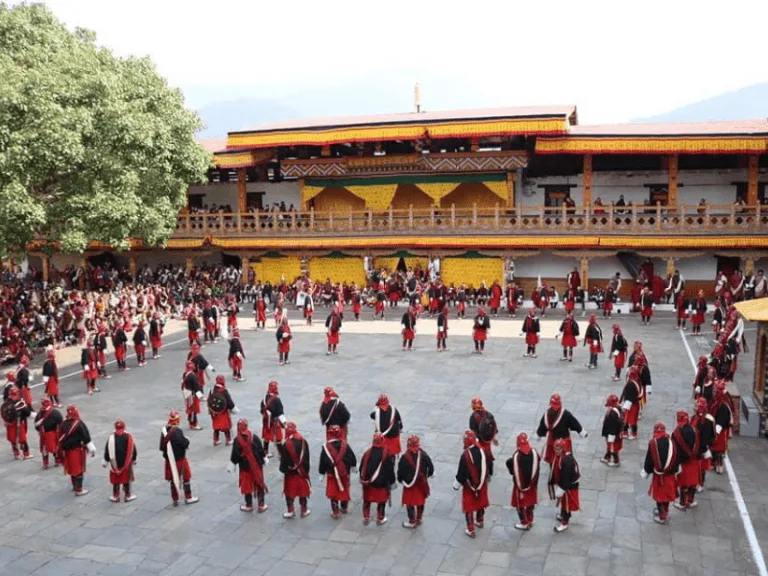
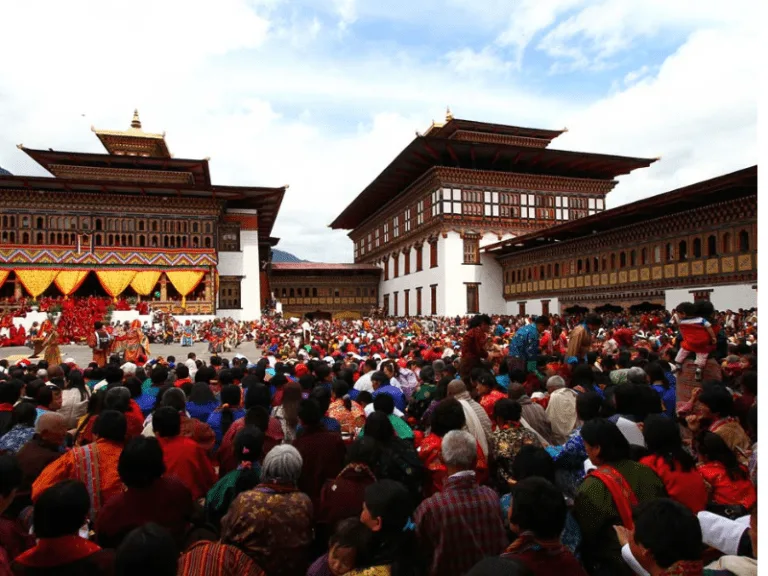
In most countries, a cultural festival is an event you attend — something you observe from a distance, behind a barrier, with a ticket and a schedule. In Bhutan, a festival is something altogether different. When you arrive at a dzong courtyard during Tshechu, you are not an audience member. You are a participant in a sacred act that has been performed continuously for more than three centuries — a living Buddhist ritual where the boundary between performance and prayer, between theatre and theology, has never existed.
Bhutan’s festivals — known as Tshechus, along with several other types of unique sacred celebrations — are the most vibrant, authentic, and spiritually charged cultural events in Asia. They are not curated for tourism. They are not theatrical recreations of past traditions. They are exactly what they have always been: religious ceremonies performed by monks and lay practitioners to honour Guru Rinpoche, accumulate merit, bless the gathered community, and transmit Buddhist teachings through the visual and physical language of sacred dance.
When the Thongdrel was unfurled in the pre-dawn darkness of Paro and the drums began, I understood for the first time why Bhutanese people travel for days to be here. This is not a festival in the sense we understand it. This is a living prayer — and being here is itself an act of devotion.
— Kingdom of Happiness Tours Guest, Paro Tshechu 2025
At Kingdom of Happiness Tours, we have guided travellers through Bhutan’s festivals for many years. In this guide — the most comprehensive you will find anywhere — we cover every major festival with exact 2026 dates, full explanations of what to expect, and practical planning advice. Use it to choose your festival, plan your trip, and arrive prepared to receive everything these extraordinary events have to offer.
Foundation Knowledge
What Is a Tshechu? The Complete Explanation
The word Tshechu literally means “tenth day” in Dzongkha. Festivals are held on the tenth day of a month in the Bhutanese lunar calendar — a day considered auspicious because it corresponds to the birthday of Guru Rinpoche (Guru Padmasambhava), the great Indian tantric master who is credited with bringing Buddhism to Bhutan in the 8th century CE.
Tshechus are held across every district in Bhutan — from the grand festivals of Paro and Thimphu that draw thousands of visitors, to intimate village celebrations in Ura or Talo that might be attended by only a few hundred local families. Despite varying enormously in scale, every Tshechu shares the same essential structure and purpose: to honour Guru Rinpoche through sacred masked dances, prayers, and offerings — and to provide spiritual blessings for all who attend.
📅
Origin of the Word
Tshe-chu
"Tenth Day" — festivals are held on the 10th day of a lunar month, corresponding to Guru Rinpoche's birthday. The lunar calendar shifts each year, so Gregorian dates change annually.
🙏
Spiritual Purpose
Merit & Blessing
Attending a Tshechu and witnessing the sacred dances is believed to confer profound spiritual merit — cleansing past negative karma and accumulating good fortune for future lives.
🎭
Who Performs
Monks & Gomchen
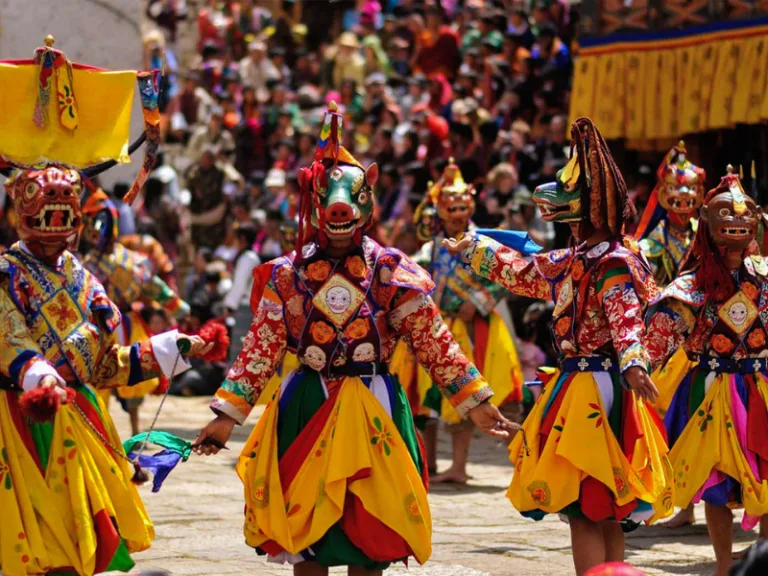
Cham dances are performed by trained monks and lay practitioners (gomchen). Performances can take years to learn. When a dancer puts on a mask, they are believed to become the deity depicted.
🏯
Where They Are Held
Dzongs & Monasteries
Tshechus are primarily held in dzong (fortress-monastery) courtyards or monastery grounds. The setting — ancient stone walls, golden roofs, mountain backdrop — is integral to the experience.
🌙
Why Dates Change
Lunar Calendar
Festival dates follow the Bhutanese lunisolar calendar, which shifts each year relative to the Gregorian calendar. A 13th intercalary month is occasionally added, causing significant date shifts. Always confirm dates before booking.
👘
A Community Celebration
For Everyone
Tshechus are family occasions. Bhutanese people wear their finest traditional dress (Gho for men, Kira for women), pack picnic lunches in bamboo baskets, and spend all day at the festival with their communities.
🎟 Festival Entry Fee
Most Bhutan festivals charge a modest entry fee of approximately
USD 12 per person per day
for visitors. This is separate from the standard SDF. Some smaller local festivals are free to attend. Your Kingdom of Happiness Tours package will include all festival entry fees in the quoted price.
The Heart of Every Festival
Cham Dance — The Sacred Masked Ritual of Bhutan
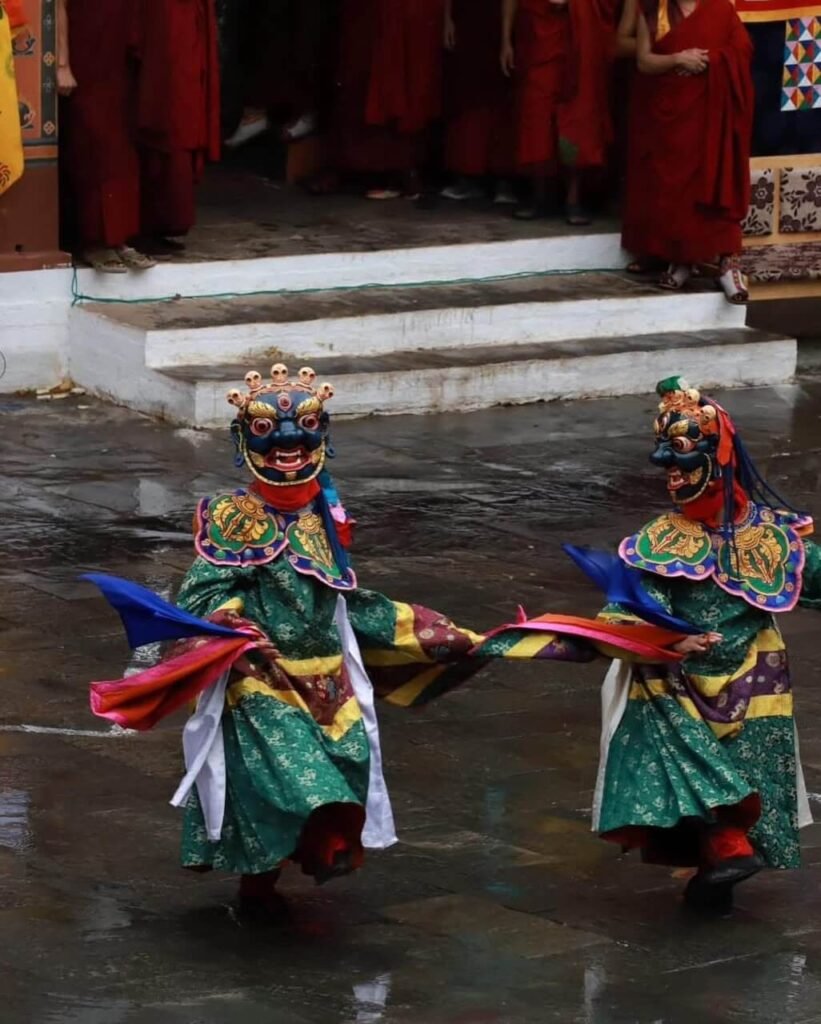
The Cham dance (also written as “Chham”) is the defining performance of every Bhutanese Tshechu — and it is far more than a dance. Cham is a form of sacred Buddhist ritual theatre developed by Guru Rinpoche himself as a method of transmitting complex Dharma teachings to all people, including those who could not read. Every gesture, every mask, every colour of every costume carries specific symbolic meaning — making the Cham simultaneously a religious ceremony, a visual teaching, a purification ritual, and a protective blessing.
🎭
The Masks
Cham masks are masterworks of traditional Bhutanese craftsmanship — hand-carved from wood or moulded from papier-mâché and lacquer, painted in vivid colours, and adorned with elaborate decorations. Each mask represents a specific deity, demon, or symbolic figure. When a dancer wears a mask, they are believed to embody the spirit of that being — transforming the performance space into a sacred realm.
🌀
The Movements
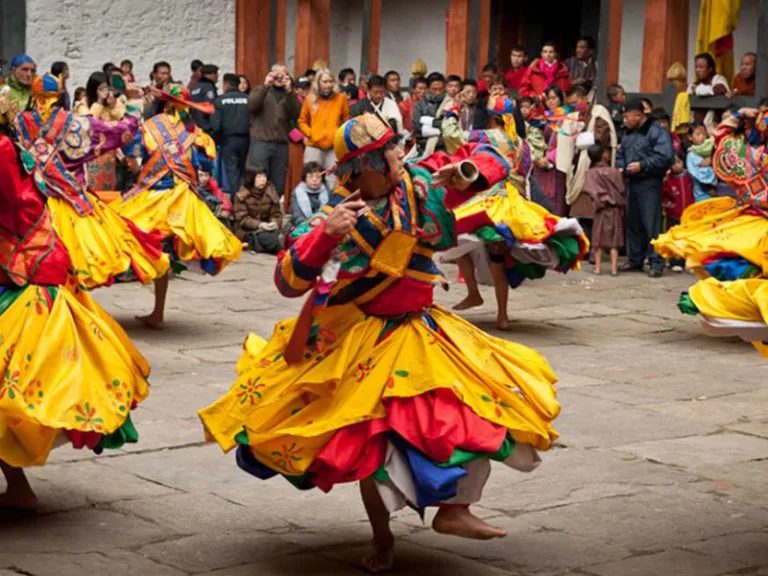
Cham movements are not choreographed for aesthetic appeal — they are precise ritual gestures that follow strictly prescribed patterns passed from teacher to student across generations. Circular movements around the dance ground represent the clearing and purification of negative energies. Stomping movements drive away demons. Every turn, step, and hand gesture (mudra) carries theological meaning.
🎨
The Costumes
Cham costumes are among the most elaborate in any performing tradition on earth — layers of embroidered silk brocade in vivid colours, gilded breastplates, wooden capes, and headdresses that can weigh several kilograms. Each element of the costume is prescribed by tradition and carries symbolic significance. The costumes of major festivals are considered sacred objects in themselves.
🥁
The Music
Cham is performed to the music of traditional Bhutanese instruments — the deep resonance of the dramyen (lute), the punctuating crash of cymbals (rolmo), the drone of the dungchen (long horn), and the heartbeat of the nga (drum). The music creates a hypnotic, otherworldly atmosphere that deepens as the dances intensify toward their climax.
😂
The Atsara (Clowns)
One of the most beloved elements of every Tshechu is the Atsara — sacred clowns in red masks and long noses who weave through the serious dances, making jokes, teasing the audience, and sometimes acting out slapstick scenes. Far from being irreverent, the Atsara serve a deep spiritual function: they represent the teaching that enlightenment can be found in laughter, and that wisdom and foolishness are not always easy to distinguish.
✨
The Spiritual Effect
Witnessing Cham is not a passive experience. Buddhist teaching holds that observing the sacred dances — even without intellectual understanding of their symbolism — produces actual spiritual merit and purification for the viewer. This is why Bhutanese people travel great distances to attend festivals; not for entertainment but for the transformative spiritual benefit they believe their attendance provides.
The Holiest Moment
The Thongdrel — Liberation Through Seeing
If the Cham dance is the body of every great Tshechu, the Thongdrel is its soul. The word means literally “liberation through seeing” — and the Thongdrel is exactly that: a massive sacred appliqué tapestry, multi-storey in scale, depicting Guru Rinpoche or other principal Buddhist figures in exquisite silk brocade embroidery, that is unfurled in the courtyard of a dzong or monastery before sunrise on the final day of the festival.
The Thongdrel is prepared by monks in a night-long ceremony, carefully unrolled and suspended from the walls of the fortress. The unfurling happens in complete darkness, before the first rays of dawn — because once sunlight touches the precious silk, the tapestry must be rolled away again to protect it. The window of viewing can be as brief as one to two hours. Buddhist teaching holds that merely seeing the Thongdrel — even in passing, even without understanding — is sufficient to liberate the viewer from accumulated negative karma and grant profound spiritual blessings. This is why thousands of devotees gather in darkness from as early as 3:00 or 4:00 AM to ensure they do not miss it.
For visitors, the dawn Thongdrel ceremony is typically the single most moving and memorable experience of an entire Bhutan trip. Standing in the pre-dawn cold, surrounded by Bhutanese families who have been waiting since midnight, watching the great tapestry slowly unfurl in torchlight while drums and horns thunder from the walls above — this is an experience that transcends cultural barriers and touches something universal in the human spirit.
⏰ Arrive by 4:00 AM for the Thongdrel — Without Fail
The Thongdrel is unfurled before sunrise — usually between 4:30 and 6:00 AM depending on the festival. It is rolled away the moment sunlight touches it. Kingdom of Happiness Tours guides will wake you and bring you to the dzong in the dark to ensure you do not miss this sacred moment. It is the highlight of the entire festival — and it is only shown once per year, only on this morning. Do not sleep through it.
The Definitive Reference
Master Bhutan Festival Calendar 2026 — All Dates
Below is the most complete, verified list of Bhutan festivals for 2026. Dates follow the Bhutanese lunar calendar and are tentative — always confirm with Kingdom of Happiness Tours before finalising travel plans, as lunar calendar dates can shift by several days each year.
🔑 Calendar Key
Major
— large-scale festivals recommended for all visitors |
Regional
— district festivals, excellent cultural experience |
Special
— unique events outside the Tshechu tradition |
Unique
— rare, remote, or one-of-a-kind celebrations
| Dates (2026) | Festival Name | Venue / District | Type |
|---|---|---|---|
| Feb 22–24 | Lhamoi Dromchhen & Punakha Dromchoe ⭐ Top Pick | Punakha Dzong | Major |
| Feb 26–28 | Punakha Tshechu ⭐ Top Pick | Punakha Dzong | Major |
| Feb 27 | Tharpaling Thongdrol | Tharpaling Lhakhang, Bumthang | Regional |
| Mar 4–6 | Tangsibi Mani Tshechu | Tangsibi Lhakhang, Bumthang | Regional |
| Mar 26–28 | Talo Tshechu | Talo Monastery, Punakha | Regional |
| Mar 29 – Apr 2 | Paro Tshechu ⭐ Most Famous | Rinpung Dzong, Paro | Major |
| Apr 22–24 | Bhutan Rhododendron Festival | Lamperi Garden, Thimphu | Special |
| Apr 28 – May 2 | Ura Yakchoe Festival | Ura Monastery, Bumthang | Unique |
| Jun 22–24 | Nimalung Tshechu & Kurjey Tshechu | Bumthang District | Regional |
| Sep 6 | Tour of the Dragon (Bicycle Race) | Bumthang to Thimphu | Special |
| Sep 17 | Thimphu Drubchen | Tashichho Dzong, Thimphu | Regional |
| Sep 19–21 | Haa Summer Festival | Haa Valley | Unique |
| Sep 19–21 | Wangdi Phodrang Tshechu | Wangdue Phodrang Dzong | Regional |
| Sep 21–23 | Thimphu Tshechu ⭐ Top Pick | Tashichho Dzong, Thimphu | Major |
| Sep 21–23 | Tamshing Phala Choepa (Tamshing Tshechu) | Tamshing Lhakhang, Bumthang | Regional |
| Sep 24–26 | Gangtey Tshechu | Gangtey Monastery, Phobjikha | Regional |
| Sep 26–27 | Thangbi Mani Tshechu | Thangbi Lhakhang, Bumthang | Regional |
| Oct 2–4 | Thimphu Tshechu (extended) | Tashichho Dzong, Thimphu | Major |
| Oct 18–21 | Jakar Tshechu | Jakar Dzong, Bumthang | Regional |
| Oct 19–21 | Chhukha Tshechu | Chhukha Dzong | Regional |
| Oct 26–29 | Jambay Lhakhang Drup ⭐ Spectacular | Jambay Lhakhang, Bumthang | Major |
| Nov 11 | Black-Necked Crane Festival ⭐ Unique | Gangtey Monastery, Phobjikha | Unique |
| Nov 24 | Jambay Lhakhang Singye Cham | Jambay Lhakhang, Bumthang | Regional |
| Nov 17–19 | Mongar Tshechu | Mongar Dzong, Eastern Bhutan | Regional |
| Nov 18–20 | Trashigang Tshechu | Trashigang Dzong, Eastern Bhutan | Regional |
| Dec 13 | Druk Wangyel Tshechu | Dochula Pass, Thimphu | Special |
Deep Guides
The 7 Greatest Bhutan Festivals — Complete Profiles
Paro Tshechu
📅 Mar 29 – Apr 2, 2026
📍 Rinpung Dzong, Paro
⏱ 5 Days
The Paro Tshechu is Bhutan’s most internationally celebrated festival — and for very good reason. Held over five magnificent days in the courtyard of Rinpung Dzong (one of the most beautiful fortresses in the Himalayas) in March or April each year, Paro Tshechu is the event that most visitors picture when they imagine a Bhutan festival. The timing — coinciding with spring, when cherry blossoms and wildflowers carpet the Paro Valley — adds a layer of natural beauty to an already extraordinary cultural experience.
The five days feature a different sequence of Cham dances each day, performed by monks from Rinpung Dzong in elaborate masks and costumes representing deities, demons, and historical figures from Guru Rinpoche’s life. The performances unfold in the vast dzong courtyard, with the ancient stone fortress walls rising on all sides and mountain peaks visible above. Bhutanese families arrive in their finest Gho and Kira, picnic baskets in hand, from every corner of the Paro Valley.
The climax of Paro Tshechu is the pre-dawn unfurling of the Guru Thongdrel — a massive silk appliqué tapestry depicting Guru Rinpoche in his eight manifestations — hung from the facade of Rinpung Dzong before sunrise on the final morning (April 2, 2026). Thousands gather in darkness for this sacred moment. Arrive by 4:00 AM.
Crown Moment
Pre-dawn Guru Thongdrel unfurling — arrive by 4 AM on the final morning
Top Dance
Guru Tshengye Cham — the Eight Manifestations of Guru Rinpoche
Setting
Rinpung Dzong courtyard — one of the most beautiful festival venues in Asia
Combine With
Tiger’s Nest hike (same trip) + Paro Valley sightseeing
Punakha Dromchoe & Tshechu
📅 Dromchoe: Feb 22–24, 2026
📅 Tshechu: Feb 26–28, 2026
📍 Punakha Dzong
The Punakha Dromchoe and Punakha Tshechu are two festivals that follow each other in rapid succession at Punakha Dzong — the most magnificent fortress-monastery in Bhutan, rising dramatically at the confluence of the Pho Chhu and Mo Chhu rivers. Together they form one of the most extraordinary festival experiences in Asia.
The Dromchoe (February 22–24) is unique in Bhutan — a ceremonial re-enactment of the legendary 1644 Bhutanese victory over Tibetan and Mongolian invaders. Warriors in full traditional battle costume — helmets, chain mail, lances, and shields — stage a dramatic mock battle in the dzong courtyard, with ritual dances honouring the protective deities Palden Lhamo and Mahakala. The atmosphere is electric and unlike any other festival in the kingdom.
The Punakha Tshechu (February 26–28) follows immediately after, with sacred Cham dances in the same extraordinary setting. The festival culminates in the unfurling of one of the most intricate Thongdroels in Bhutan — depicting Guru Rinpoche in the seated lotus position, a tapestry of extraordinary beauty and religious power. February in Punakha is warm and mild — a further advantage over the cold of other spring festival destinations.
Unique Highlight
Dromchoe battle reenactment — warriors in full 17th-century battle costume
Best Season
February — jacaranda trees about to bloom; warm, mild Punakha weather
Combine With
Paro Tshechu (March) for the ultimate Bhutan festival circuit
Thongdrel
One of the most intricate in Bhutan — Guru Rinpoche in lotus position
Thimphu Tshechu
📅 Sep 21–23 (+ Oct 2–4), 2026
📍 Tashichho Dzong, Thimphu
⏱ 3–4 Days
The Thimphu Tshechu is the largest and most widely attended festival in Bhutan — held in the courtyard of Tashichho Dzong, the seat of Bhutan’s government and the most impressive dzong in the capital. It draws the greatest number of domestic pilgrims of any festival in the country, with Bhutanese families travelling from across the kingdom to Thimphu for this annual celebration.
The festival spans three to four days in late September, featuring the full sequence of sacred Cham dances: the Guru Tshengye (Eight Manifestations of Guru Rinpoche), the Shawa Shachi (Dance of the Deer), the Drametse Nga Cham (Dance of the Drums from Drametse), and more. The Drametse Nga Cham — a UNESCO Intangible Cultural Heritage — is a particular highlight: performed by red-masked drummers in a circular formation, the rhythmic intensity builds to a crescendo that resonates through the entire dzong.
The Thongdrel unfurling at Thimphu Tshechu is one of the grandest in the kingdom — a multi-storey tapestry hung from the dzong’s central tower, visible from a great distance and drawing thousands of Thimphu residents into the night hours before dawn.
Unique Performance
Drametse Nga Cham — UNESCO Intangible Heritage dance of the thundering drums
Scale
Largest attendance of any Bhutan festival — the full national gathering
Setting
Tashichho Dzong — seat of government; golden roofs, mountain backdrop
Autumn Magic
Golden October light, clear mountain views, crisp festival air
Jambay Lhakhang Drup
📅 Oct 26–29, 2026
📍 Jambay Lhakhang, Bumthang
⏱ 4 Days
Of all the festivals in Bhutan, the Jambay Lhakhang Drup is perhaps the most extraordinary — a four-day celebration at one of Bhutan’s oldest and most sacred temples (founded in 659 CE) featuring rituals found nowhere else in the kingdom. This is the festival that experienced Bhutan travellers name when asked for the greatest cultural event they have attended.
The Jambay Lhakhang Drup features two uniquely remarkable ceremonies. The first is the Mewang (Fire Blessing Ceremony) — devotees leap over fire in a ritual act of purification, burning away accumulated negative karma in the light of the flames. Watching hundreds of Bhutanese people leaping through fire in the firelit darkness around the ancient white temple is one of the most visually dramatic sights in Asia.
The second is the Ter Cham (Naked Dance) — performed by masked monks at midnight as a sacred fertility ritual — accompanied by the extraordinary spectacle of the Guru Tshengye Thongdrel: a 50-foot silk tapestry depicting Guru Rinpoche’s eight manifestations, unfurled at dawn on the final morning.
Unmissable Ritual
Mewang Fire Ceremony — devotees leap through fire for purification under night skies
Midnight Ritual
Ter Cham (Naked Dance) — performed at midnight as a sacred fertility blessing
Thongdrel
50-foot Guru Tshengye tapestry — the eight manifestations of Guru Rinpoche
Setting
Jambay Lhakhang — 1,400-year-old temple, firelit courtyard at midnight
Black-Necked Crane Festival
📅 November 11, 2026
📍 Gangtey Monastery, Phobjikha
⏱ 1 Day
The Black-Necked Crane Festival — held annually on November 11 in the courtyard of Gangtey Monastery above the Phobjikha Valley — is unlike any other festival in Bhutan or the world. It is not primarily a religious Tshechu but a community celebration of the arrival of the endangered black-necked cranes (fewer than 11,000 globally) that migrate from Tibet to winter in the valley below.
The festival features sacred Cham mask dances by monks alongside an extraordinary performance unique to this event: schoolchildren dressed in full black-and-white crane costumes performing graceful dances that mimic the movements of the cranes themselves — a children’s performance of such innocent beauty that it moves most visitors to tears. Environmental awareness presentations, folk songs celebrating the valley’s ecology, and communal celebration complete the day.
The unique magic of this festival is the combination: in the monastery courtyard above, the dances and celebrations. In the valley far below, hundreds of real black-necked cranes feeding in the morning marshes. The cranes are said to circle the monastery three times upon arrival each autumn — a sacred ritual of reverence that gives the festival its profound spiritual dimension.
Most Unique Element
Children in crane costumes performing graceful dances mimicking the birds themselves
Wildlife Bonus
500+ real black-necked cranes feeding in the valley below the monastery
Organised By
RSPN (Royal Society for Protection of Nature) + Gangtey Monastery monks
Best Combine
Punakha + Phobjikha 3-day circuit — warmth and cranes in a single trip
Haa Summer Festival
📅 Sep 19–21, 2026
📍 Haa Valley
⏱ 3 Days
The Haa Summer Festival is Bhutan’s most distinctive celebration of nomadic herder culture — a festival unlike anything in the Tshechu tradition, focused on the living folk culture of the Haa Valley’s unique Haap community. Yak Cham mask dances appear alongside traditional sports (archery, Khuru dart-throwing, Soksum javelin), demonstrations of Haap cuisine (Hoentey buckwheat dumplings, Yaksha Kam dried yak meat), and local ara spirit brewing.
What makes the Haa Summer Festival irreplaceable is its authenticity and intimacy — this is not a performance for tourists but a genuine community celebration, and visitors are welcomed as guests of the valley. Yak herders descend from their summer pastures for the festival, women demonstrate weaving and cheese-making, and the entire community gathers for three days of song, dance, sport, and celebration in one of Bhutan’s most beautiful and least-visited valleys.
Must Experience
Hoentey (buckwheat dumpling) tasting and Ara brewing demonstration
Unique Activity
Traditional sports participation — archery, Khuru, and Soksum open to visitors
Combine With
Chele La Pass (3,988m) + twin temples of Haa + village homestay
Why Unique
Only festival in Bhutan celebrating nomadic herder culture — no equivalent exists
Druk Wangyel Tshechu
📅 December 13, 2026
📍 Dochula Pass (3,150m)
⏱ 1 Day
The Druk Wangyel Tshechu is unlike every other festival in Bhutan — and deliberately so. Rather than being performed by monks to honour Guru Rinpoche in the traditional Tshechu manner, this festival was conceived by scholar Dasho Karma Ura and performed by Bhutanese soldiers to commemorate the 2003 flushing out of ULFA and Bodo militant camps from southern Bhutan by the Royal Bhutan Army — a pivotal moment in Bhutanese national history. It is held on 13 December each year at the Dochula Pass — the breathtaking 3,150-metre mountain pass between Thimphu and Punakha, decorated with 108 chortens — a setting of extraordinary drama and beauty.
The festival is attended by members of the Royal Family and political leaders. The dances celebrate national unity, the heroism of Bhutan’s soldiers, and the stability of the kingdom under the Wangchuck dynasty. The setting — prayer flags, 108 chortens, and panoramic Himalayan views on a clear winter day — makes this one of the most photographically extraordinary events in Bhutan’s calendar.
Setting
Dochula Pass — 108 chortens + Himalayan panorama on a December morning
Unique Aspect
Performed by soldiers, not monks — the only such festival in Bhutan
Attendees
Royal Family often present — a truly national occasion
Winter Advantage
Low season pricing, few tourists, clear Himalayan views in December air
Plan by Month
Month-by-Month Festival Guide 2026
February
Late Winter · Punakha in Bloom
March–April
Peak Spring · Best Season Overall
June
Early Monsoon · Lush Bumthang
September
Peak Autumn · Best Weather of the Year
October–November
Golden Autumn · Most Festivals
December
Winter · Clear Skies, Few Tourists
For the Adventurous
Hidden Gem Festivals — Beyond the Crowd
While the major festivals are extraordinary, some of Bhutan’s most rewarding festival experiences are found at smaller, more intimate celebrations that most visitors never discover. These festivals offer something the grand Tshechus cannot: the chance to be a genuine guest of a local community, not a spectator at a large event.
| Festival | Location | Why It's Special | Best For |
|---|---|---|---|
| Talo Tshechu (Mar 26–28, 2026) | Talo Monastery, Punakha Valley | Tiny, intimate festival in a hilltop monastery village — only villagers and a handful of tourists. Authenticity at its finest. | Those wanting genuine, uncrowded cultural immersion |
| Ura Yakchoe Festival (Apr 28 – May 2, 2026) | Ura Village, Bumthang | Ancient stone village at 3,100m; entire community gathers for a festival largely unknown to international tourists | Off-beaten-path adventurers; Bumthang district visitors |
| Gasa Tshechu | Gasa Dzong (gateway to Lunana) | Remote, rarely visited festival near natural hot springs; feels like Bhutan as it was 100 years ago | Adventure trekkers combining Gasa with Jigme Dorji NP |
| Chorten Kora | Trashi Yangtse, Eastern Bhutan | Pilgrims circumambulate a white stupa for days; the crowd includes tribal communities from Arunachal Pradesh (India) | Eastern Bhutan explorers; pilgrimage enthusiasts |
| Royal Highlander Festival | Laya, near Lunana | Two-day festival of nomadic herders at 3,900m; yak racing, highlander dances, wool weaving; attendance under 200 people/year | Serious trekkers; those who have done the Snowman Trek |
| Jambay Lhakhang Singye Cham (Nov 24, 2026) | Jambay Lhakhang, Bumthang | The sacred Lion Dance — a one-day festival rarely attended by tourists, rich in local mythology and intimate atmosphere | Bumthang enthusiasts returning for a deeper experience |
Planning Ahead
Hidden Gem Festivals — Beyond the Crowd
Planning your Bhutan trip in 2027? Below are preliminary festival dates. All 2027 dates are subject to confirmation by the Tourism Council of Bhutan. Kingdom of Happiness Tours will have confirmed dates available 6–9 months in advance.
⚠️ Important Note on 2027 Dates
All dates listed below are preliminary estimates based on the Bhutanese lunar calendar. They may shift by several days when officially confirmed. Always contact Kingdom of Happiness Tours to verify final dates before booking travel. The 2027 SDF rate is also expected to be reviewed — potentially reverting to $200/night from September 2027.
| Approx. Dates (2027) | Festival | Location |
|---|---|---|
| Feb 14–18 | Punakha Drupchen | Punakha Dzong |
| Feb 16–18 | Punakha Tshechu | Punakha Dzong |
| Feb 20 | Chorten Kora (1st) | Trashi Yangtse |
| Mar 8 | Chorten Kora (2nd) | Trashi Yangtse |
| Mar 16–18 | Gasa Tshechu | Gasa Dzong |
| Mar 16–18 | Talo Tshechu | Talo Monastery, Punakha |
| Mar 16–18 | Gomphu Kora | Trashiyangtse |
| Mar 18–22 | Paro Tshechu | Rinpung Dzong, Paro |
| Apr 16–18 | Domkhar Tshechu | Bumthang |
| Apr 18–22 | Ura Yakchoe Festival | Ura, Bumthang |
| Sep–Oct | Thimphu Tshechu | Tashichho Dzong, Thimphu |
| Oct–Nov | Jakar Tshechu | Jakar Dzong, Bumthang |
| Oct–Nov | Jambay Lhakhang Drup | Bumthang |
| Nov 11 | Black-Necked Crane Festival | Phobjikha Valley |
| Dec 13 | Druk Wangyel Tshechu | Dochula Pass |
How to Plan Your Trip
How to Plan a Festival Trip to Bhutan
01
Choose Your Festival
First-timers: Paro Tshechu (spring) or Thimphu Tshechu (autumn) — the grandest and most accessible. For intimacy: Talo or Ura Yakchoe. For fire ceremonies: Jambay Lhakhang Drup. For wildlife + culture: Crane Festival in Phobjikha.
02
Book 4–6 Months Early
Festival periods are Bhutan's busiest. Hotels in Paro during Paro Tshechu and in Thimphu during Thimphu Tshechu fill 6+ months in advance. Paro Tshechu 2027 bookings are already being taken. Do not leave this late.
03
Combine Two Festivals
Smart itineraries combine adjacent festivals: Punakha Dromchoe + Paro Tshechu (Feb–Mar); Thimphu Tshechu + Gangtey Tshechu + Jambay Drup (Sep–Oct). Kingdom of Happiness Tours designs multi-festival circuits.
04
Allow Enough Days
For a single major festival: minimum 7 nights (includes travel, sightseeing, and 3–4 festival days). For two festivals: 10–12 nights recommended. Never book a tight schedule — Bhutan's mountain roads and weather can cause delays.
05
Confirm Final Dates
All festival dates follow the Bhutanese lunar calendar and can shift by 1–5 days each year. Always confirm the final date with Kingdom of Happiness Tours within 3 months of your planned travel — never book flights based on preliminary dates alone.
06
Budget Festival Extras
Festival entry: ~$12/person/day. Guide tip during festival: $10–15/day (they work extremely hard). Accommodation premium during festivals: 20–40% above regular rates. Budget accordingly — it is worth every dollar.
💡 Which Festival Is Right for You?
First time in Bhutan:
Paro Tshechu (March–April) — the most famous, most spectacular, most accessible.
Want something dramatic:
Punakha Dromchoe + Jambay Lhakhang Drup.
Love wildlife:
Black-Necked Crane Festival.
Seek authenticity:
Haa Summer Festival or Ura Yakchoe.
Budget-conscious:
Winter festivals (Druk Wangyel in December) offer lower accommodation prices.
Best overall circuit:
Punakha (Feb) + Talo (Mar) + Paro (Mar–Apr) — three festivals, one unforgettable journey.
Be a Respectful Guest
Festival Etiquette — What To Do & What Never To Do
| Category | Do ✅ | Never Do ❌ |
|---|---|---|
| Dress | Dress modestly — covered shoulders and knees for both men and women. Traditional Bhutanese dress (Gho/Kira) is welcomed if you wish to wear it. Wear warm layers — early morning Thongdrel viewing is cold. | Never wear shorts, sleeveless tops, or revealing clothing at festivals. Never wear shoes into temple interiors. |
| Photography | Photography of the Cham dances and general festival atmosphere is permitted. Ask your guide whether photography is allowed in specific areas. Best light: morning. | Never photograph inside temple rooms or when explicitly asked not to by officials. Never use flash near performers or sacred objects. Never block the view of Bhutanese families to photograph. |
| Behaviour | Arrive early (especially for the Thongdrel — 4 AM). Stand or sit quietly during the dances. Move respectfully through the crowd. Accept offerings from monks if given (hold with both hands). | Never enter the dance performance area. Never turn your back on the main altar or shrine. Never sit with feet pointing toward the altar. Never speak loudly during dances or prayer. |
| Religion | Approach the festival as a sacred religious event, not an entertainment show. Follow your guide's instructions at all times. Walk clockwise around chortens and prayer wheels. | Never treat the Cham dancers as photo props — approach with genuine respect. Never touch dancers or their costumes without clear invitation. |
| Practical | Carry sufficient cash (festival vendors accept BTN/INR). Bring water and snacks for long days. Wear comfortable shoes — you may stand for hours. Keep your belongings close in festival crowds. | Never leave litter in festival grounds. Never consume alcohol conspicuously at religious festivals. Never attempt to enter restricted areas marked by officials. |
We are not a travel portal in Singapore. We are a Bhutanese-owned, Bhutan-based licensed Bhutan tour operator — founded in 2018 by locals who were born in the valleys they now guide you through. That difference defines every Bhutan trip we create.
Common Questions
Frequently Asked Questions About Bhutan Festivals
For most first-time visitors, Paro Tshechu (March–April) is the best choice — it is the most famous, most spectacular, and most accessible festival in Bhutan. The setting (Rinpung Dzong), the five days of Cham dances, and the pre-dawn Thongdrel unfurling combine to create an experience that exceeds all expectations. The spring timing coincides with perfect weather and the beginning of the rhododendron season. Thimphu Tshechu (September–October) is an excellent alternative — larger scale, autumn setting, easily combined with other autumn Bhutan attractions.
Bhutan festival dates follow the Bhutanese lunisolar calendar — based on Tibetan Buddhist astrology — which does not align directly with the Gregorian (Western) calendar. Because the lunar months begin and end with the new moon and a 13th intercalary month is added every two or three years to keep the calendar aligned with the seasons, festival dates shift each year relative to the Gregorian calendar. This is why you cannot simply assume that “Paro Tshechu is always in April” — in some years it falls in late March, in others in early April. Always confirm dates with Kingdom of Happiness Tours within 3 months of travel.
A Thongdrel (literally “liberation through seeing”) is a massive multi-storey silk appliqué religious tapestry depicting Guru Rinpoche or other principal Buddhist figures. It is unfurled at dawn on the final day of major Tshechus. Buddhist teaching holds that merely seeing the Thongdrel — even without intellectual understanding — is sufficient to liberate the viewer from accumulated negative karma and grant profound spiritual blessings. Thongdroels are displayed for only one to two hours per year, before sunrise, and then carefully rolled away to protect the precious silk. This is why thousands of Bhutanese gather in darkness from 3–4 AM to ensure they witness it.
Modest clothing covering shoulders and knees is required at all festivals — both for men and women. Avoid shorts, sleeveless tops, and revealing clothing. Since festivals begin very early in the morning (especially the Thongdrel viewing at 4–5 AM), warm layers are essential even in spring and autumn. Many visitors choose to wear traditional Bhutanese dress (Gho for men, Kira for women) as a mark of respect — it is deeply appreciated by local communities and your guide can arrange rental or purchase in Thimphu or Paro. Comfortable walking shoes are important; you may stand for several hours in festival grounds.
Yes — most Bhutan festivals charge an entry fee of approximately USD 12 per person per day for non-Bhutanese visitors. This is separate from the SDF and visa fee. For most Kingdom of Happiness Tours packages, all festival entry fees are included in the quoted package price. Some smaller local festivals (such as Talo Tshechu or village-level celebrations) may be free to attend or charge a smaller nominal amount.
Most Tshechus are observational — you watch the sacred Cham dances rather than participating. However, the Haa Summer Festival actively encourages visitors to try traditional sports (archery, Khuru, Soksum javelin), taste local foods, and participate in community activities. At all festivals, you can light butter lamps, receive blessings from monks, spin prayer wheels, and engage with the community in the same way local families do. The line between “spectator” and “participant” at a Bhutan festival is deliberately porous — you are welcomed as a beneficiary of the spiritual merit the festival generates.
The Punakha Dromchoe (Feb 22–24, 2026) is a historically based festival commemorating Bhutan’s 1644 victory over Tibetan and Mongolian invaders — featuring a dramatic re-enactment with warriors in traditional battle dress and sacred dances honouring protective deities. It is not a standard Tshechu. The Punakha Tshechu (Feb 26–28, 2026) follows immediately after and is a traditional Tshechu — with Cham dances honouring Guru Rinpoche and culminating in a Thongdrel unfurling. Both are held at Punakha Dzong and are typically visited together in a single trip.
YOUR JOURNEY BEGINS HERE
Plan Your Bhutan Festival Journey with Kingdom of Happiness Tours
Let Bhutan’s most trusted licensed tour operator craft your perfect festival itinerary — from the pre-dawn Thongdrel at Paro to the fire ceremony at Jambay Lhakhang and beyond. Every detail handled. Every moment sacred.