Thimphu Tshechu Festival Tour Bhutan's Largest Annual Celebration
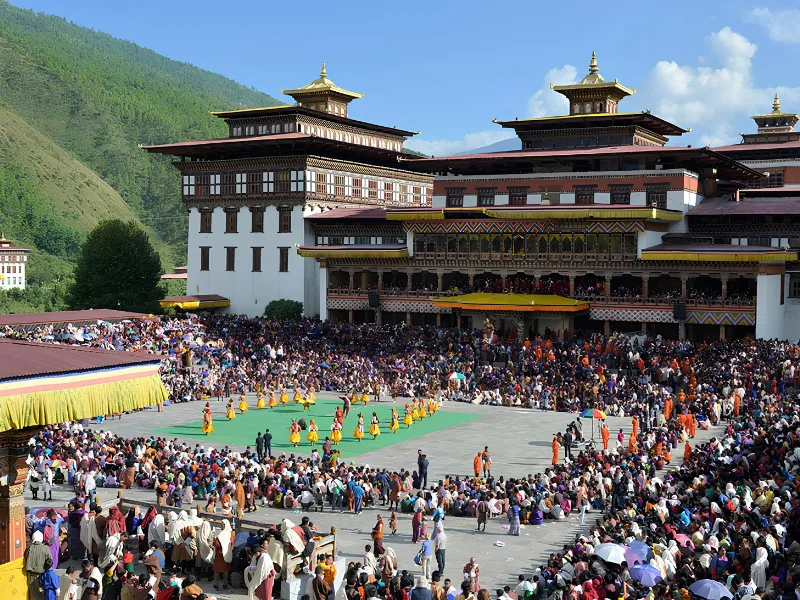
The Thimphu Tshechu was founded in the 17th century by Gyalse Tenzin Rabgye, the fourth Druk Desi, as a small monastic tribute consisting mainly of prayers performed by a handful of monks. Today it draws thousands of Bhutanese from every corner of the country, alongside international visitors, to Tendrel Thang — the open festival ground in front of Tashichho Dzong — making it both the largest and most accessible of Bhutan’s great Tshechus, held in the capital itself rather than a remote dzong.
Witness Bhutan's Most Vibrant Festival in the Capital Itself
Of all the Tshechus held across Bhutan’s twenty districts, the Thimphu Tshechu is unmatched in scale and accessibility. Founded in the 17th century by Gyalse Tenzin Rabgye, the fourth Druk Desi (temporal ruler) of Bhutan, the festival began as a modest monastic tribute — a handful of monks performing a few dances inside Tashichho Dzong, with little involvement from the wider public beyond prayer. It commemorated the birth of Guru Rinpoche, the 8th-century master credited with bringing Vajrayana Buddhism to Bhutan and Tibet.
The festival changed dramatically in the 1950s, when the third King, Jigme Dorji Wangchuck, introduced additional Boed Cham dances, adding colour and scale without compromising the festival’s spiritual core. By the early 2000s, the festival had grown so large that the historic inner courtyard of Tashichho Dzong could no longer accommodate the crowds — in 2007, the Thimphu Tshechu moved to a purpose-built festival ground named Tendrel Thang, meaning “Auspicious Ground,” where it continues today.
The three-day festival, held on the 10th to 12th (sometimes extending to the 13th) day of the eighth month of the Bhutanese lunar calendar, now comprises twenty-four folk songs and twenty-five sacred Cham dances, performed by monks and lay dancers in elaborate silk brocade costume to the sound of trumpets, cymbals, and drums. For 2026, the festival is confirmed for 21 to 23 September.
“What began as a handful of monks praying inside a dzong courtyard has grown, over three and a half centuries, into the single largest gathering of Bhutanese people anywhere in the kingdom each year.”
For Bhutanese farmers and rural families, the Thimphu Tshechu is also a welcome break from agricultural life — a chance to travel to the capital, dress in their finest gho and kira, meet friends and relatives, and receive blessings believed to ward off misfortune for the year ahead. For international visitors, it remains one of the single most accessible and rewarding cultural experiences available anywhere in Bhutan, precisely because it takes place in the capital rather than a remote valley.
🎭 Book accommodation early
Thimphu fills up significantly during the Tshechu — as Bhutan’s biggest single festival, hotel availability and flights should be secured well ahead.
Tour at a Glance
Everything you need to know about this Thimphu Tshechu Festival Tour at a glance.
🗓️ Duration
8 Days / 7 Nights
📍Destinations
Paro – Thimphu – Punakha
🎭 Festival Focus
Thimphu Tshechu
🏨 Accommodation
3-Star Hotels & Resorts
🚙 Throughout
Private Vehicle & Guide
👥 Group Size
1 – 10 Guests
💰 Starting Price
From USD $2,050 Per Person
🛂 Documents Needed
Entry Permit + Special Area Permit
From a Handful of Monks to Bhutan's Largest Festival
The Thimphu Tshechu’s growth over more than three centuries reflects the evolution of Bhutan itself — from a collection of monastic fortresses to a modern capital. The dzong where it is held, Tashichho Dzong, has its own layered history of destruction and rebuilding: originally constructed in 1216, rebuilt by the first Dharma Raja, destroyed by fire on at least three separate occasions and seriously damaged by an earthquake in 1897, before being rebuilt in its present form in 1962–1968 by the third King as the seat of Bhutan’s government, following the capital’s move from Punakha to Thimphu.
1216
1670s
1950s
2007
The move to Tendrel Thang in 2007 was itself a sign of the festival’s success — the historic inner courtyard of Tashichho Dzong, where the Tshechu had been performed for centuries, had simply become too congested for the rites to be properly carried out, given the growing number of attendees each year.
The Sacred Dances — What You Will Actually See
The Thimphu Tshechu’s programme includes some of Bhutan’s most significant and visually striking Cham dances, each carrying specific religious meaning.
🎩 Shaa Nga Cham — Dance of the 21 Black Hats with Drums
Performed in honour of religion’s victory over its enemies, the black-hatted dancers beat great drums whose sound is said to represent Buddhism itself — a doctrine with no visible form that can only be expressed through sound and ritual.
⚔️ Kyecham
An accompanying dance performed by dancers carrying swords, wearing knee-length yellow skirts, bare feet, and animal masks — adding dynamic movement and visual contrast to the festival programme.
👑 Pholeg Moleg — Dance of the Noblemen and Ladies
This dance depicts events from the life of King Norzang, weaving courtly drama and storytelling into the festival’s broader religious programme.
According to tradition, these dances and their costumes have remained unchanged for centuries — each is considered an exact re-enactment of visions seen by Bhutan’s great Buddhist saints, and any deviation would be regarded as sacrilege. The dances are interspersed with folk songs and clowning, providing moments of levity between the more solemn ritual performances.
The Scale of Bhutan's Biggest Festival
The Thimphu Tshechu’s scale genuinely sets it apart from nearly every other festival in the country. As the capital’s own Tshechu, held in a purpose-built festival ground specifically constructed to accommodate growing crowds, it draws thousands of Bhutanese from every district of the kingdom alongside the largest concentration of international visitors at any single Bhutanese festival.
3 Days
24 + 25
Thousands
Alongside the religious performances, the festival ground also hosts a small trade fair, where local businesses conduct deals for the coming year — a reminder that the Tshechu has always combined spiritual devotion with genuine social and economic function in Bhutanese life.
Why the Thimphu Tshechu Is the Ideal First Bhutan Festival
For travellers choosing their first Bhutanese festival, several genuine advantages set Thimphu Tshechu apart.
Held in the Capital — No Long Drives Required
Unlike many of Bhutan's festivals, which require substantial travel to remote districts, Thimphu Tshechu is held in the country's most accessible city, just over an hour from Paro International Airport.
The Largest Cultural Gathering in the Country
With thousands of attendees from across Bhutan, the festival offers an unmatched cross-section of Bhutanese society — farmers, government officials, monks, and families all gathered in one place.
A Genuinely Comprehensive Dance Programme
At 24 folk songs and 25 sacred Cham dances across three days, the programme is among the most extensive of any Bhutanese Tshechu.
Easily Combined With Bhutan's Standard Highlights
Tiger's Nest, Punakha Dzong, and Thimphu's other major sites are all easily reached on the same trip without significant additional travel time.
September Brings Some of the Finest Weather of the Year
The festival falls just as the monsoon clears, typically offering clear skies and comfortable temperatures.
A Living Festival, Not a Performance for Tourists
Despite its size and international visibility, the Thimphu Tshechu remains, at its core, exactly what Gyalse Tenzin Rabgye founded in the 17th century — a genuine religious offering to Guru Rinpoche.
What Makes This Thimphu Tshechu Tour Different
Many operators treat Thimphu Tshechu as a routine add-on. We build this trip around the festival’s genuine scale and significance.
Genuinely Researched Festival History
The 17th-century founding, the 2007 move to Tendrel Thang, the specific named dances — all verified against multiple sources, because even Bhutan's most famous festival deserves accurate description.
A Complete Western Circuit
Paro, Thimphu, and Punakha are all properly covered, including the Tiger's Nest hike, not just the festival days.
Early Arrival for the Best Viewing
We plan your festival days around early arrival at Tendrel Thang, since the best viewing spots fill quickly as the festival grows in popularity each year.
A Guide Who Explains Every Dance
We assign guides who can properly explain the specific significance of dances like Shaa Nga Cham and Kyecham as they happen, not just describe the festival in general terms.
Accommodation Secured Early
Given how much demand the Thimphu Tshechu generates, we prioritise securing your accommodation as early as possible.
Full Support Before, During & After
Visa, SDF, all bookings — handled entirely. We remain available throughout your trip and after you return home.
8-Day Thimphu Tshechu Tour Itinerary — Day by Day
Every site, every festival day, every reason this route is sequenced this way — described in full.
DAY 1
Arrival Day · Paro → Thimphu
📍 Paro International Airport · Drive to Thimphu
Arrival at Paro and a scenic drive to Thimphu (around 1 hour, 60km), following the Paro Chhu and Wang Chhu river valleys.
DAY 2
Thimphu City Tour
📍National Memorial Chorten · Buddha Dordenma · Local Markets
A day exploring Thimphu’s major sites before the festival begins: the National Memorial Chorten, the Buddha Dordenma statue overlooking the city, and the capital’s markets and craft institutions.
DAY 3
The Festival · Day One
📍 Witness Thimphu Tshechu at Tendrel Thang — Day 1
An early arrival at Tendrel Thang, the festival ground in front of Tashichho Dzong, to secure a good viewing position. A full day witnessing the opening sacred Cham dances, performed by monks and lay dancers in elaborate silk brocade costume.
🎭 Thousands in Their Finest Traditional Dress
The atmosphere at Tendrel Thang on the opening day is genuinely extraordinary — thousands of Bhutanese in their finest gho and kira, having travelled from every district of the country, gathered for a festival that has continued, in one form or another, since the 17th century.
DAY 4
The Festival · Final Day
📍Witness Thimphu Tshechu — Final Day · Tashichho Dzong
Return to Tendrel Thang for the festival’s concluding day, including further Cham dances and the closing ceremonies. Afterward, visit Tashichho Dzong itself, the golden seat of Bhutan’s Royal Government, the dzong that has hosted this festival in one form or another since the 17th century.
DAY 5
Thimphu → Punakha
📍Dochula Pass · Punakha Dzong (1637)
Drive to Punakha via Dochula Pass, where 108 memorial chortens stand with Himalayan views on clear days. Visit Punakha Dzong, built in 1637 by Zhabdrung Ngawang Namgyal.
DAY 6
Punakha → Paro
📍Chimi Lhakhang · Drive to Paro
A gentle walk to Chimi Lhakhang, the 1499 fertility temple, before the drive back to Paro via Dochula Pass.
DAY 7
Tiger’s Nest
📍Hiking to Paro Taktsang
After breakfast, hike to the iconic Tiger’s Nest Monastery, Bhutan’s most famous landmark, perched dramatically on a cliff overlooking the Paro Valley. Enjoy stunning views, peaceful forest trails, and the spiritual atmosphere of this sacred pilgrimage site before returning to Paro.
DAY 8
Departure
📍Departure from Paro | Paro International Airport arrival
After breakfast, check out from your hotel and transfer to Paro International Airport for your departure flight. Bid farewell to the Kingdom of Bhutan as you depart with unforgettable memories of its breathtaking landscapes, rich cultural heritage, and warm hospitality.
Why Book With Us?
We provide a smooth and authentic Bhutan experience with expert guides and careful planning. You will enjoy the Thimphu Tshechu comfortably while connecting with Bhutanese culture in a meaningful way.
What’s Included
What's Included & Excluded
Complete transparency — exactly what your festival tour covers.
✓ Included in This Tour
- All meals — breakfast, lunch, dinner and evening tea throughout
- Accommodation throughout on twin/double sharing basis (single supplement available)
- All ground transportation, including airport transfers
- Licensed English-speaking guide for the entire trip
- Tiger’s Nest hike with guide
- Government Sustainable Development Fee (SDF)
- One-time non-refundable Bhutan visa processing fee
- All monument and dzong entry fees, including Tashichho Dzong (Nu. 500)
- Full support before, during and after your tour
✕ Not Included
- International flights to/from Paro International Airport
- Bottled drinks and alcoholic beverages
- Travel and medical insurance (strongly recommended)
- Personal expenses — laundry, phone calls, shopping
- Tips and gratuities for guide and driver (appreciated, entirely your choice)
- Unforeseen costs from flight cancellations or weather disruption
This Tour Is Made for You If —
🆕 You're a First-Time Bhutan Visitor
The capital location, comprehensive dance programme, and easy combination with standard sightseeing make this an ideal introduction to Bhutanese festival culture.
📷 You Want Maximum Cultural Spectacle
As Bhutan's largest festival, Thimphu Tshechu offers unmatched scale, colour, and photographic opportunity.
⏱️ You Have Limited Time
Because the festival is held in the capital, you can experience Bhutan's biggest cultural event without the extended travel required for more remote festivals.
👨👩👧 You're Travelling With Family
The accessible location and well-developed infrastructure make this one of the more comfortable festival options for families.
📅 Your Dates Suit Late September
If you're already planning an autumn Bhutan trip, this festival adds genuine cultural depth to that exact window, with excellent weather.
✅ You Want Accurate Festival History
If you'd rather understand the genuine origins and evolution of Bhutan's most famous festival than receive generic descriptions, this tour is built on exactly that principle.
Why Book Your Thimphu Tshechu Tour With Kingdom of Happiness Tours?
We provide a smooth and authentic Bhutan experience with expert guides and careful planning. You will enjoy the Thimphu Tshechu comfortably while connecting with Bhutanese culture in a genuinely informed way.
Accurate Festival History
We tell the genuine story of the Thimphu Tshechu's 17th-century origins and its growth, not a generic festival description.
Completely Private, Always
Every tour we run is private for your specific party — no merging with strangers.
A Guide Who Knows the Dance Programme
We assign guides who can properly explain specific dances as they happen, not generic commentary.
Genuinely Researched Content
Every date, dance name, and historical detail on this page is accurate and verifiable.
Early Accommodation Booking
Given the festival's popularity, we prioritise securing your accommodation as early as possible.
Full Support Before, During & After
Visa, SDF, all bookings — handled entirely, with support throughout your trip and after you return.
Book Your Thimphu Tshechu Festival Tour 2026
Complete the form below and our team will confirm current festival dates, availability, and send you full itinerary and pricing details within 24 hours.
As Bhutan’s largest festival, Thimphu Tshechu sees the highest demand for accommodation and flights of any Bhutanese festival period. We recommend enquiring at least 3 months ahead.
USD $2,050
📞 +975 16108730
💬 WhatsApp: +975 16108730
✉ hello@kingdomofhappinesstours.com
Tour Highlights
- Thimphu Tshechu — both major festival days
- Tashichho Dzong & Tendrel Thang
- Punakha Dzong & Chimi Lhakhang
- Tiger’s Nest hike included
- Dochula Pass scenic crossing
- All meals, transport, visa, SDF included
🎭 Festival Dates
Confirmed for 21–23 September 2026 at Tendrel Thang, Tashichho Dzong. We reconfirm exact dates closer to your travel period.
Frequently Asked Questions
Honest, complete answers about Bhutan’s biggest festival.
Yes — Thimphu Tshechu is genuinely one of the most popular festivals in Bhutan, drawing thousands of Bhutanese from every district of the country alongside the largest concentration of international visitors at any single Bhutanese festival. The festival was specifically moved to a larger purpose-built venue, Tendrel Thang, in 2007 precisely because the original dzong courtyard could no longer accommodate the crowds. We recommend arriving early each day to secure a good viewing position.
Yes, genuinely well-suited. Thimphu Tshechu is held in the capital, requiring minimal additional travel compared to many of Bhutan’s other festivals, and easily combines with the country’s standard highlights — Tiger’s Nest, Punakha Dzong, and Thimphu’s major sites. The festival’s scale and comprehensive 25-dance programme also give first-time visitors an excellent, thorough introduction to Bhutanese Cham dance tradition.
Modest, respectful clothing is expected — shoulders and knees should be covered, and comfortable layers are recommended since the festival is held outdoors and September weather, while generally pleasant, can vary. Many visitors choose to wear traditional Bhutanese dress (gho for men, kira for women) out of respect, though this is not required. Bringing a hat and sunscreen is also wise, as the open festival ground offers little shade and seating is typically on the ground.
Yes — we can extend the itinerary to include Bumthang or Phobjikha, adjust the number of days in Paro or Punakha, or rearrange the route to suit your interests. Please tell us your priorities when you enquire.
The festival was founded in the 17th century by Gyalse Tenzin Rabgye, the fourth Druk Desi of Bhutan, initially as a modest tribute of prayers and a small number of monastic dances honouring Guru Rinpoche. It grew significantly in the 1950s when the third King, Jigme Dorji Wangchuck, introduced additional Boed Cham dances. By 2007, the festival had grown so popular that it moved from the historic inner courtyard of Tashichho Dzong to a new, larger festival ground called Tendrel Thang, where it continues to be held today, now comprising 24 folk songs and 25 sacred Cham dances over three days.
Witness Bhutan's Biggest Festival, 2026
Seven days. Twenty-five sacred dances. Thousands of Bhutanese in their finest dress, gathered in the capital for a tradition that began with a handful of monks in the 17th century. This is Bhutan’s largest festival, accurately described and properly experienced.
“Gross National Happiness is more important than Gross National Product.” — His Majesty Jigme Singye Wangchuck, Fourth King of Bhutan