Chhukha Festival Tour 2026 One of Bhutan's Least-Crowded Tshechus
If the names Paro Tshechu and Thimphu Tshechu are already familiar to you, the Chhukha Tshechu almost certainly isn’t — and that is precisely its appeal. Held annually at Chhukha Dzong, a hilltop fortress in Bhutan’s southwestern hydropower district, this three-day Buddhist festival honours Guru Rinpoche with the same sacred Cham mask dances and the same dawn Thongdrel unveiling found at Bhutan’s famous festivals — but draws a fraction of the visitors, because almost no international tour operator builds it into a standard itinerary. This 8-day journey takes you through Paro, Thimphu, and Punakha before timing your arrival in Chhukha District for the 2026 festival on 19–21 October — a route most travel companies don’t offer, through a part of Bhutan most tourists never see.
Experience an Authentic Bhutan Festival, Genuinely Away From the Crowds
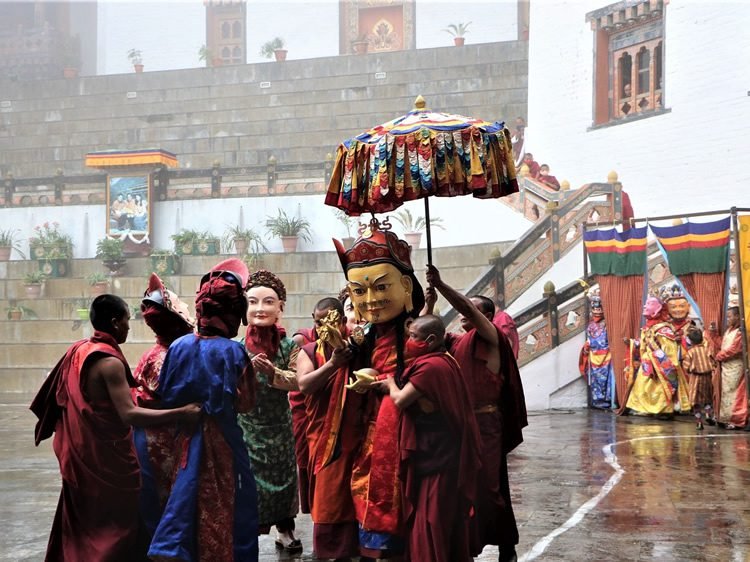
The Chhukha Tshechu is a real, government-listed festival on the Tourism Council of Bhutan‘s official calendar, confirmed for 19–21 October 2026 at Chhukha Dzong in Chhukha District. It is not a manufactured “hidden gem” invented for marketing — it is one of Bhutan’s genuine annual Tshechus, held as an offering to Guru Rinpoche exactly as the famous festivals are, with Cham mask dances performed by monks and lay dancers, and the unfurling of a sacred Thongdrel tapestry at dawn on the festival’s final day. What makes it distinctive is simply that almost no international visitor knows about it, and almost no standard Bhutan itinerary includes it.
Chhukha District itself is unlike the western valleys most visitors see. It is Bhutan’s industrial heartland, home to the country’s first hydropower project — the Chukha Hydel plant, completed in 1986–88 on the Wangchhu river — and the much larger Tala Hydropower Project nearby. The district sits at a notably lower altitude than Paro or Thimphu, with a milder, more subtropical climate, and includes Phuentsholing, Bhutan’s second-largest city and principal gateway to India. This is a side of Bhutan that the standard “golden triangle” itinerary simply doesn’t show you.
This 8-day tour combines the destinations most visitors expect — Paro’s Tiger’s Nest, Thimphu’s dzongs, Punakha‘s 1637 fortress — with a genuine detour into Chhukha specifically timed for the festival, including a stop at the historic Dobji Dzong en route. You experience both the iconic Bhutan and a side of the country that exists entirely outside the well-worn tourist path.
“The Paro Tshechu draws thousands of visitors who book hotels a year in advance. The Chhukha Tshechu, held at the same kind of sacred dzong with the same Cham dances, draws almost none of them — and that is the entire point of going.”
Festival dates in Bhutan are set by the lunar calendar and can shift slightly year to year — we confirm exact dates with the Tourism Council of Bhutan at the time of booking. The 19–21 October 2026 window given here is the currently published date for this specific year.
🎭 Festival dates follow the lunar calendar
We confirm exact 2026 dates with the Tourism Council of Bhutan before finalising your booking, as minor shifts are possible.
Tour at a Glance
Everything you need to know about this Chhukha Festival Tour at a glance.
🗓️ Duration
8 Days / 7 Nights
📍Destinations
Paro – Thimphu – Punakha – Chhukha
🎭 Festival Focus
Chhukha Tshechu
🏨 Accommodation
3-Star Hotels & Resorts
🚙 Throughout
Private Vehicle & Guide
👥 Group Size
1 – 10 Guests
💰 Starting Price
From USD $1,860 Per Person
🛂 Documents Needed
Entry Permit + Special Area Permit
Chhukha Tshechu vs. Paro and Thimphu Tshechu — An Honest Comparison
We won’t claim Chhukha is “better” than Bhutan’s famous festivals — it’s genuinely different, and here’s exactly how.
🎪 Paro & Thimphu Tshechu — Bhutan’s Best-Known Festivals
Scale: Bhutan’s largest festivals, drawing thousands of locals and the majority of festival tourists
Setting: Held at Rinpung Dzong (Paro, built 1644) and Tashichho Dzong (Thimphu) — the country’s two most iconic fortresses
Booking: Hotels and flights often need booking 3+ months ahead for these dates
Atmosphere: Spectacular, but genuinely crowded — you will be one of many visitors
🏞️ Chhukha Tshechu — The Same Tradition, a Fraction of the Visitors
Scale: A genuine three-day Tshechu, but with far smaller local and almost no international tourist turnout
Setting: Chhukha Dzong, perched on a hilltop in Bhutan’s industrial hydropower district — a setting almost no tourist photograph exists of
Booking: Far less demand on accommodation and logistics for these dates
Atmosphere: The same Cham mask dances and Thongdrel ceremony, experienced as locals actually experience it — without a wall of other visitors’ cameras
What Actually Happens at the Chhukha Tshechu
A genuine three-day religious festival, held in the courtyard of Chhukha Dzong as an offering to Guru Rinpoche, who brought Vajrayana Buddhism to Bhutan and Tibet in the 8th century.
Opening Cham Dances
The festival opens with sacred masked Cham dances performed by monks and lay dancers in elaborate costume, including the Guru Tshengye Cham — depicting the eight manifestations of Guru Rinpoche — and the Dance of the Wrathful Deities, which represents the protection of Buddhist teachings against malevolent forces.
Continued Rituals & Community Gathering
Further mask dances continue through the second day, alongside traditional folk songs and dances. Local villagers attend in their finest traditional gho and kira, and the dzong courtyard becomes a genuine gathering point for families from across the district — not a performance staged for visitors.
The Thongdrel Unveiling at Dawn
The festival’s culmination: a massive appliqué tapestry depicting Guru Rinpoche, called a Thongdrel, is unfurled at first light. Devotees believe that simply viewing the Thongdrel grants liberation and purifies negative karma — crowds gather from before sunrise specifically to witness this single moment.
As with all Bhutanese Tshechus, the Chhukha Tshechu is fundamentally a spiritual event — held to commemorate Guru Rinpoche’s introduction of Buddhism to the Himalayas, not organised to entertain tourists. There is no special government fee to witness it. The mask dances depict the triumph of good over evil and the spread of Buddhist teaching, and accumulating the merit of witnessing them is understood by Bhutanese Buddhists as genuinely beneficial to the soul.
Why Chhukha District Is Worth Visiting Beyond the Festival
The detour to Chhukha is not just about the festival — the district itself offers a genuinely different side of Bhutan.
Bhutan's Industrial Heartland
Chhukha is home to the Chukha Hydel plant — Bhutan's first major hydropower project, completed 1986–88 on the Wangchhu river — and the larger Tala Hydropower Project nearby, which together represent the backbone of Bhutan's national economy.
Genuinely Different Climate and Geography
At a notably lower altitude than Paro or Thimphu, Chhukha has a milder, subtropical climate with average temperatures ranging roughly 5°C in winter up to 28°C in summer — a real contrast to the cold mountain valleys most visitors associate with Bhutan.
Dobji Dzong En Route
The drive to Chhukha passes Dobji Dzong, a historic fortress most standard itineraries never stop at, offering a genuine "off the main route" cultural site purely as a byproduct of this detour.
Phuentsholing — Bhutan's Gateway South
Chhukha District includes Phuentsholing, Bhutan's second-largest city and the principal border crossing with India — a genuinely different urban character from anything in Paro or Thimphu, with its own blend of Bhutanese and Indian influences.
Kharbandi Goenpa
A peaceful monastery founded in 1967 on a hill overlooking Phuentsholing, offering sweeping views toward the Indian plains — a genuinely different vista from anything in the mountain valleys of western Bhutan.
Genuinely Lower Tourist Density Throughout
Because Chhukha is not on the standard tourist circuit, the entire detour — not just the festival itself — offers a noticeably quieter, less-visited version of Bhutan than the western valleys most travellers see.
What Makes This Chhukha Festival Tour Different
Most operators who even offer this festival treat it as an afterthought tacked onto a standard itinerary. We built this trip around it properly.
Genuinely Confirmed Festival Dates
We verify Chhukha Tshechu dates directly against the Tourism Council of Bhutan's official calendar each year, rather than relying on guesswork — lunar calendar festivals can shift, and we confirm before you book.
A Complete Route, Not Just a Detour
This itinerary properly integrates the Chhukha detour with the standard Paro–Thimphu–Punakha route, including the Dobji Dzong stop en route, rather than treating it as a rushed side trip.
A Guide Who Knows This Region
Few guides have genuine familiarity with Chhukha District beyond the standard route — we specifically assign guides with real knowledge of this region's history and significance.
Genuinely Researched Content
Every fact on this page — the festival's confirmed dates, the Cham dance names, the hydropower history — is accurate and verifiable, because we believe even a lesser-known festival deserves to be sold honestly.
Comfortable Accommodation Throughout
3-star hotels and resorts selected for genuine comfort, even on the less-travelled Chhukha leg of the journey.
Full Support Before, During & After
Visa, SDF, all bookings — handled entirely. We remain available throughout your trip and after you return home.
8-Day Chhukha Festival Tour Itinerary — Day by Day
Every site, every cultural detail, every reason this route is sequenced this way — described in full.
DAY 1
Arrival Day · Paro → Thimphu
📍 Paro International Airport · Tamchog Lhakhang · Drive to Thimphu
Your journey begins with arrival at Paro and a private transfer to Thimphu (approximately 1 hour, 54 km). En route, a stop at Tamchog Lhakhang, built in the 15th century by Thangtong Gyalpo — known as “the Iron Bridge Builder” for constructing 108 iron chain bridges across Tibet and Bhutan, 8 of which were in Bhutan. In the afternoon, visit the National Memorial Chorten, built in 1974 in honour of the Third King.
Paro International Airport arrival
Tamchog Lhakhang 15th century
DAY 2
Full Day · Thimphu
📍Tashichho Dzong · Buddha Dordenma · National Institutions
A full day exploring the capital — Tashichho Dzong, the seat of Bhutan’s Royal Government, and the Buddha Dordenma statue overlooking the city. Time to visit the National Postal Museum, where you can make your own personalised stamps, and explore Thimphu’s markets and artisan workshops.
Tashichho Dzong
Buddha Dordenma
DAY 3
Thimphu → Punakha · Dochula Pass
📍Dochula Pass — 108 Chortens · Punakha Dzong (1637) · Suspension Bridge
The drive to Punakha (around 76 km, 3 hours) crosses Dochula Pass, where 108 memorial chortens stand with Himalayan views on clear days. In Punakha, visit the magnificent Punakha Dzong, built in 1637 by Zhabdrung Ngawang Namgyal, and walk across Bhutan’s longest suspension bridge (160 metres) over the Pho Chhu river.
Dochula Pass 108 chortens
Punakha Dzong 1637
160m suspension bridge
DAY 4
Punakha → Wangdue Phodrang → Thimphu
📍Wangdue Phodrang Dzong · Dochula Cafeteria Lunch · Changlimithang Archery
Drive to Wangdue Phodrang to view the dzong, built in 1638 by Zhabdrung Ngawang Namgyal, before returning toward Thimphu via Dochula Pass for lunch. In Thimphu, witness an archery match at Changlimithang Stadium — Bhutan’s national sport, played with genuine local competitive spirit.
Wangdue Phodrang Dzong 1638
Dochula Pass lunch stop
DAY 5
Thimphu → Chhukha · Dobji Dzong · The Festival
📍Drive to Chhukha via Dobji Dzong · Witness the Chhukha Tshechu (Full Day)
The drive to Chhukha (approximately 2 hours one way) stops en route to view Dobji Dzong — a historic fortress that almost no standard Bhutan itinerary includes. Arriving in Chhukha, spend a full day witnessing the Chhukha Tshechu in the dzong courtyard.
🎭 A Full Day at the Chhukha Tshechu — Genuinely Uncrowded
Watch the sacred Cham mask dances performed by monks and lay dancers, in a courtyard where you will be one of very few international visitors present, surrounded almost entirely by local Bhutanese families in their finest traditional dress. Packed lunch is served so you can stay immersed in the festival atmosphere throughout the day rather than breaking for a formal meal elsewhere.
Dobji Dzong en route
Chhukha Tshechu full day
DAY 6
Thimphu → Paro
📍Drive to Paro · Sightseeing · Rinpung Dzong · Kyichu Lhakhang
Drive back to Paro for an afternoon of sightseeing: Rinpung Dzong, built in 1646 by Zhabdrung Ngawang Namgyal and host to the famous spring Paro Tshechu; Ta Dzong, the 1649 watchtower now housing the National Museum; Kyichu Lhakhang, built in 659 AD by Tibetan King Songtsen Gampo, one of 108 temples he built across the Himalayan region. An evening free to stroll Paro town for shopping and photography.
Paro Rinpung Dzong 1646
Ta Dzong National Museum 1649
DAY 7
Paro · Tiger’s Nest
📍Hiking to Paro Taktsang — Tiger's Nest Monastery
The hike to Paro Taktsang, Bhutan’s most iconic monastery, built around the cave where Guru Rinpoche meditated in the 8th century. The round trip takes around 4 hours, with the monastery itself sitting 900 metres above the valley floor.
Tiger’s Nest hike
Guru Rinpoche meditation cave
DAY 8
Departure Day · Paro
📍Final Breakfast · Paro International Airport Departure
A final breakfast before transfer to Paro International Airport. As your aircraft lifts away, you carry with you not only the standard sights most Bhutan visitors see, but a genuine, uncrowded festival experience almost no other tourist will have shared this year.
Why Book With Us?
We offer a real Bhutan experience, not just a tour. Enjoy the Chukha Festival like a local with expert guides, smooth planning, and full support. We focus on authentic culture, less crowded experiences, and making your journey easy, comfortable, and memorable.
What’s Included
What's Included & Excluded
Complete transparency — exactly what your festival tour covers.
✓ Included in This Tour
- All meals — breakfast, lunch, dinner and evening tea, including packed lunch on festival day
- Accommodation throughout on twin/double sharing basis (single supplement available)
- All transportation within Bhutan, including airport transfers
- Licensed English-speaking guide for the entire trip
- Government Sustainable Development Fee (SDF)
- One-time non-refundable Bhutan visa processing fee
- All monument and dzong entry fees
- Full support before, during and after your tour
✕ Not Included
- International flights to/from Paro International Airport
- Bottled drinks and alcoholic beverages
- Travel and medical insurance (strongly recommended)
- Personal expenses — laundry, phone calls, shopping
- Tips and gratuities for guide and driver (appreciated, entirely your choice)
- Single room supplement (quoted separately)
- Unforeseen costs from flight cancellations or weather disruption
This Tour Is Made for You If —
📸 You're a Culture Lover or Photographer
The same Cham mask dances and Thongdrel ceremony as Bhutan's famous festivals, with far fewer other cameras in your frame.
🤝 You Want Genuine Local Connection
In a courtyard with almost no other international visitors, your interactions with local Bhutanese families feel notably more genuine.
🗺️ You've Already Done the "Standard" Bhutan Trip
If you've seen Paro and Thimphu before, or simply want to go beyond the well-worn route, Chhukha District offers something genuinely different.
📅 Your Dates Happen to Align With October
If you're already planning an autumn Bhutan trip, this festival adds genuine depth to dates you may already have in mind.
⛅ You Want Bhutan's Best Autumn Weather
October offers clear skies and comfortable temperatures across the whole route, from cool Thimphu to milder Chhukha.
✅ You Value Honesty Over Hype
If you'd rather know plainly that this is a real but lesser-known festival than have it oversold as something it isn't, this tour is built on exactly that principle.
Why Book Your Chhukha Festival Tour With Kingdom of Happiness Tours?
We offer a real Bhutan experience, not just a tour. Enjoy the Chhukha Tshechu like a local, with expert guides, smooth planning, and full support.
Verified Festival Dates
We confirm Chhukha Tshechu dates directly against the Tourism Council of Bhutan's calendar each year before finalising your itinerary.
Completely Private, Always
Every tour we run is private for your specific party — no merging with strangers.
A Guide Who Knows This Lesser-Visited Route
We assign guides with genuine knowledge of Chhukha District, not just the standard western valleys.
Genuinely Researched Content
Every historical date and festival detail on this page is accurate and verifiable.
Comfortable Accommodation Throughout
Carefully selected hotels even on the less-travelled legs of this route.
Full Support Before, During & After
Visa, SDF, all bookings — handled entirely, with support throughout your trip and after you return.
Book Your Chhukha Festival Tour 2026
Complete the form below and our team will confirm current festival dates, availability, and send you full itinerary and pricing details within 24 hours.
Because this festival is far less booked-out than Paro or Thimphu Tshechu, you have more flexibility — but we still recommend enquiring at least 8–10 weeks ahead for the best hotel options.
USD $1,860
📞 +975 16108730
💬 WhatsApp: +975 16108730
✉ hello@kingdomofhappinesstours.com
Tour Highlights
- Chhukha Tshechu — full festival day
- Tiger’s Nest hike included
- Punakha Dzong & Wangdue Phodrang
- Dobji Dzong — rarely visited
- Changlimithang archery match
- All meals, transport, visa, SDF included
🎭 Festival Dates
Confirmed for 19–21 October 2026 at Chhukha Dzong. We reconfirm exact dates closer to your travel period.
Frequently Asked Questions
Honest, complete answers about this lesser-known but genuine Bhutanese festival.
The Chhukha Tshechu is a genuine, government-listed Bhutanese Buddhist festival held at Chhukha Dzong — featuring the same sacred Cham mask dances and Thongdrel tapestry unveiling found at Bhutan’s famous festivals, but drawing a fraction of the visitors because it isn’t on the standard tourist circuit. It offers an authentic, less-crowded way to experience exactly the same religious tradition that thousands travel to see at Paro or Thimphu.
Yes — photography of the Cham mask dances and the general festival atmosphere is welcome, as it is at most Bhutanese Tshechus. As with any religious event, we ask guests to remain respectful, avoid disrupting devotees during prayer, and follow your guide’s guidance on specific moments — such as the Thongdrel unveiling — where particular customs may apply.
No — and this is the entire reason to choose it. Compared to the Paro Tshechu or Thimphu Tshechu, which draw large numbers of both local and international visitors, the Chhukha Tshechu sees a fraction of the attendance. You will be one of relatively few non-Bhutanese visitors present, surrounded mostly by local families.
Yes — this itinerary is a strong starting structure, but we can adjust the days before or after the festival, add or remove destinations like Bumthang or Phobjikha, extend your stay in Chhukha or Phuentsholing, or rearrange the route to suit your specific interests. Please tell us your priorities when you enquire.
Yes — all international visitors require a Bhutan visa, except citizens of India, Bangladesh, and the Maldives. We handle the entire visa application and SDF payment on your behalf. All international visitors must travel through a licensed Bhutanese tour operator with a licensed guide — Kingdom of Happiness Tours is fully licensed and manages all documentation.
Witness the Chhukha Tshechu, 2026
Eight days. The same sacred Cham dances and Thongdrel ceremony as Bhutan’s famous festivals — held in a courtyard where you’ll be one of very few outsiders present. This is a real festival, genuinely overlooked, and waiting for the travellers who actually want to find it.
“Gross National Happiness is more important than Gross National Product.” — His Majesty Jigme Singye Wangchuck, Fourth King of Bhutan