Bhutan travel guide · Updated October 2026 for 2027

Things to Do in Bhutan: 40+ Experiences for 2027

Bhutan sightseeing valley by valley, from Tiger’s Nest and Punakha Dzong to the crane valley, Bumthang‘s temples and the quiet east, plus treks, festivals, entry fees and how many days you need. Checked against official sources.

Written by a licensed Bhutanese operator · Licence No. 1052914

Read this first

Bhutan is not a checklist country

Every night in Bhutan carries the Sustainable Development Fee (US$100 per adult, or Nu 1,200 for Indian nationals), so a well-planned trip matters more here than almost anywhere. This guide is organised the way you will travel, valley by valley from west to east, with honest notes on what deserves your time.

Distances are measured in hours

Roads wind through the mountains, so plan on an average of 30–40 km/h. Thimphu to Punakha is about 2.5–3 hours.

Permits beyond Thimphu and Paro

Travel to Punakha, Phobjikha, Bumthang and the east needs a route permit. Your tour operator arranges it.

A licensed guide, always

Since the Department of Tourism’s April 2026 notice, tourists must be accompanied by a licensed guide at all times; treks need a trekking guide.

If you only have a week

The top 8 things to do in Bhutan

Everything else in this guide is a bonus. Entry fees are per adult, as charged in 2026.

Experience

Where

Time

Entry

Hike to Tiger's Nest (Paro Taktsang)

Paro

5–6 hours

Nu 1,000

Walk among the 108 chortens at Dochula

Thimphu–Punakha road

45 minutes

Free

Explore Punakha Dzong at the river confluence

Punakha

1.5 hours

Nu 500

Watch black-necked cranes in Phobjikha

Phobjikha

Half day

Free

Attend a tshechu (masked dance festival)

By date, nationwide

1 day

Free

Take a traditional hot stone bath

Paro, Punakha, Bumthang

1–2 hours

Varies

Cross the Punakha suspension bridge

Punakha

30 minutes

Free

Drive up to Chele La pass (about 3,990 m)

Paro–Haa road

Half day

Free

Paro Valley

Where you land, and where the icon is
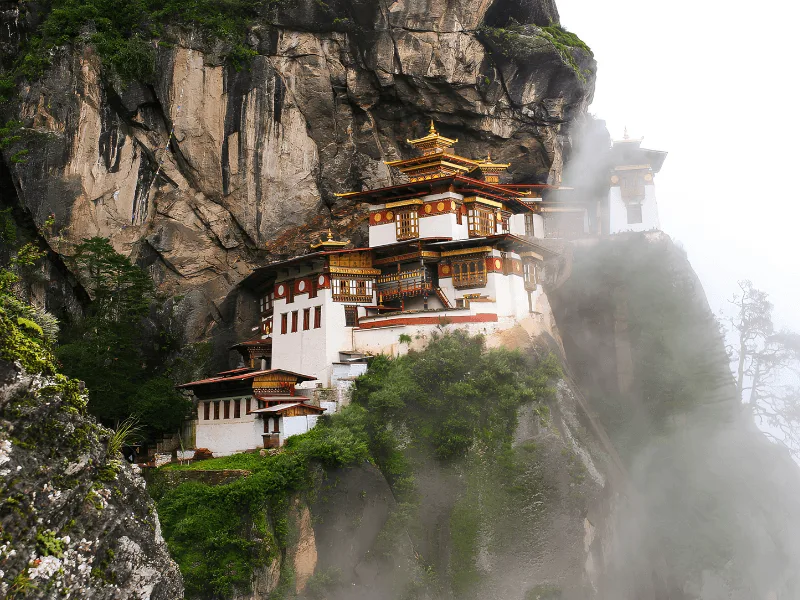
Paro is home to Bhutan’s international airport, Rinpung Dzong and Tiger’s Nest. Most trips start and end here.
Paro Taktsang

01

Hike to Tiger's Nest

3,120 m · 4–6 hours return · Nu 1,000

The monastery clings to a cliff about 900 m above the valley. See the full facts in the spotlight below.

02

Rinpung Dzong and Nyamai Zam bridge

Free entry

The white fortress-monastery above Paro town, reached across a traditional covered wooden bridge. Venue of the Paro Tshechu.

03

National Museum (Ta Dzong)

About 1.5 hours

Housed in the old watchtower above Rinpung Dzong: thangkas, masks, textiles and natural history. Visit it before the dzongs, not after.

04

Kyichu Lhakhang

Nu 500

One of Bhutan’s oldest temples, traditionally dated to the 7th century and the Tibetan king Songtsen Gampo. Small, dark and deeply atmospheric.

05

Drive to Chele La pass

About 3,990 m · Free

Among Bhutan’s highest road passes, on the way to Haa, with prayer flags and views towards Jomolhari on clear mornings. Go early, before the clouds.

06

Haa Valley

Opened to tourists in 2002

Over Chele La: the white and black temples (Lhakhang Karpo and Nagpo), farmhouse stays and very few visitors.

07

Bumdrak trek

2 days · about 3,800 m

Camp near a cliff-side monastery above the clouds, then walk down to Tiger’s Nest from above the next morning.

Spotlight · Paro Taktsang

How to hike Tiger's Nest

Guru Rinpoche is said to have flown here on the back of a tigress in the 8th century and meditated in the cave. The monastery was built in 1692, badly damaged by fire in 1998 and restored by 2005. More than 108,000 people visited in 2025.

3,120 m

Monastery altitude

~900 m

Above the valley floor

4–6 hrs

Round trip, about 2–3 hours up

Nu 1,000

Adults; Nu 500 for ages 6–17

Tips from our guides

Thimphu

The capital with no traffic lights
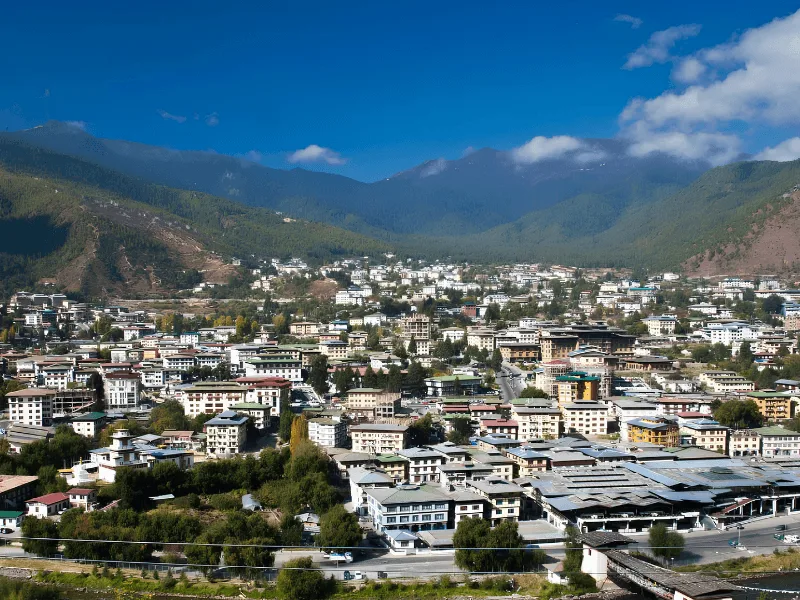
Bhutan’s capital mixes government buildings, monasteries, markets and museums. Two days is about right.
Thimphu

08

Buddha Dordenma

54 m · Free

A bronze, gilded Buddha completed in 2015, holding more than 125,000 smaller Buddha statues inside. Go late afternoon for the light over the valley.

09

Tashichho Dzong

Nu 500

The seat of government and the central monk body, and venue of the Thimphu Tshechu. Tourist visiting hours are limited while offices are open.

10

National Memorial Chorten

Nu 500

Built in 1974 in memory of the Third King. Sit for a while and watch locals circle it and spin the prayer wheels.

11

Motithang Takin Preserve

Bhutan's national animal

See the takin, a strange goat-antelope tied to a legend about the “Divine Madman”, Drukpa Kunley.

12

Changangkha Lhakhang

Nu 500

A 12th-century temple on a ridge where parents bring newborn babies to be blessed and named, with fine views over the city.

13

Archery at Changlimithang

Free to watch

Bhutan’s national sport: targets about 145 m away, with singing, dancing and teasing between shots.

14

Centenary Farmers' Market

Busiest at weekends

Red rice, chillies, datshi cheese, dried yak cheese (chugo) and fiddlehead ferns beside the Wang Chhu.

15

Crafts and culture

Museums and workshops

The Folk Heritage Museum, Royal Textile Academy and the Institute for Zorig Chusum, where students learn Bhutan’s 13 traditional arts.

16

Hike to Tango or Cheri monastery

About 1 hour up

Easy hikes north of the city to two working monasteries. Cheri was founded in 1620 by Zhabdrung Ngawang Namgyal.

Punakha and Wangdue

The warm valley of the old capital
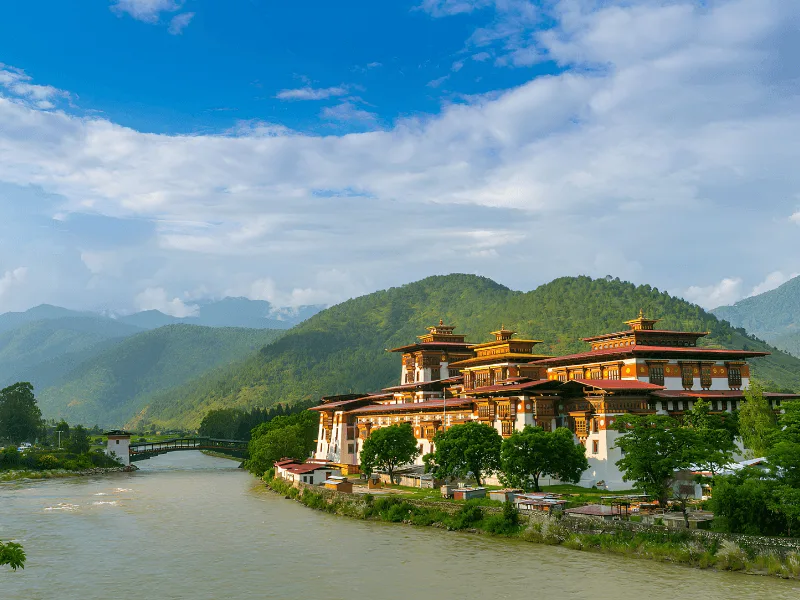
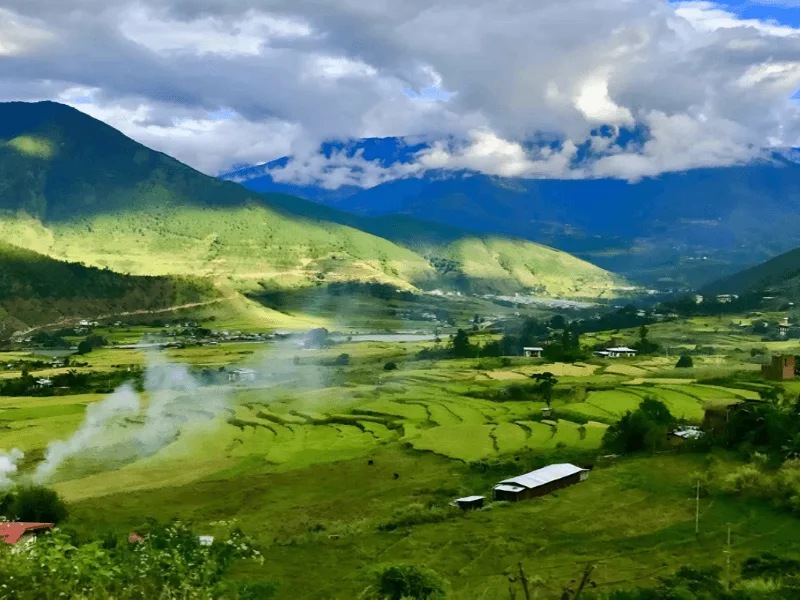
Lower and warmer than Thimphu, Punakha is reached over Dochula pass and is a highlight of almost every trip.
Punakha

17

Dochula pass and the 108 chortens

About 3,100 m · Free

Memorial chortens built by the Queen Mother, with views of the high Himalaya, including Gangkhar Puensum (7,570 m), on clear winter mornings.

18

Punakha Dzong

1637–38 · Nu 500

Built by Zhabdrung Ngawang Namgyal where the Pho Chhu and Mo Chhu rivers meet. The capital until the 1950s and the winter home of the central monk body. Jacarandas bloom around it in spring.

19

Punakha suspension bridge

Free

One of Bhutan’s longest suspension bridges, hung with prayer flags over the Pho Chhu. It sways, and that is the fun.

20

Khamsum Yulley Namgyal Chorten

45–60 minute walk

A walk through rice fields to a chorten built by the Queen Mother, with a rooftop view down the valley.

21

Chimi Lhakhang

Nu 500

The temple of Drukpa Kunley, the “Divine Madman”, reached on a short walk through fields. Couples come here to pray for children.

22

Rafting on the Mo Chhu or Pho Chhu

Half day

The Mo Chhu is a gentle float past the dzong, suitable for beginners; the Pho Chhu is a livelier run.

Phobjikha and Gangtey

The crane valley
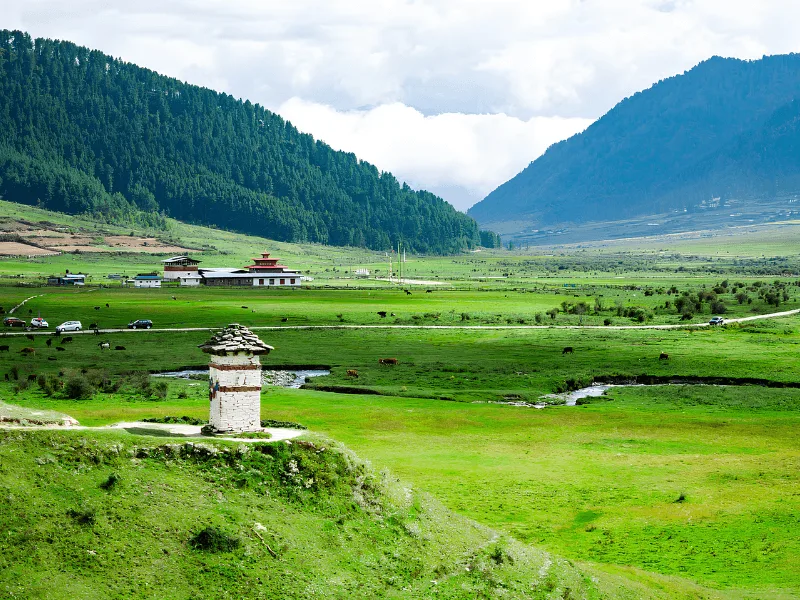
A wide glacial valley at about 3,000 m, and Bhutan’s main winter home for the black-necked crane.
Phobjikha Valley

23

Watch the black-necked cranes

Late October to February

RSPN counted 709 cranes in Bhutan in the 2024–25 winter, 640 of them in Phobjikha. Visit the Black-Necked Crane Information Centre for spotting scopes.

24

The Gangtey Nature Trail

About 1.5 hours · Free

An easy walk from Gangtey Goenpa through pine forest and across the valley floor. One of the most pleasant short walks in Bhutan.

25

Gangtey Goenpa

Founded 1613

A Nyingma monastery on a ridge above the valley. The Black-Necked Crane Festival is held in its courtyard every 11 November.

Bumthang

The spiritual heartland

Four valleys (Chhume, Chokhor, Tang and Ura) with some of Bhutan’s oldest temples. About a day’s drive beyond Punakha, or a domestic flight to Bathpalathang.
Bumthang Valley

26

Jambay Lhakhang

Free

A 7th-century temple and one of the oldest in Bhutan. Its autumn festival includes the Mewang fire blessing.

27

Kurjey Lhakhang

Free

Temples built around the cave where Guru Rinpoche is said to have left his body print in the rock.

28

Tamshing Lhakhang

Founded 1501

Built by the treasure-revealer Pema Lingpa, with some of Bhutan’s oldest surviving murals and a heavy chainmail vest pilgrims carry around the shrine.

29

Mebar Tsho, the Burning Lake

Tang Valley · Free

A gorge pool where Pema Lingpa is said to have dived in with a lamp and returned with treasures, the flame still burning.

30

Jakar Dzong and the Swiss farm

Free

The “castle of the white bird” above Chamkhar, then local cheese, honey and Red Panda beer from the Bumthang brewery.

31

Ura village

About 3,100 m

The highest Bumthang valley, with clustered stone houses and the spring Ura Yakchoe festival.

Trongsa and the east

Where few visitors go
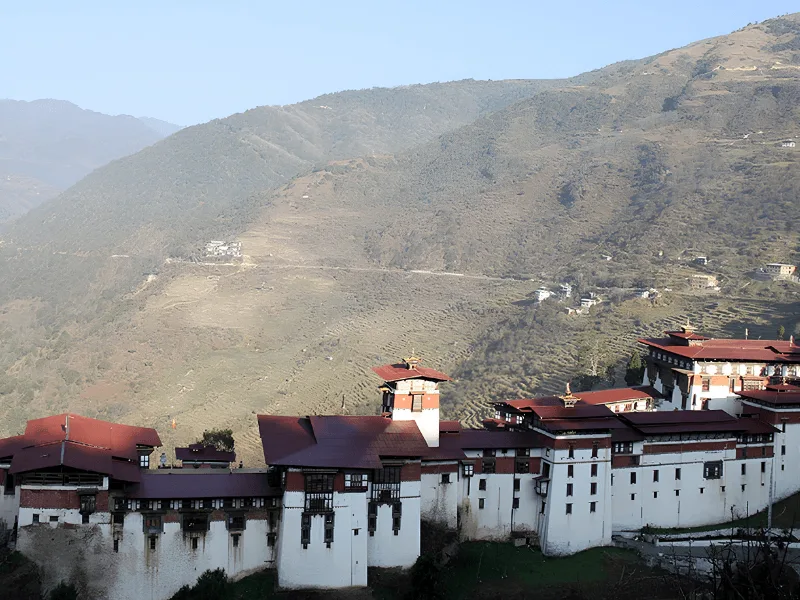
With 12 days or more, central and eastern Bhutan feel like a different trip: quieter roads, weaving villages and uncrowded festivals.
Trongsa

32

Trongsa Dzong and the Tower of Trongsa

Free

One of the largest dzongs in Bhutan and the ancestral seat of the royal family, with an excellent museum in the old watchtower.

33

Pele La pass

About 3,400 m

The pass between western and central Bhutan, with yak pastures and dwarf bamboo on the edge of a national park.

34

Merak and Sakteng

Opened in 2010

Home of the semi-nomadic Brokpa yak herders, with their own language, dress and felt hats.

35

Chorten Kora, Trashi Yangtse

Far east

A white stupa modelled on Boudhanath in Kathmandu, and the setting for a lively spring festival.

36

Trashigang

Largest town in the east

A 17th-century dzong above the river; from here you can continue south and exit overland at Samdrup Jongkhar into Assam.

37

Royal Manas and the southern forests

Wildlife and birding

Bhutan’s oldest protected area, home to tigers, elephants and golden langurs. Bhutan has recorded over 700 bird species.

Bhutan activities for the adventurous

Treks, trails, rivers and bikes

All treks are organised through a licensed operator with a trekking guide and crew; independent trekking is not allowed. Most treks run in spring and autumn.

Trek

Days

High point

Difficulty

Bumdrak

2 days

About 3,800 m

Moderate

Druk Path (Paro to Thimphu)

4–5 days

About 4,200 m

Moderate

Dagala Thousand Lakes

5–6 days

About 4,500 m

Moderate

Jomolhari

7–9 days

About 4,900 m

Moderate to hard

Laya–Gasa

12–14 days

About 5,000 m

Hard

Snowman

25+ days

Passes over 5,000 m

Very hard

Trans Bhutan Trail

An ancient route across Bhutan, reopened in 2022: about 403 km from Haa to Trashigang through nine districts. Walk one section or many.

Tour of the Dragon

A one-day mountain-bike race of about 268 km from Bumthang to Thimphu over four passes, held each September. Bhutan’s roads are superb for cycling at any pace.

Rafting and kayaking

Gentle floats on the Mo Chhu past Punakha Dzong, or livelier water on the Pho Chhu, best from about November to April.

Birding

Over 700 recorded species, including the critically endangered white-bellied heron; RSPN counted 29 in Bhutan in 2025.

Only in Bhutan

Cultural experiences worth building in

These are the moments travellers talk about for years, and most of them cost very little.

Hot stone bath (dotsho)

River stones heated in a fire and dropped into a wooden tub of herb-infused water. Perfect after Tiger’s Nest.

Night in a farmhouse

Stay with a family, eat dinner by the wood stove and see daily village life.

Archery and khuru

Try the national sport, or khuru, a darts game played outdoors with heavy wooden darts.

Wear a gho or kira

The national dress is everyday clothing here. Your guide or hotel can help you put it on.

The 13 traditional arts

Watch students paint, carve and embroider at the Institute for Zorig Chusum in Thimphu.

Butter lamps and prayer flags

Light butter lamps at a temple or hang prayer flags on a pass, with your guide’s help.

Festivals

Time your trip for a tshechu

Dates follow the lunar calendar and come from the Department of Tourism’s tentative lists, so confirm them before booking flights. See every date in our festival calendar.

Festival

Where

Dates

Jambay Lhakhang Drup

Bumthang

26–29 Oct 2026 · 14–17 Nov 2027

Black-Necked Crane Festival

Gangtey Goenpa, Phobjikha

11 November every year

Punakha Dromchoe and Tshechu

Punakha Dzong

13–18 Feb 2027

Paro Tshechu

Rinpung Dzong, Paro

18–22 Mar 2027

Ura Yakchoe

Ura, Bumthang

18–22 Apr 2027

Thimphu Tshechu

Tashichho Dzong, Thimphu

10–12 Oct 2027

Entry fees

What the main sites cost

Fees apply to international and regional (including Indian) tourists, on top of the SDF. Children aged 5 and under are free. Fees can change, so we confirm them in your quote.

Site

Fee

Note

Taktsang (Tiger's Nest)

Nu 1,000

Children 6–17: Nu 500

Kyichu and Dungtse Lhakhang, Paro

Nu 500

Children pay half

Tashichho Dzong, Memorial Chorten, Changangkha

Nu 500

Each site

Punakha Dzong and Chimi Lhakhang

Nu 500

Each site

Buddha Dordenma, Rinpung, Trongsa and Jakar dzongs, Jambay Lhakhang

Free

No entry fee

Bhutan sightseeing by trip length

How much can you see?

Bhutan rewards depth over distance. Add a full day for Tiger’s Nest and for any festival, and avoid changing hotels every night.

3 days

The minimum

Paro sights, Tiger’s Nest and a day in Thimphu.

5 days

The sweet spot

Add Dochula and two nights in Punakha, with a hot stone bath.

7 days

Western Bhutan

Add two nights in Phobjikha, or Haa and Chele La.

10 days

Into the heartland

Add Bumthang, flying one way to save a long drive.

14+ days

Across Bhutan

Continue east to Trashigang and exit overland into India, or add a trek.

Before you go

Practical tips that improve your trip

Dress for dzongs

Long trousers or skirts and covered shoulders at religious sites; hats off and shoes off in shrines.

Walk clockwise

Always go clockwise around chortens, temples, prayer wheels and mani walls.

Respect the altitude

Paro is about 2,200 m and Thimphu about 2,300 m. Take the first day gently and drink plenty of water.

Photos

Fine outdoors and in courtyards, but not inside temples. Ask before photographing people.

Alcohol

Sold to those 18 and over. Tuesdays have not been national dry days since July 2023.

Tipping

Not compulsory but appreciated; many travellers tip their guide and driver at the end of the trip.

FAQ

Things to do in Bhutan: your questions

What are the top things to do in Bhutan?

Hike to Tiger’s Nest, visit Punakha Dzong, stop at Dochula pass, watch the black-necked cranes in Phobjikha (in winter), see a tshechu festival and take a hot stone bath.
See Buddha Dordenma and Tashichho Dzong, sit at the National Memorial Chorten, visit the takin preserve and the farmers’ market, watch archery, and explore the crafts at the Royal Textile Academy and Institute for Zorig Chusum.
Five to seven days is ideal for a first trip covering Paro, Thimphu, Punakha and Phobjikha. Ten days lets you reach Bumthang; two weeks or more takes you east.
Moderate to strenuous: about 4–6 hours return with a climb of roughly 500 m from the trailhead, plus steps down into a gorge and back up at the end. Ponies can carry you part of the way up.
Nu 1,000 per adult and Nu 500 for children aged 6–17, for international and regional (including Indian) tourists. Children aged 5 and under are free.
March to May and late September to November for clear weather and major festivals; late October to February for cranes in Phobjikha. June to August is the monsoon.
Yes. Under the Department of Tourism’s April 2026 notice, tourists must be accompanied by a licensed guide at all times, and treks need a licensed trekking guide.
No. Mountaineering on Bhutan’s high peaks is not permitted, out of respect for local beliefs, which is why Gangkhar Puensum (7,570 m) is still unclimbed. Trekking is allowed with a licensed operator.
An ancient walking route across Bhutan, restored and reopened in 2022. It runs about 403 km through nine districts from Haa to Trashigang, and you can walk a single section or the whole trail.
Archery. Targets stand about 145 m away, and matches are full of singing, dancing and good-natured teasing.
Yes: the takin preserve, gentle rafting on the Mo Chhu, the Punakha suspension bridge, the Gangtey Nature Trail, archery and farmhouse stays. Children under 6 pay no SDF.
Ema datshi (chillies and cheese), red rice, momos, phaksha paa (pork with dried chillies) and butter tea. See our Bhutanese food guide.

Plan your trip

Build your trip around what you love

Tell us your dates and interests: festivals, treks, birding or an unhurried week in the western valleys. We will send a free day-by-day itinerary and handle permits, guides and transport.

Plan my trip to Bhutan

Free itinerary and itemised quote

Contact form 2