Bhutan travel safety · Updated October 2026 for 2027
Is Bhutan Safe to Visit in 2027?
Yes. Crime against visitors is rare, and the US government rates Bhutan at its lowest risk level. The real risks are mountain roads, altitude and limited medical care outside Thimphu. Here is what government advisories say, and how we keep our guests safe.
Licensed by Bhutan's Department of Tourism · Licence No. 1052914
The short answer
Yes, Bhutan is one of the safest places to travel in Asia
There are no touts, almost no scams, and violent crime against visitors is uncommon. Every international visitor also travels with a licensed guide, so someone who knows the country is with you throughout. What deserves your attention is not crime but mountain roads, altitude, medical care and the monsoon. This guide covers each one.
Level 1
US travel advisory
“Exercise normal precautions”, the lowest of four levels, reissued by the US State Department in September 2026.
16th
Global Peace Index 2026
Bhutan ranked 16th in the world and was again the most peaceful country in South Asia.
Low
Crime rate
Australia’s Smartraveller says “Bhutan’s crime rate is low” and violent crime is uncommon. Petty theft does happen.
Guided
Every trip
International visitors travel with a licensed guide and stay in certified hotels, under Department of Tourism rules.
Official travel advice
What governments say about Bhutan
All four governments below place Bhutan in their lowest risk category. None of them has an embassy in Bhutan; help for their citizens comes from New Delhi, India. Advice can change, so check your own government’s page before you fly.
United States
Level 1 · Normal precautions
Notes relatively little crime, limited medical care in rural areas, and mountain roads with steep drop-offs. Recommends insurance with medical evacuation.
Australia
Normal safety precautions
Highlights altitude sickness above 2,500 m, severe drug penalties, and floods and landslides from June to September.
Canada
Normal security precautions
Flags dangerous mountain roads in winter and the rainy season, stray dogs and rabies, and limited care outside Thimphu and Paro.
United Kingdom
No travel restrictions
The FCDO advises insurance that covers your whole itinerary, planned activities and emergency costs.
Risk 1 · Roads
Mountain roads are the biggest risk
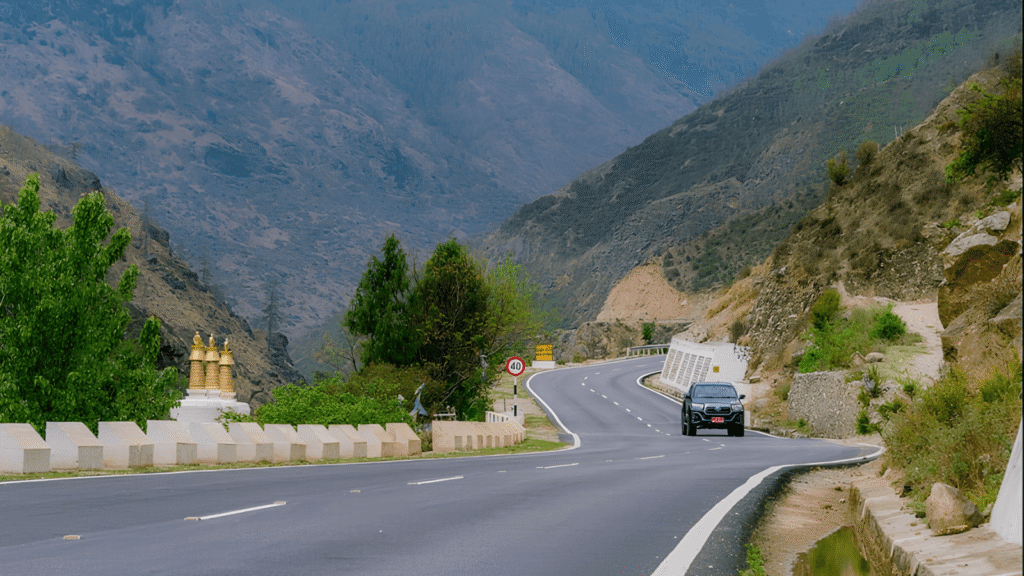
Bhutan’s highways are narrow and winding, with steep drop-offs and blind bends, and heavy rain can bring rockfalls and landslides. Royal Bhutan Police figures reported by BBS show nearly 1,120 road accidents and just over 90 deaths in 2024, mostly blamed on speeding, drunk driving and poor vehicle maintenance. Thimphu had the most accidents, followed by Phuentsholing and Punakha.
How we keep road travel safe
- Licensed, experienced drivers. You cannot rent a car to drive yourself in Bhutan; our drivers know every bend.
- No driving after dark. Each day is planned so long drives finish before sunset.
- Realistic drive times. Highways average around 30–40 km/h, so we never squeeze long legs.
- Seatbelts on, front and back. Our vehicles are serviced, with brakes and tyres checked.
- Monsoon flexibility. In June–September we build in spare time for landslide delays.
- Motion sickness? Tell your guide; a front seat and short breaks help on winding roads.
Other risks to know
Health, altitude and nature
None of these should stop you travelling, but each is worth planning for.
Altitude
Paro sits at about 2,200 m and Thimphu at about 2,300 m; Tiger’s Nest is about 3,100 m. Mild headaches are common for a day or two. We plan gentle first days and save high hikes for later. Tell your guide about any symptoms that get worse.
Medical care
The national referral hospital (JDWNRH) is in Thimphu, but care is limited elsewhere and serious cases may be evacuated abroad. Visitors pay for treatment, so bring your own medicines in original packaging.
Monsoon and landslides
From June to September, floods and landslides can block roads with little warning, and Paro flights can be delayed by weather. Keep a spare night before any onward international flight.
Stray dogs and rabies
Free-roaming dogs are common in towns and bark at night (bring earplugs). Do not feed or approach them. If bitten or scratched, wash the wound and get to a hospital the same day.
Earthquakes and glacial lakes
Bhutan is in an active earthquake zone, and glacial lakes are monitored by the National Center for Hydrology and Meteorology. The risk on a normal tour is very low; on high treks, follow your crew’s advice.
Food, water and sun
Do not drink tap water; drink bottled or filtered water. Restaurant food is generally safe; spice is the usual complaint. The sun is strong at altitude, so use sunscreen even in winter.
Safety for every traveller
Is Bhutan safe for women, families and LGBTQ+ travellers?
Solo female travellers
Yes. Harassment is rare and women hold a strong place in Bhutanese society. You will have your own guide and driver throughout, and we can arrange a female guide if you ask when booking.
LGBTQ+ travellers
Same-sex relations between adults were decriminalised in 2021, but same-sex relationships are not legally recognised. Bhutan is conservative, and public displays of affection are uncommon for everyone. Couples travel without problems.
Families with children
Bhutan is excellent for families: low crime, clean air and friendly people. Children under 6 pay no SDF and children aged 6–11 pay half. Plan short drives and bring motion-sickness remedies.
Older travellers
Very common and very doable. The main things to plan for are altitude, uneven steps in dzongs and the Tiger’s Nest climb; ponies can carry you part of the way up. Speak to your doctor if you have heart or lung conditions.
Laws and local rules
Rules that can catch visitors out
Bhutan is relaxed and welcoming, but a few laws are strict. Your guide will help you stay on the right side of them.
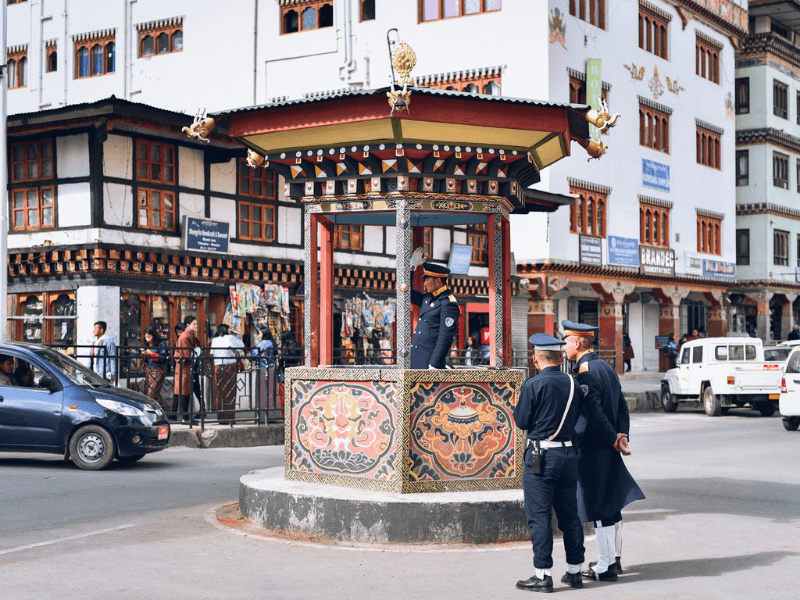
- Drugs: penalties are severe, including long prison terms, and apply to cannabis too.
- Tobacco: tightly controlled. Bring only a small amount for personal use, declare it on arrival and do not smoke in public places.
- The monarchy: the King is deeply respected. Do not criticise the royal family, including on social media.
- Photography: not allowed inside temples and dzong shrine rooms. At Tiger's Nest, cameras and phones are left at the entrance.
- Drones: you need prior permission to fly one.
- Alcohol: sold only to people 18 and over. Tuesdays have not been dry days since July 2023.
- Dress: long sleeves and long trousers or skirts at dzongs and temples.
- Antiques: do not buy or export religious antiques.
Save these before you land
Bhutan emergency numbers
113
Police
112
Ambulance
110
Fire
111
Traffic police
Embassies are in New Delhi
The US, UK, Australia and Canada have no embassy in Bhutan. Their missions in New Delhi cover Bhutan: US +91 11 2419 8000, Australia +91 11 4139 9900, Canada +91 11 4178 2000. Also save your guide’s number and our 24-hour contact.
Travel insurance
Insurance has not been compulsory for Bhutan visas since April 2024, but we strongly recommend it. Choose a policy that covers medical treatment, helicopter evacuation and repatriation, and check its altitude limit, especially if you plan to trek.
Where is Bhutan?
A small kingdom in the eastern Himalaya
Bhutan is a landlocked country between India to the south, east and west, and China’s Tibet region to the north. Its capital is Thimphu, and Paro International Airport is the main gateway. Overland, visitors enter from India at Phuentsholing or Samdrup Jongkhar. The country rises from hot southern foothills to Himalayan peaks over 7,000 m.
- Capital: Thimphu, at about 2,300 m
- Airport: Paro International, with flights from Drukair and Bhutan Airlines
- Land borders for visitors: Phuentsholing and Samdrup Jongkhar
- Entry: visa (US$40) and SDF of US$100 per adult per night until 31 August 2027
- Travel style: licensed guide, certified hotels, booked through a licensed operator
FAQ
Bhutan safety questions
Is Bhutan safe to visit right now?
Yes. As of October 2026, the US rates Bhutan at Level 1 (exercise normal precautions), and Australia and Canada advise normal precautions. Check your government’s latest advice before you travel.
Is Bhutan dangerous for tourists?
No. Violent crime against visitors is uncommon, and there are no touts or scam culture. The main risks are winding mountain roads, altitude, limited medical care outside Thimphu, and landslides in the monsoon.
Is Thimphu safe at night?
Thimphu is generally safe, though petty theft occurs. Streets can be poorly lit and stray dogs gather at night, so walk with others or ask your guide or hotel to arrange transport.
Is Bhutan safe for solo female travellers?
Yes. Harassment is rare, and you travel with your own guide and driver. We can arrange a female guide on request.
Do I need travel insurance for Bhutan?
It is not required for the visa since April 2024, but we strongly recommend insurance with medical evacuation, checking the altitude limit if you will trek.
What is the emergency number in Bhutan?
Police 113, ambulance 112, fire 110 and traffic police 111.
Can I travel around Bhutan without a guide?
No. Under Department of Tourism rules, international tourists must be accompanied by a licensed guide, and you cannot rent a car to drive yourself. Booking through a licensed operator such as us covers your guide, driver and permits.
Is the tap water safe to drink?
No. Drink bottled or filtered water, which hotels provide.
Travel with confidence
Plan a safe, well-paced Bhutan trip
Tell us your dates and any health or mobility needs. We will send a free day-by-day itinerary with sensible drive times, gentle altitude pacing and a licensed guide throughout.
- Licensed operator, licence No. 1052914
- Experienced local guides and drivers
- 24-hour support while you travel
Plan my trip to Bhutan
Free itinerary and itemised quote