Bhutan Spiritual & Cultural Tour: An Immersive Journey Beyond Sightseeing
Bhutan Spiritual & Cultural Tour 11 Nights / 12 Days through Thimphu, Phajoding, Punakha, Phobjikha, Gaselo and Paro — with two nights near a mountain monastery, a night within a Buddhist nunnery, and time to experience Bhutan through its people, not just its landmarks.
About This Journey
An Immersive Journey Beyond Sightseeing
Bhutan is more than its beautiful mountains, ancient monasteries and famous landmarks. It is a country where Buddhist traditions, spirituality, community and simple ways of life continue to be part of everyday living.
This immersive 11-night, 12-day journey is designed for travellers who want to experience Bhutan beyond conventional sightseeing. Rather than simply visiting monasteries and taking photographs, it gives you opportunities to spend meaningful time around monks and nuns, participate in or respectfully observe prayers, share simple meals and conversations, walk through traditional villages, discover lesser-known temples and experience the rhythms of everyday Bhutanese life.
You will spend two nights in the Phajoding area, experiencing the peaceful mountain environment and connecting with monks through prayers, meals, conversations and everyday activities. Later in the journey, you will stay in a dedicated guesthouse within a Buddhist nunnery complex in Paro, giving you another perspective on monastic life in Bhutan.
Along the way, the journey takes you through Thimphu, Punakha, Phobjikha Valley, Gaselo and Paro, combining spiritual experiences with Bhutanese culture, traditional arts, village life, nature and gentle adventure.
“This is not simply a journey to see Bhutan. It is a journey to experience how Bhutan feels, through its people, traditions, landscapes and living spiritual culture.”
🧭 We Arrange Every Permit & Stay
Your entry permit, the Special Area Permit needed beyond Thimphu and Paro, and the arrangements for your Phajoding monastery stay and your night within the Paro nunnery are all coordinated by our team in advance, respectfully and on your behalf.
Tour at a Glance
Everything you need to know about this 11-night, 12-day Bhutan journey at a glance.
🗓️ Duration
11 Nights / 12 Days
📍 Destinations
Thimphu, Punakha, Phobjikha, Gaselo and Paro
💑 Tour Type
Private, immersive, cultural and spiritual
🙏 Main theme
Monastic life, Bhutanese Buddhism, local culture and everyday life
🏔️ Monastery experience
Two nights in the Phajoding area
🚐 Transport
Private 4WD Vehicle
🛖 Nunnery experience
Guesthouse within the nunnery complex in Paro
✈️ Entry Point
Paro International Airport
🎋 Group Size
5 Persons
💰 Package cost
From USD $2,280 per person (based on five travelers)
Practical Information Before You Go
Honest, verified essentials for planning your trip to Bhutan.
🛂 Visa & Permits
All non-Indian, non-Bangladeshi and non-Maldivian nationals need a Bhutan visa, arranged in advance through a licensed Bhutanese tour operator. The application is processed online and typically takes around five working days, plus a separate Special Area Permit for travel beyond Thimphu and Paro.
💰 Sustainable Development Fee
Bhutan's Sustainable Development Fee (SDF) supports free healthcare, free education and environmental conservation. It is currently USD $100 per person, per night for most international visitors (reduced rates for children, and a lower SAARC rate for Indian, Bangladeshi and Maldivian nationals), with a 5% tourism GST added from January 2026.
✈️ Getting to Paro
Paro International Airport is Bhutan's only international gateway, served by Drukair (Royal Bhutan Airlines) and Bhutan Airlines, with flights connecting via Bangkok, Delhi, Kolkata, Kathmandu, Singapore, Dhaka, Guwahati and Dubai.
📄 Passport & Documents
Your passport should be valid for at least six months beyond your travel dates. You'll also need recent passport-style photos and proof of travel insurance as part of your visa application.
💵 Currency
The Bhutanese Ngultrum (BTN) is pegged to the Indian Rupee, and Indian Rupees are widely accepted. Cards are usable in larger hotels in Thimphu and Paro, but cash is essential once you're outside the main towns.
🗓️ Best Time to Visit
Spring (March–May) and autumn (September–November) bring the clearest mountain views and most reliable road conditions. Winter (November–February) is when black-necked cranes migrate to Phobjikha Valley.
Where You’ll Stay
Overnight Stays Across the Journey
Accommodation is deliberately varied — here is exactly where you sleep, night by night.
| Day | Region | Overnight |
|---|---|---|
| Day 1 | Thimphu | Thimphu |
| Day 2 | Thimphu | Thimphu |
| Day 3 | Phajoding | Phajoding area — simple monastery guesthouse |
| Day 4 | Phajoding | Phajoding area — simple monastery guesthouse |
| Day 5 | Dochula / Thinleygang | Thinleygang |
| Day 6 | Punakha | Punakha Valley |
| Day 7 | Phobjikha | Phobjikha Valley — glamping accommodation |
| Day 8 | Gaselo | Gaselo — eco-lodge |
| Day 9 | Paro | Nuns’ Guesthouse — within the nunnery complex, Paro |
| Day 10 | Paro | Paro |
| Day 11 | Paro | Paro |
| Day 12 | Departure | Departure — no overnight |
Note: the Phajoding and nunnery stays are intentionally simple — see “Accommodation on This Journey” below for what to expect.
Why This Journey Is Different
Beyond Bhutan's Famous Landmarks
Many Bhutan tours introduce travellers to the country’s famous dzongs, monasteries, temples and Himalayan landscapes. This journey goes a step further by creating opportunities to experience the people and traditions connected to those places.
Spend Time Around Bhutanese Monks
Travel into the mountains above Thimphu and spend two nights in the Phajoding area. Join the monks for prayers and simple meals, sit with them over tea, learn about their daily routines and, when appropriate, enjoy an informal game of football.
Experience Life Around a Buddhist Nunnery
In Paro, stay in a dedicated guesthouse within the nunnery complex, separate from the nuns' private living quarters. Meet the nuns, learn about their routines and studies, join their prayers when the schedule allows, and share meals and conversation.
Discover Bhutan Beyond the Main Tourist Routes
The journey includes lesser-visited temples and cultural sites such as Toeb Chandana Lhakhang, Khujula Lhakhang and Rinchengang Clustered Village, where local people go about normal routines rather than activities arranged for tourists.
Experience Bhutanese Buddhist Traditions
At Pangri Zampa Monastery, receive a traditional blessing and cleansing ceremony and learn more about Buddhist traditions. If interested, a traditional Bhutanese astrology reading can also be arranged. Participation is always optional.
Walk Through Villages and Living Landscapes
The journey includes walks through traditional villages, rice fields, forests and open mountain landscapes — opportunities to observe architecture, farming, local routines and the relationship between people and the landscape.
Discover Traditional Bhutanese Arts and Crafts
Visit Choki Art School and a traditional weaving centre to see Bhutanese artistic and textile traditions being practised, and how traditional skills continue to be passed from one generation to another.
Experience the Spiritual and Natural Beauty of Phobjikha
Travel into the highland landscape of Phobjikha Valley, visit Gangtey Monastery, walk the Gangtey Nature Trail and visit the Crane Centre. During crane season, you may also see the migratory black-necked cranes in the valley.
Combine Spiritual Experiences with Adventure
Although spirituality and culture are at the heart of the journey, there is room for adventure — white-water rafting in Punakha, optional mountain walks and the famous hike to Taktshang, better known as Tiger's Nest.
Stay in Different Styles of Accommodation
Accommodation is deliberately varied — comfortable hotels, a simple guesthouse in the Phajoding area, a glamping tent in Phobjikha, an eco-lodge in Gaselo and a guesthouse within the nunnery complex in Paro.
Tour Highlights
What This Journey Includes
- 11 nights / 12 days exploring Bhutan through culture, spirituality, nature and local life
- Spend two nights in the Phajoding area and experience the mountain environment around the monastery
- Join monks for prayers, simple meals and conversations
- Enjoy an informal game of football with monks, when appropriate
- Experience a traditional Bhutanese blessing and cleansing ceremony
- Option to arrange a traditional Bhutanese astrology reading
- Visit Pangri Zampa Monastery, one of Thimphu's historic Buddhist sites
- Explore Choki Art School and see traditional Bhutanese arts being practised
- Visit Buddha Dordenma overlooking Thimphu Valley
- Experience the Tashichho Dzong flag-lowering ceremony before entering the dzong
- Cross Dochula Pass and explore its Himalayan landscape and meditation caves
- Discover the story and traditions associated with Toeb Chandana Lhakhang
- Enjoy optional white-water rafting in Punakha
- Walk to Khamsum Yulley Namgyel Chorten through rice fields and village landscapes
- Visit Punakha Dzong and walk across the Punakha Suspension Bridge
- Stop at Chimi Lhakhang while travelling towards Phobjikha
- Explore Phobjikha Valley and Gangtey
- Visit Gangtey Monastery and walk the Gangtey Nature Trail
- Discover the story and traditions associated with Toeb Chandana Lhakhang
- Enjoy optional white-water rafting in Punakha
- Walk to Khamsum Yulley Namgyel Chorten through rice fields and village landscapes
- Visit Punakha Dzong and walk across the Punakha Suspension Bridge
- Stop at Chimi Lhakhang while travelling towards Phobjikha
- Explore Phobjikha Valley and Gangtey
- Visit Gangtey Monastery and walk the Gangtey Nature Trail
- Visit the Crane Centre and meet Karma and Pema, the resident black-necked cranes
- Stay in a glamping tent in Phobjikha
- Explore Rinchengang Clustered Village
- Visit Khujula Lhakhang, a quieter local temple
- Stay at an eco-lodge in Gaselo and visit the nearby monastery
- Visit Gagyel Lhundrup Weaving Centre
- Explore historic Dobji Dzong
- Stay in a guesthouse within the Buddhist nunnery complex in Paro
- Spend time with the nuns, including prayers, meals and conversations
- Explore Kyichu Lhakhang, Rinpung Dzong and Ta Dzong
- Hike through the pine forests to Taktshang Monastery (Tiger's Nest)
- Option to visit Chele La Pass, subject to time, weather and road conditions
- Relax with a traditional Bhutanese hot stone bath after the Tiger's Nest hike
Who Is This Journey For?
Ideal For Travellers Who Want More Than Sightseeing
This Bhutan journey is ideal for travellers who want more than a conventional sightseeing holiday. It is particularly suitable for people interested in:
Buddhist culture and spiritualityMonasteries and monastic lifeMeaningful cultural encountersLocal communities and village lifeMindfulness, reflection and slower travelTraditional Bhutanese arts and craftsNature and mountain landscapesAuthentic cultural experiencesPhotography and cultural observationA combination of spiritual experiences and gentle adventure
You do not need to be Buddhist to join this journey — participation in prayers or religious ceremonies is always optional, and you’re equally welcome to simply observe respectfully.
What Makes This Tour Different
Six moments most Bhutan itineraries don’t include.
🏔️ Two Nights Living Near Phajoding Monastery
Hike into the mountains above Thimphu and share prayers, meals and conversation with monks — not a staged visit, a real stay.
🙏 A Night Within a Buddhist Nunnery in Paro
Stay in a dedicated guesthouse inside the nunnery complex and spend time with the nuns over tea, prayer and conversation.
🛕 Temples Most Visitors Never Find
Toeb Chandana Lhakhang, Khujula Lhakhang and Rinchengang Clustered Village — quiet, lesser-visited places still used by local communities.
🧵 Traditional Arts, Crafts & Weaving
Choki Art School and the Gagyel Lhundrup Weaving Centre show Bhutanese craftsmanship being taught and practised, generation to generation.
🕊️ Phobjikha Valley & the Black-Necked Cranes
Walk the Gangtey Nature Trail and visit the Crane Centre, home to Karma and Pema — with wild cranes visible in winter season.
🥾 Adventure Balanced With Stillness
White-water rafting, mountain hikes, the Tiger's Nest climb and a traditional hot stone bath — gentle adventure alongside reflection.
Your Journey at a Glance
12 Days, Day by Day
- Day 1 — Arrival in Bhutan & Drive to Thimphu
- Day 2 — Spiritual Thimphu, Monasteries & Tashichho Dzong
- Day 3 — Hike to Phajoding & Evening with the Monks
- Day 4 — Morning with the Monks & Mountain Life at Phajoding
- Day 5 — Dochula Pass, Himalayan Views & Journey to Thinleygang
- Day 6 — Toeb Chandana Lhakhang, Punakha Dzong, River Rafting & Khamsum Chorten
- Day 7 — Chimi Lhakhang, Gangtey Monastery & Phobjikha Valley
- Day 8 — Rinchengang Village, Hidden Temple & Gaselo Eco-Lodge
- Day 9 — Traditional Weaving, Dobji Dzong & Stay at the Nunnery
- Day 10 — Morning with the Nuns & Exploring Paro's Sacred Sites
- Day 11 — Tiger's Nest Hike, Optional Chele La & Hot Stone Bath
- Day 12 — Farewell to Bhutan & Departure from Paro
Day by Day
11 Nights / 12 Days Bhutan Journey Itinerary
DAY 01
📍 Welcome to Bhutan: Arrival in Paro and First Evening in Thimphu
Your journey begins with your arrival at Paro International Airport, one of the world’s most distinctive mountain airports. As your aircraft makes its approach through the Himalayas, your first views of Bhutan may reveal forested mountains, green valleys, traditional villages, prayer flags and Bhutanese homes scattered across the landscape.
After completing your arrival formalities, your private guide will welcome you at the airport and accompany you on the scenic drive from Paro to Thimphu, the capital of Bhutan.
The drive takes you through the beautiful Paro and Thimphu valleys, following the river valleys and passing traditional houses, small settlements, prayer flags and peaceful countryside. Rather than filling your first day with sightseeing, we keep the pace gentle so you have time to settle into your surroundings.
Memorial Chorten and Everyday Bhutanese Life
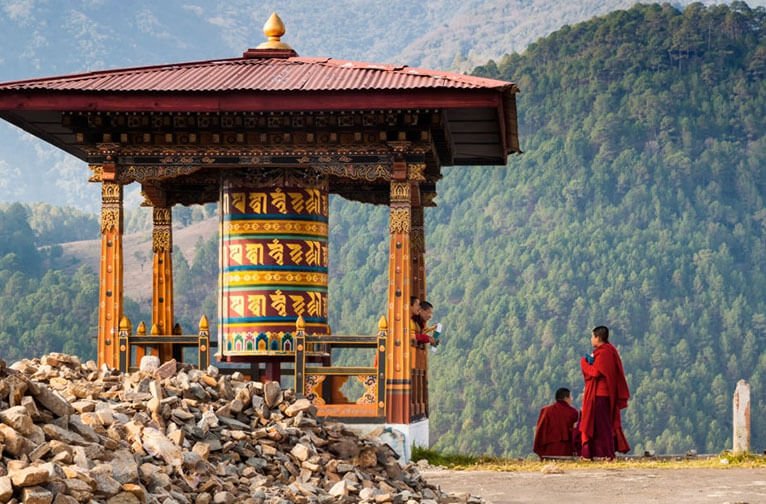
Later in the afternoon, visit the Memorial Chorten, one of Thimphu’s most recognizable religious landmarks. What makes this visit particularly meaningful is that it remains part of everyday religious life in Thimphu — you may see local residents walking around the chorten, turning prayer wheels, reciting prayers and making offerings.
This is your first introduction to one of the central ideas of this journey: experiencing Bhutanese traditions as they are practised in everyday life, rather than simply seeing them as tourist attractions.
Evening Walk Through Thimphu
After visiting the Memorial Chorten, take a relaxed walk through Thimphu town. Explore some of the local streets and shops, see the city’s distinctive traffic system and observe the evening rhythm of Bhutan’s capital.
There is no need to rush. You can stop for a cup of tea, browse local handicrafts or simply watch people going about their daily routines. The evening is intentionally kept light, allowing you to rest after your journey and prepare for the more immersive experiences that begin tomorrow.
📍 Spiritual Thimphu: Monastic Traditions, Art and Local Life
Today begins the deeper cultural and spiritual side of your Bhutan journey. Rather than focusing only on famous landmarks, we explore places where Bhutanese Buddhism, traditional arts and everyday community life continue to come together.
Pangri Zampa Monastery
Our morning begins at Pangri Zampa Monastery, one of the historic monasteries in Thimphu. Here, you will meet a monk and have the opportunity to receive a traditional blessing and cleansing ceremony, sought by many Bhutanese for peace, protection, good fortune or a positive beginning.
Participation is completely optional. You may participate if you feel comfortable or simply observe respectfully while your guide explains the tradition. Afterwards, spend some time over a cup of tea and conversation, learning about Buddhist traditions, monastic life and the values that guide monks in their daily lives.
Optional Bhutanese Astrology Reading
Pangri Zampa is also associated with Bhutanese astrology. If you are interested, an optional traditional Bhutanese astrology reading can be arranged during your visit — a tradition still consulted by many people for important occasions and decisions.
Choki Art School
From Pangri Zampa, continue to Choki Art School to discover Bhutan’s traditional arts and crafts. Begin with the small museum before walking through the classrooms, where you may see students learning traditional Bhutanese artistic techniques passed down through generations.
Buddha Dordenma
Continue to Kuensel Phodrang, home to the impressive Buddha Dordenma statue, which overlooks Thimphu Valley. Take time to enjoy the panoramic views across the capital and surrounding mountains.
Centenary Farmers Market
Later, visit the Centenary Farmers Market, where farmers, traders and local residents gather to sell fresh produce and traditional foods — an excellent place to observe another side of everyday Bhutanese life.
Tashichho Dzong and the Flag-Lowering Ceremony
In the late afternoon, continue to Tashichho Dzong, one of Bhutan’s most important administrative and religious landmarks. Before entering, witness the daily national flag-lowering ceremony — as the flag is slowly lowered, the atmosphere becomes quiet and respectful. Inside the dzong, your guide will introduce you to its architecture, history and continuing role in Bhutanese religious and administrative life.
Optional Evening Activity
If time, weather and energy allow, choose one of two optional experiences: a 4–5 km round-trip hike through pine forests towards Wangditse Monastery with views across Thimphu Valley, or an evening visit to Dechen Phodrang Monastery to quietly observe young monks during their evening prayer session.
📍 Hike to Phajoding: A Night in the Mountains with the Monks
Today marks a major change in the rhythm of the journey. Instead of travelling from one sightseeing site to another by vehicle, we leave Thimphu behind and walk into the mountains towards the Phajoding area.
Hiking into the Mountains
The trail takes you through pine forests as the sounds of the city gradually disappear. As you climb higher, the views across Thimphu Valley open up behind you. Your guide will accompany you throughout and help you maintain a comfortable pace. The hike requires a reasonable level of fitness, but it is not intended to be a race.
Arriving at Phajoding
After reaching the Phajoding area, settle into the simple mountain environment around the monastery. Here, the rhythm of the day follows the natural rhythm of prayers, meals, study and quiet time — one of the defining experiences of the journey.
An Evening with the Monks
In the evening, share a simple meal with the monks — an opportunity to learn more about their daily lives and what it means to dedicate yourself to Buddhist learning and practice. After dinner, join the monks for their evening prayer session, depending on the monastery’s schedule. This is not a performance arranged for visitors; you are there to observe and respectfully experience a small part of the rhythm of monastic life.
Your Mountain Guesthouse
Tonight, you stay in a simple guesthouse in the Phajoding area. The facilities are basic and should not be compared with a conventional hotel — that simplicity is part of the experience, stepping away from the usual comforts to spend time in the mountain environment.
📍 A Morning with the Monks: Prayer, Community and Mountain Life
There is something special about waking up in the mountains around a monastery. Instead of waking to the sounds of a busy city, your morning begins with the rhythm of monastic life.
Morning Prayers
Depending on the monastery’s prayer schedule, join the monks for their morning prayer session. Afterwards, share a simple breakfast and spend time learning more about the monks’ daily routines, studies and what keeps them connected to their spiritual path.
Time to Talk and Connect
There will be time to sit with the monks and have informal conversations about monastic life, daily routines, Buddhist learning and life in the mountains. Some of the most memorable moments may come from these simple conversations.
Optional Mountain Walks
Later, enjoy a gentle walk around the Phajoding area. If conditions and energy allow, optional walks towards Pumola or Thudedrak can be considered — less about reaching a destination and more about enjoying the mountain environment.
A Different Side of Monastic Life
There is also time for something much lighter: a friendly game of football with the monks, when appropriate — a wonderful opportunity to see the monks not only as religious practitioners, but also as young people enjoying a game and sharing an informal moment with visitors.
Second Night in the Phajoding Area
By evening, we return to the simple rhythm of the monastery. Depending on the schedule, you may again observe or join evening prayer before sharing another simple meal — mountains, prayer, community, conversation and time away from everyday distractions.
📍 From Phajoding to Thinleygang: Across Dochula to Punakha Valley
After two nights in the mountains around Phajoding, we leave the peaceful monastic environment behind and gradually make our way towards the warmer valleys of Punakha. As we descend from the higher elevations, you will notice the landscape changing from cool mountain forests to warmer valleys, traditional villages and agricultural areas.
Dochula Pass
Our main stop is Dochula Pass, at approximately 3,100 metres above sea level. On a clear day, the pass offers beautiful views towards the Himalayan mountain ranges. Take time to enjoy a cup of tea and explore the area around the famous 108 Druk Wangyal Chortens, one of Bhutan’s most recognizable mountain landscapes.
The Meditation Caves at Dochula
For those interested in Bhutanese Buddhist traditions, we also visit the small meditation caves located above the pass — quiet spaces that show how places of prayer and meditation are incorporated into Bhutan’s mountain landscape. The visit is intentionally unhurried.
Continuing to Thinleygang
From Dochula, we descend gradually towards the warmer Punakha Valley as pine forests give way to lower-altitude vegetation, farmland and settlements. We continue to Thinleygang, where we check into our accommodation for the night, and rest before tomorrow’s exploration of Punakha.
📍 Punakha's Hidden Stories: Toeb Chandana, River Adventure and Khamsum
Today we begin exploring the cultural and spiritual landscape of the Punakha Valley. Rather than immediately heading to Punakha’s most famous monuments, we start with a lesser-known temple and the legends of Lama Drukpa Kuenley, popularly known as the Divine Madman.
Toeb Chandana Lhakhang
Our first visit is Toeb Chandana Lhakhang, a small temple many travellers do not include in their itinerary. According to local tradition, when Drukpa Kuenley shot an arrow to determine where his spiritual journey should lead him, the arrow landed here. This visit introduces another important theme of Bhutanese culture: the way stories, legends, spirituality and places remain connected across generations.
White-Water Rafting in Punakha
We then continue towards the river, where you have the option to enjoy a white-water rafting experience. For first-time rafters or a gentler experience, the Mo Chhu is generally more suitable; those seeking more adventure may consider the Pho Chhu, depending on conditions. A safety briefing is provided, and experienced rafting staff accompany you. If rafting is not for you, simply enjoy the riverside surroundings.
Walk to Khamsum Yulley Namgyel Chorten
After the river, continue to the trailhead for Khamsum Yulley Namgyel Chorten. The walk takes approximately one hour through rice fields, traditional homes and a small village — time to experience the agricultural landscape and the relationship between villages, rice fields and surrounding mountains.
Punakha Dzong
Continue to Punakha Dzong, one of Bhutan’s most impressive and historically important dzongs, located between the Pho Chhu and Mo Chhu rivers. Explore its courtyards, architecture and beautifully decorated interiors while your guide explains its historical and spiritual significance.
Punakha Suspension Bridge
From the dzong, continue to the famous Punakha Suspension Bridge for a different perspective of the valley. If you prefer a quieter ending to the day, there may be time to stop at a riverside café near the vegetable market.
📍 Punakha to Phobjikha: Chimi Lhakhang, Gangtey and the Black-Necked Cranes
After breakfast, we leave the Punakha Valley and begin our journey towards Phobjikha Valley, one of Bhutan’s most remarkable highland landscapes, making a stop at Chimi Lhakhang along the way.
Chimi Lhakhang and the Story of the Divine Madman
The journey to Chimi Lhakhang takes you through traditional village landscapes and rice fields. The temple is dedicated to Lama Drukpa Kuenley, whose unconventional approach to Buddhist teaching has become an important part of Bhutanese folklore and religious culture, and remains an important pilgrimage destination.
Journey into Phobjikha Valley
The road gradually climbs towards the higher elevations of central Bhutan. The valley is particularly famous for its connection with the black-necked cranes, which migrate to Bhutan during the winter months. Local communities in Gangtey consider their arrival a blessing, with a beautiful local belief that the cranes circle Gangtey Monastery three times when they arrive and again before departing.
Gangtey Monastery
On arrival in Phobjikha, visit Gangtey Monastery, one of Bhutan’s important monasteries of the Nyingma tradition, standing above the valley as a place of Buddhist learning, prayer and spiritual practice.
Gangtey Nature Trail
We then take a gentle walk along the Gangtey Nature Trail, passing open meadows, forests and traditional settlements with wide views across the Phobjikha landscape.
The Crane Centre
We also visit the Crane Centre, home to Karma and Pema, two black-necked cranes that lost their ability to fly and now live under the centre’s care. If you are travelling during crane season, there may also be opportunities to see wild black-necked cranes in the valley.
Glamping in Phobjikha
Tonight, enjoy a different style of accommodation at a glamping tent in Phobjikha Valley, surrounded by mountains and open landscapes — a peaceful way to end the day.
📍 From Phobjikha to Gaselo: Villages, Local Temples and a Quiet Monastery
After a peaceful morning in Phobjikha Valley, we continue towards Gaselo, a quieter and less-visited part of Bhutan, moving away from the open highland landscape into forests, mountain roads and smaller settlements.
Rinchengang Clustered Village
On the way, stop at Rinchengang Clustered Village, one of Bhutan’s distinctive traditional settlements, characterized by traditional homes built closely together. Walking through the village provides an opportunity to look closely at Bhutanese architecture and observe the simple routines of local life — a living community, not staged for visitors.
Khujula Lhakhang
Continue to Khujula Lhakhang, a small and peaceful temple away from Bhutan’s more frequently visited tourist sites, where you may see local people visiting to pray or make offerings in a quieter setting.
Gaselo Eco Lodge
From Khujula Lhakhang, continue to Gaselo Eco Lodge, where you will spend the night. The area is quieter, with nature and village life closely connected to the surrounding religious traditions; below the lodge is a small monastery important to the local community.
Evening or Morning Prayer at the Local Monastery
During your stay, we will visit the nearby monastery. Depending on the schedule, you may observe or join a morning or evening prayer session — as with all religious experiences on this journey, participation is optional.
A Quiet Evening in Gaselo
After visiting the monastery, return to the eco-lodge and enjoy quiet time in the natural surroundings — another opportunity to appreciate the slower rhythm that defines this journey.
📍 From Gaselo to Paro: Traditional Weaving, Dobji Dzong and a Night at the Nunnery
After breakfast at Gaselo Eco Lodge, we begin our journey towards Paro Valley, travelling through the changing landscapes of western Bhutan and continuing to discover Bhutanese traditions through local communities, crafts and historic religious sites.
Simtokha Dzong
Our journey takes us through the area of Simtokha, where we can pause and appreciate one of Bhutan’s historic dzongs and understand the connection between Bhutan’s religious traditions, architecture and national history.
Traditional Weaving at Gagyel Lhundrup Weaving Centre
Continue to the Gagyel Lhundrup Weaving Centre to learn about Bhutan’s traditional textile heritage. Textiles are closely connected with Bhutanese culture, identity and everyday life — observe the intricate weaving process and, where possible, speak with the weavers about traditional patterns and techniques.
Dobji Dzong
Continue to Dobji Dzong, a historic fortress-monastery along the route towards Paro, whose elevated location and surrounding landscape make it a particularly atmospheric place to visit.
Arrival in Paro
By late afternoon, we arrive in Paro, one of Bhutan’s most beautiful and culturally significant valleys. After checking in, there is time to relax and prepare — but tonight is not an ordinary hotel night.
Staying at the Nuns’ Guesthouse
Tonight, you stay in a dedicated guesthouse located within the nunnery complex, separate from the nuns’ private living quarters, allowing you to experience the atmosphere of the nunnery while respecting their privacy and daily routines.
An Evening with the Nuns
Depending on the nunnery’s schedule, you may spend time with the nuns in the evening, learning about their daily routines, studies, spiritual practice and life within the nunnery, and perhaps observe or respectfully join an evening prayer session over a simple conversation and tea.
📍 Morning with the Nuns and Discovering the Spiritual Heritage of Paro
Wake up to the peaceful surroundings of the nunnery. For many travellers, this morning becomes one of the most memorable parts of the journey, because there is no need to hurry away.
Morning Prayers
Depending on the nunnery’s schedule, join or respectfully observe the nuns during their morning prayer session — an opportunity to observe Buddhist practice from another perspective and gain deeper appreciation of the role of nuns within Bhutanese religious life.
Butter-Lamp Offering
After prayers, there may be an opportunity to make a butter-lamp offering, traditionally associated with the aspiration to dispel darkness and cultivate wisdom and clarity.
Breakfast and Conversation with the Nuns
Share breakfast and spend time talking with the nuns about their daily routines, Buddhist studies, life within the nunnery, meditation and prayer, education and responsibilities, and their personal reasons for choosing monastic life. After breakfast, say farewell to the nuns and continue exploring Paro.
Kyichu Lhakhang
Visit Kyichu Lhakhang, one of Bhutan’s oldest and most revered temples and an important pilgrimage site — another opportunity to experience Bhutan’s living Buddhist traditions.
Rinpung Dzong
Continue to Rinpung Dzong, one of Paro’s most impressive architectural landmarks, rising above the valley with beautiful views across Paro. Explore its courtyards, wooden galleries and richly decorated interiors.
Ta Dzong and the National Museum
Continue uphill to Ta Dzong, the former watchtower now housing Bhutan’s National Museum, with collections connected to Bhutanese culture, religion, art and history — useful context for the traditions encountered throughout the journey.
Evening in Paro Town
Return to Paro town for free time to walk the streets, browse local shops and handicraft stores, or simply relax at a café before tomorrow’s major adventure.
📍 Tiger's Nest: The Sacred Journey to Taktshang Monastery
Today is one of the highlights of your Bhutan journey: the famous hike to Taktshang Monastery, better known around the world as Tiger’s Nest. Perched dramatically on a cliff high above the Paro Valley, the experience is about the journey through the forest and the feeling of approaching one of Bhutan’s most revered spiritual places on foot.
Beginning the Tiger’s Nest Hike
After breakfast, drive to the trailhead. The hike begins through pine forest, gradually climbing towards the monastery. Take your time — your guide will help you maintain a comfortable pace, with opportunities to stop, rest and enjoy the scenery.
First View of Tiger’s Nest
One of the most memorable moments comes when Taktshang Monastery first appears across the gorge, its white buildings seeming to cling to the cliff face, surrounded by forest and mountains — for many travellers, one of the defining visual moments of a trip to Bhutan.
Reaching Taktshang Monastery
Continue along the trail, which includes stairs and uneven sections, so a reasonable level of fitness and comfortable walking shoes are recommended. Inside, your guide will explain the history, legends and spiritual importance of Taktshang, closely associated with Guru Rinpoche (Padmasambhava), believed to have meditated here after arriving on the back of a tigress.
Returning to Paro
After visiting the monastery, begin the descent back towards the valley. The return is generally easier than the ascent, though the stairs and uneven sections still require care.
Optional Chele La Pass
If time, weather and road conditions allow, you may choose to continue towards Chele La Pass, one of the highest motorable passes in Bhutan, with expansive views across the surrounding mountains and valleys. This is optional and should not be treated as compulsory after the Tiger’s Nest hike.
Traditional Bhutanese Hot Stone Bath
After the day’s activities, unwind with a traditional Bhutanese hot stone bath — heated stones placed into a wooden bath filled with water, gradually warming it and creating a deeply relaxing experience to end the day.
After breakfast, it is time to say goodbye to Bhutan. Depending on your flight schedule, you will be transferred from your hotel to Paro International Airport for your onward journey.
As you leave the country, you may find yourself thinking back through the experiences of the past 11 nights: the prayers in the mountains around Phajoding, conversations with monks, traditional villages, quiet temples, the landscapes of Punakha and Phobjikha, black-necked cranes, a night within a Buddhist nunnery, conversations with nuns, and finally the journey to Tiger’s Nest.
This journey was designed not simply to show you Bhutan, but to give you time to experience its spiritual traditions, people, landscapes and everyday way of life. We hope you leave Bhutan not only with photographs and memories, but with a deeper understanding of the Kingdom of Bhutan and the people who call it home.
📍 Farewell to Bhutan
Why Book With Us?
We are Bhutan travel specialists who arrange this journey with genuine care — coordinating your permits, your Phajoding monastery stay and your night within the Paro nunnery, so your 11-night, 12-day journey is smooth, respectful and deeply meaningful.
What’s Included
What's Included & Excluded
Complete transparency — exactly what this journey covers.
✓ Included in This Journey
- Private guide accompanying you throughout the 12-day journey
- Accommodation as described: hotels, the Phajoding monastery-area guesthouse, Phobjikha glamping, the Gaselo eco-lodge and the nunnery guesthouse in Paro
- Meals as included in the itinerary, including simple shared meals with monks and nuns during the monastic stays
- All monastery, temple and dzong visits described in the itinerary
- Coordination of your entry permit and Special Area Permit
- Airport pick-up in Paro on arrival and transfer to the airport on departure
✕ Not Included
- International flights to and from Paro
- Bhutan visa fee and Sustainable Development Fee (confirm with us whether these are included in your quote)
- Travel and medical insurance (strongly recommended)
- Personal expenses — laundry, phone calls, shopping
- Tips and gratuities for your guide and driver (appreciated, entirely your choice)
- Optional activities beyond those listed, such as extra excursions
This Journey Is Made for You If —
🧘
You Want to Slow Down, Not Check Off Sights
You're Curious About Buddhist Life, Not Just Buildings
You're Comfortable With Moderate Hiking
You're Open to Different Styles of Stay
You'd Love to See Phobjikha's Cranes
You Want Honest, Flexible Planning
Why Book This Journey With Kingdom of Happiness Tours?
We are Bhutan travel specialists creating short and long Bhutan journeys with personalised service, comfortable travel and quick support — so your trip is smooth, memorable and accurately planned.
🗝️ Genuine Access, Respectfully Arranged
We coordinate the Phajoding and nunnery stays directly and respectfully, so the access you get is real, not staged.
🧭 Private, Tailor-Made Itinerary
Your journey is never merged with strangers — every departure is arranged around your dates, pace and interests.
🏔️ Local Expertise Across Bhutan
Our guides know the western valleys, the mountain trails and the monastic communities along this specific route.
🕰️ Flexible, Unhurried Pacing
Prayer times, weather and your own energy can adjust the day — we build that flexibility in rather than rushing you through it.
📞 Support Before, During & After
From your first enquiry through to your departure from Paro, our team is available to help.
💛 Your Happiness Is Our Measure of Success
You are not a tourist to us — you are our private guest, and we plan accordingly.
Practical Information
Accommodation on This Journey
This is not a conventional hotel-to-hotel Bhutan tour. Accommodation is deliberately varied so that each stay contributes something different to the overall experience. Throughout the journey, you may stay in:
🏔️ The Phajoding Monastery Stay
🙏 Staying at the Buddhist Nunnery in Paro
Good to Know
Responsible & Respectful Travel in Bhutan
This journey takes you into monasteries, nunneries, villages and communities that are meaningful to the people who live there. We encourage every traveller to travel as a respectful guest, not simply as a visitor.
Please Do
- Listen before photographing
- Ask before entering, and before photographing monks, nuns or ceremonies
- Observe respectfully before participating
- Wear clothing that covers shoulders and knees at religious sites
- Carry a small overnight bag for the Phajoding stay (warm clothing, torch, toiletries)
Please Avoid
- Wearing monk or nun robes — reserved for the ordained
- Sleeveless tops, shorts or revealing clothing inside prayer halls
- Smoking or drinking alcohol inside monasteries, nunneries or sacred areas
- Assuming donations are required — offerings are always optional
- Rushing — this journey is designed to be experienced slowly
Book This Journey
Book Your 11-Night, 12-Day Bhutan Journey
Tell us your preferred travel dates, number of travellers and any particular experiences that are important to you, and our team will confirm availability and send full itinerary and pricing details.
We recommend enquiring at least 4–6 weeks ahead, particularly during peak season (March–May, September–November) and given the additional Special Area Permit processing time.
USD $2,280
📞 +975 16108730
💬 WhatsApp: +975 16108730
✉ hello@kingdomofhappinesstours.com
Tour Highlights
- Thimphu Tshechu — both major festival days
- Tashichho Dzong & Tendrel Thang
- Punakha Dzong & Chimi Lhakhang
- Tiger’s Nest hike included
- Dochula Pass scenic crossing
- All meals, transport, visa, SDF included
Frequently Asked Questions
Honest, complete answers about this Bhutan monastic and cultural journey.
The most distinctive feature is the opportunity to experience living Buddhist traditions and everyday Bhutanese life, rather than simply visiting monuments. Highlights include two nights in the Phajoding area, time with monks, a monastery-area guesthouse stay, a dedicated guesthouse within a Buddhist nunnery in Paro, time with nuns, a traditional blessing and cleansing ceremony, optional Bhutanese astrology, traditional arts and weaving, local village experiences, Phobjikha Valley and crane conservation, optional white-water rafting, Taktshang / Tiger’s Nest and a traditional hot stone bath.
No. This is a specially designed 11-night, 12-day spiritual, cultural and immersive Bhutan journey that combines Bhutan’s famous landmarks with opportunities to experience everyday Buddhist and Bhutanese life. You will still visit important attractions such as Punakha Dzong, Gangtey Monastery, Rinpung Dzong and Taktshang, but the itinerary is designed to go beyond conventional sightseeing.
The journey can be adapted for families depending on children’s ages, fitness and interests. The monastic stays and cultural encounters can be especially meaningful for older children and teenagers. Families should be aware the journey includes mountain walks, simple accommodation at Phajoding and a moderate Tiger’s Nest hike.
Not in the conventional sense. The journey includes comfortable accommodation, but luxury is not its central purpose. The itinerary deliberately combines different accommodation styles — including a simple mountain guesthouse, glamping, an eco-lodge and a guesthouse within a nunnery complex — with a focus on authentic cultural immersion rather than luxury facilities every night.
For the two nights in the mountain area, we recommend a small overnight bag with warm clothing, comfortable sleeping clothes, personal toiletries, comfortable walking shoes, a flashlight or phone light, and any personal medication or essential items. Your main luggage can remain safely with the vehicle.
Ready to Experience Bhutan Differently?
Design Your 11-Night, 12-Day Bhutan Journey
Your happiness is our only measure of success. From your first enquiry to your return journey, our team will help you plan and experience Bhutan with care.
Package Cost: From USD $2,280 Per Person (Based on Five Travelers)