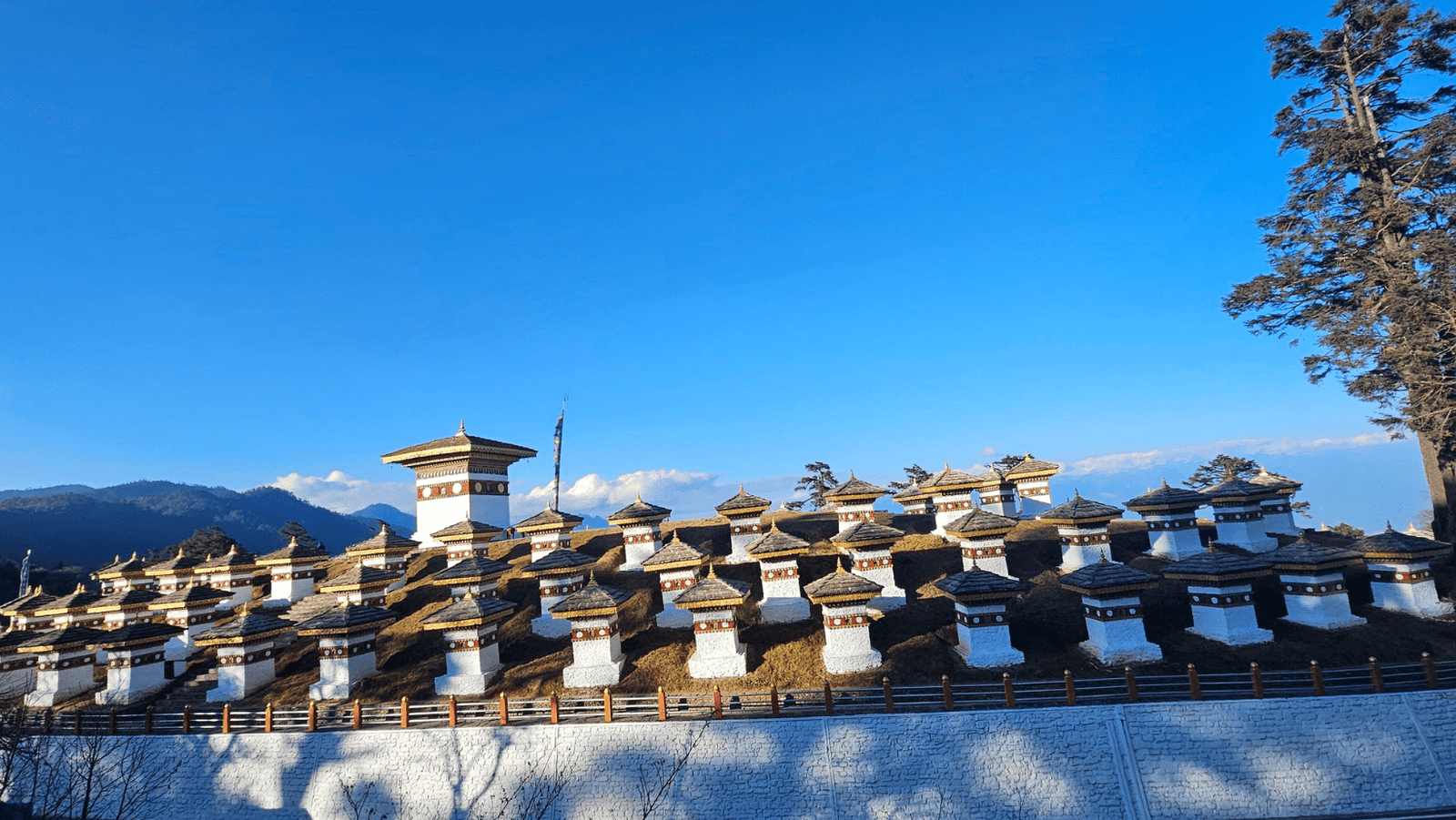

Nestled deep in the eastern Himalayas, the Kingdom of Bhutan — the world’s last Shangri-La — is not just a destination. It is a feeling. A country that measures its progress not in GDP but in Gross National Happiness, Bhutan offers every traveler something rare: an encounter with a civilization that has deliberately chosen meaning over materialism, silence over noise, and soul over spectacle.
But like any great journey, timing matters. Knowing the best time to visit Bhutan can transform a good trip into a transcendent one.
At Kingdom of Happiness Tours, we have guided thousands of travelers through Bhutan’s sacred valleys, ancient dzongs, and living festivals. In this deeply researched guide, we share everything you need to know — season by season, month by month — to plan your perfect Bhutan journey.

Table of Contents
1. Why Timing Your Visit to Bhutan Matters
Bhutan is not a destination you visit casually. Every aspect of a Bhutan tour — from obtaining your visa clearance to booking your licensed tour operator — requires advance planning. The country’s tourism philosophy of “High Value, Low Impact” means visitor numbers are thoughtfully managed, and certain seasons fill up months in advance.
More importantly, Bhutan’s dramatic geography — from subtropical lowlands in the south to towering Himalayan peaks above 7,000 meters — means that the weather varies enormously by region and altitude. The right season determines which mountain passes are accessible, which festivals are alive with color, and whether you will see the sacred peak of Jomolhari reflected in a cloudless autumn sky.
The two golden windows for visiting Bhutan are:
- Spring: March to May
- Autumn: September to November
But as you will discover in this guide, every season in Bhutan holds its own magic — and the “best” time depends entirely on what kind of journey you seek.
2. Bhutan's Four Seasons at a Glance
| Season | Months | Weather | Crowds | Best For |
|---|---|---|---|---|
| Spring | March–May | Mild, clear | High | Festivals, trekking, wildflowers |
| Summer/Monsoon | June–August | Warm, rainy | Low | Green landscapes, budget travel |
| Autumn | September–November | Cool, crystal-clear | Very High | Mountain views, festivals, trekking |
| Winter | December–February | Cold, dry | Low | Spiritual travel, bird watching, snow |
3. Spring in Bhutan (March–May): The Season of Blooms & Festivals
What Makes Spring Magical
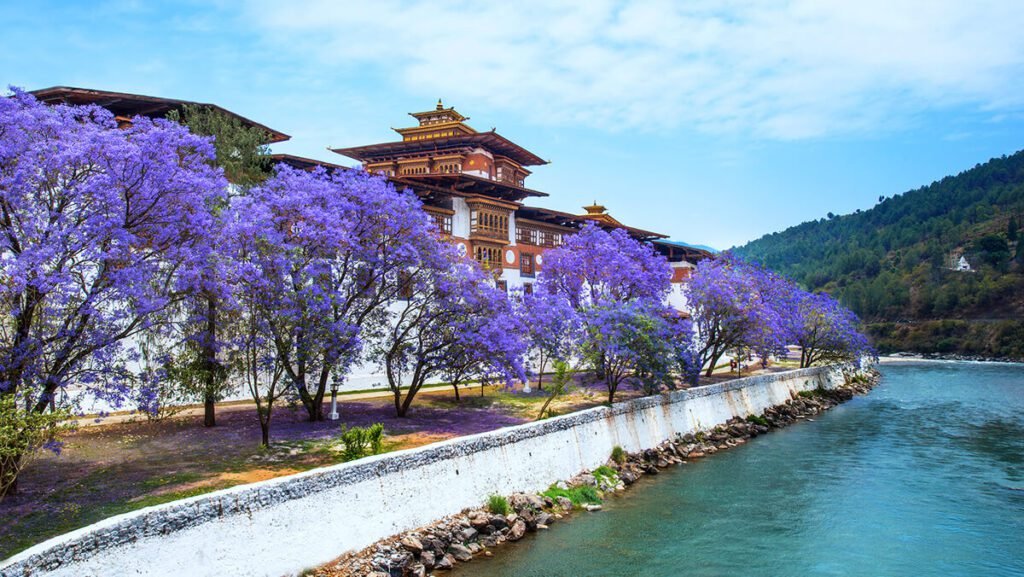
Spring is, for many travelers, the most visually spectacular time to visit Bhutan. As the cold retreats from the valleys, Bhutan undergoes a transformation that feels almost mythical. Rhododendron forests — Bhutan is home to over 46 species — explode into a cascading palette of red, pink, white, and yellow across the hillsides. Magnolias, cherry blossoms, and countless wildflowers join in. The air is crisp, the skies are wide and blue, and the mountains emerge in sharp, snow-dusted relief against the horizon.
For those traveling on a Bhutan photography tour, spring offers unrivaled opportunities to capture the kingdom at its most painterly.
Spring Weather in Bhutan
- March: Cool mornings warming into pleasant afternoons (8°C–18°C in Thimphu). Occasional light showers.
- April: Warm and comfortable (10°C–20°C). One of the finest months to visit.
- May: Warming up (12°C–22°C) with increasing humidity toward month’s end. Still excellent.
Spring Festivals in Bhutan
Spring hosts the single most anticipated festival in the Bhutanese calendar: the Paro Tshechu. Held at the iconic Rinpung Dzong, this multi-day festival features sacred Cham mask dances performed by monks in elaborate costumes representing deities, demons, and heroes of Buddhist scripture. The highlight — unforgettable for every witness — is the pre-dawn unfurling of the Thongdrel, an enormous embroidered thangka depicting Guru Rinpoche. Bhutanese believe that simply witnessing this sacred tapestry cleanses the soul of sin.
The Paro Tshechu 2026 is a must-plan event. Book your Bhutan tour package with Kingdom of Happiness Tours well in advance — accommodations and guides are reserved months ahead.
Best Activities in Spring
- Hiking the Druk Path Trek through rhododendron and magnolia forests
- Visiting Tiger’s Nest Monastery (Taktsang Lhakhang) in ideal temperatures
- Bird watching in Phobjikha Valley (spring migration season)
- Exploring Punakha Dzong with mustard fields in bloom
- Cultural tours of Thimphu’s heritage sites
4. Summer & Monsoon in Bhutan (June–August): The Green Secret
The Hidden Season Most Travelers Miss
June to August is Bhutan’s monsoon season — and it is perhaps the kingdom’s best-kept secret. While many travelers shy away from the rain, those who venture in during the monsoon discover a Bhutan of breathtaking lushness. The landscapes turn an almost surreal shade of green. Waterfalls cascade down every hillside. Rice paddies glow emerald. The air smells of pine and earth and rain.
This is also Bhutan’s lowest-tourism season, which means you can explore the sacred monasteries, mountain villages, and ancient dzongs in near-solitude — a rarity in the modern world of travel.
Monsoon Weather in Bhutan
- June: Rainy and warm (15°C–25°C). Trails become muddy.
- July: Peak monsoon. Lush but wet. Occasional flooding in lower valleys.
- August: Monsoon begins to ease. Landscape magnificently green.
Who Should Visit Bhutan in Monsoon?
- Budget travelers: Tour packages are often discounted in low season.
- Spiritual seekers: Monasteries and dzongs feel especially serene with fewer visitors.
- Landscape photographers: The monsoon light — dramatic clouds, golden rays, emerald valleys — is extraordinary.
- Nature lovers: Bhutan’s rich biodiversity, including rare orchids and medicinal plants, is at its peak.
Important Note
High-altitude trekking is not recommended during monsoon due to slippery trails and limited visibility. However, lower-altitude cultural tours and valley explorations remain perfectly accessible.
5. Autumn in Bhutan (September–November): The Peak of Perfection
Why Autumn Is Bhutan’s Most Celebrated Season
If spring is Bhutan in full bloom, autumn is Bhutan at its most majestic. The monsoon rains have washed the sky to a perfect, polished blue. The rice has been harvested and the terraced fields glow golden. The Himalayan peaks — Gangkhar Puensum, Jomolhari, Jichu Drake — stand sharp and white against the horizon like guardians of an ancient world.
For most travelers, October is considered the single finest month to visit Bhutan.
Autumn Weather in Bhutan
- September: Transitional. Still some rain early in the month, clearing beautifully.
- October: Ideal. Cool, dry, crystal-clear (10°C–20°C). Peak season.
- November: Crisp and cold (5°C–15°C). Spectacular mountain views. Fewer crowds than October.
Autumn Festivals in Bhutan
Autumn hosts a remarkable cluster of festivals across the kingdom. The Thimphu Tshechu — one of Bhutan’s largest and most celebrated festivals — takes place in late September at the Tashichho Dzong. In October and November, the Jakar Tshechu in Bumthang, the Jambay Lhakhang Drup (famous for its ancient fire ceremony and midnight naked dance), and the deeply moving Black-Necked Crane Festival in Phobjikha Valley all offer experiences of extraordinary cultural depth.
2026 Autumn Festival Highlights:
- Thimphu Tshechu: September 21–23, 2026
- Gangtey Tshechu: September 24–26, 2026
- Jakar Tshechu: October 18–21, 2026
- Jambay Lhakhang Drup: Late October/Early November 2026
- Black-Necked Crane Festival: November 11, 2026
Best Activities in Autumn
- Snowman Trek and Jomolhari Trek — world-class Himalayan trekking
- Mountain views of the Eastern and Western Himalayas
- Witnessing the arrival of Black-Necked Cranes at Phobjikha Valley
- Cultural immersion during Thimphu Tshechu
- Photography tours across golden valleys and harvested terraces
6. Winter in Bhutan (December–February): The Season of Serenity
Bhutan’s Most Underrated Season
Winter in Bhutan is not what most travelers expect. While the high mountain passes accumulate snow and some trekking routes close, the lower valleys — Paro, Thimphu, Punakha — remain accessible, peaceful, and hauntingly beautiful. Snow-dusted dzongs. Smoke rising from farmhouses. Monks bundled in robes in sunlit courtyards. The pace of life slows, and Bhutan reveals itself in intimate detail.
For travelers seeking a spiritual journey, a couples tour of Bhutan, or simply a deeply quiet and reflective experience, winter is magnificent.
Winter Weather in Bhutan
- December: Cold but clear. Paro: 0°C–12°C. Beautiful winter light.
- January: The coldest month. Thimphu can drop below freezing at night.
- February: Warming gradually. Punakha valley is mild and lovely.
The Punakha Drubchen & Tshechu: Winter’s Crowning Festival
The Punakha Drubchen (late February) is one of the most historically significant festivals in Bhutan. It reenacts a 17th-century battle in which Zhabdrung Ngawang Namgyal’s forces repelled a Tibetan invasion, featuring warriors in full armor and ceremonial regalia. Immediately following, the Punakha Tshechu brings sacred Cham dances to the stunning Punakha Dzong — a fortress that sits at the confluence of the Pho Chhu and Mo Chhu rivers, widely considered the most beautiful dzong in all of Bhutan.
2026 Winter/Spring Festival Dates:
- Punakha Drubchen: February 22–24, 2026
- Punakha Tshechu: February 26–28, 2026
Best Activities in Winter
- Black-Necked Crane watching in Phobjikha (December, before they migrate south)
- Exploring Punakha Valley’s warm, subtropical microclimate
- Visiting the Haa Valley — remote and pristine in winter
- Low-altitude nature walks and cultural day hikes
- Luxury lodge stays with spectacular mountain views
7. Month-by-Month Bhutan Travel Guide
January
Cold and quiet. Clear skies. Ideal for travelers who want intimacy with the culture without crowds. Recommended for: spiritual travel, off-season luxury travel. Festival activity is minimal — a peaceful, reflective time.
February
Still cold but beginning to warm. The Punakha Drubchen and Tshechu make February one of the most culturally rich months of the year. Punakha Valley is mild enough to explore comfortably. Recommended for: festival travel, couples tours, cultural immersion.
March
The beginning of spring. Rhododendrons begin blooming in lower valleys. Chorten Kora Festival (Trashiyangtse) and Gom Kora Festival (Trashigang) — both held in March — draw pilgrims from across the eastern Himalayan region in a profoundly moving display of faith. Recommended for: cultural tours, bird watching, early trekking season.
April
The peak of spring. The Paro Tshechu (late March–early April) is the highlight of the Bhutanese cultural calendar. Rhododendrons are in full bloom across the mountain forests. Tiger’s Nest hike is at its finest. Recommended for: festival travel, trekking, photography, family tours.
May
Still excellent weather with some pre-monsoon humidity by month’s end. Ura Yakchoe Festival in Bumthang (late April/early May) is an intimate, deeply traditional celebration in one of Bhutan’s most culturally preserved valleys. Recommended for: cultural depth, off-the-beaten-path exploration.
June
Monsoon arrives. Lush landscapes emerge. A quieter, more budget-friendly season begins. Some high-altitude trails close. Recommended for: landscape photography, budget travelers, solitary spiritual seekers.
July
Peak monsoon. Verdant and atmospheric. Not ideal for trekking but perfect for monastery visits and cultural immersion in the rain-washed towns of Thimphu and Paro. Recommended for: budget travel, photography enthusiasts.
August
Monsoon easing. Landscapes are at maximum lushness. The kingdom feels alive with rivers, waterfalls, and greenery. Recommended for: nature travel, off-season adventurers.
September
Transitional month of tremendous beauty. Skies clear rapidly. Thimphu Tshechu (September 21–23, 2026) marks the return of peak season with one of Bhutan’s greatest festivals. Recommended for: festival travel, early autumn trekking.
October
The finest month in Bhutan. Crisp air, blue skies, mountain views, golden valleys. Jakar Tshechu in Bumthang adds cultural richness. Trekking conditions are superb. Recommended for: first-time visitors, trekkers, photographers, families.
November
Cooling but still spectacular. The Jambay Lhakhang Drup and Black-Necked Crane Festival offer extraordinary cultural and wildlife experiences. Fewer crowds than October. Recommended for: wildlife travel, off-peak culture seekers, luxury travel.
December
Winter arrives. Cold and clear in Paro and Thimphu. Punakha remains mild. A magical, quiet time to experience Bhutan’s spiritual heart. Recommended for: spiritual seekers, couples, luxury travel, photographers.
8. Best Time to Visit Bhutan for Festivals
Bhutan’s festivals — the Tshechus — are living expressions of the kingdom’s Buddhist soul. Rooted in the teachings of Guru Rinpoche (Padmasambhava), who brought Vajrayana Buddhism to Bhutan in the 8th century, these sacred gatherings have been held for centuries without interruption. To attend a Tshechu is not merely to witness a performance — it is to participate in an act of collective spiritual renewal.
The Major Bhutan Festivals 2026:
| Festival | Location | 2026 Dates |
|---|---|---|
| Punakha Drubchen | Punakha Dzong | February 22–24 |
| Punakha Tshechu | Punakha Dzong | February 26–28 |
| Chorten Kora | Trashiyangtse | March 3 & 18 |
| Gom Kora | Trashigang | March 28–29 |
| Paro Tshechu | Rinpung Dzong, Paro | Late March–Early April |
| Ura Yakchoe | Ura Village, Bumthang | Late April–Early May |
| Haa Summer Festival | Haa Valley | September 19–21 |
| Thimphu Tshechu | Tashichho Dzong | September 21–23 |
| Gangtey Tshechu | Gangtey Monastery | September 24–26 |
| Jakar Tshechu | Jakar Dzong, Bumthang | October 18–21 |
| Jambay Lhakhang Drup | Jambay Lhakhang, Bumthang | Late October |
| Black-Necked Crane Festival | Phobjikha Valley | November 11 |
Kingdom of Happiness Tours designs specialized festival tour packages around each of these celebrations, with expert local guides who bring context, depth, and personal access to every event.
9. Best Time to Trek in Bhutan
Bhutan is home to some of the most spectacular and unspoiled trekking routes in the world — from the celebrated Druk Path Trek to the legendary Snowman Trek, considered one of the most challenging treks on Earth.
Trekking Seasons:
- April–May: Excellent. Rhododendrons in bloom. Clear trails. Pre-monsoon conditions.
- October–November: The finest months for high-altitude trekking. Crystal-clear skies and stable weather.
- March: Possible at lower altitudes. Higher routes still snow-covered.
- June–September: Monsoon. High-altitude trekking not recommended. Some lower trails possible.
- December–February: Winter trekking at low altitudes (Punakha, Haa). High passes snowed in.
Top Treks in Bhutan:
- Druk Path Trek (5–6 days): Paro to Thimphu via high alpine lakes. Best in April–May and October.
- Jomolhari Trek (8 days): Views of the sacred Jomolhari peak. Best in October.
- Bumthang Owl Trek (2–3 days): Gentle cultural trek through Bumthang’s spiritual heartland.
- Snowman Trek (25–30 days): The world’s hardest trek. Best in September–October.
- Laya–Gasa Trek (12 days): Remote highlands and nomadic culture. Best in April and October.
10. Best Time for Photography in Bhutan
Bhutan is one of the world’s most photographically compelling destinations — a kingdom where ancient architecture, living culture, unspoiled nature, and extraordinary light converge.
- Paro Tshechu (Spring): Festival mask dances, the pre-dawn Thongdrel unfurling, monastic architecture.
- October (Autumn): Golden harvest light, crystal Himalayan panoramas, Thimphu and Bumthang festivals.
- Monsoon (June–August): Dramatic clouds, luminous green valleys, atmospheric monastery shots.
- Winter (December–January): Snow-dusted dzongs, low golden light, intimate village scenes.
11. Bhutan's Sustainable Development Fee (SDF) — What You Must Know
One of the most common questions travelers ask us at Kingdom of Happiness Tours is about Bhutan’s Sustainable Development Fee (SDF).
Bhutan has, since 1974, maintained a philosophy of “High Value, Low Volume” tourism — choosing quality over quantity, and preservation over profit. The SDF is the financial expression of this commitment.
Current SDF Rates (2025–2026):
- International visitors: USD $100 per person, per night
- Indian nationals: INR 1,200 per person, per night
- Children aged 6–12: 50% discount
- Children under 5: Fully exempt
This rate is confirmed by the Royal Government of Bhutan and is fixed until August 31, 2027.
Important 2026 Update: From January 1, 2026, Bhutan has introduced a 5% Goods and Services Tax (GST) on tourism services. This will apply to accommodation, guides, transport, and meals within tour packages (excluding the SDF itself). Please account for this when budgeting your 2026 trip.
What Your SDF Funds:
Your SDF is not simply a tax — it is a direct investment in Bhutan’s future. The funds support:
- Free healthcare and free education for all Bhutanese citizens
- Environmental conservation — Bhutan is one of the world’s few carbon-negative countries, with a constitutionally mandated 60% forest cover
- Cultural preservation of dzongs, monasteries, and living heritage traditions
- Infrastructure development across Bhutan’s remote valleys and communities
- Free entry to all temples, monasteries, and national museums during your visit
Total Budget for a Bhutan Trip in 2026:
- SDF: $100/night
- Tour package (accommodation, guide, transport, meals): approximately $150–$250/day
- Total estimated daily cost: $250–$350 per person
Kingdom of Happiness Tours includes your SDF as part of your transparent, all-inclusive tour package — no hidden costs.
12. Travel Tips from Kingdom of Happiness Tours
After years of guiding travelers through the Kingdom, our team shares these essential planning insights:
Book Early — Especially for Festivals Bhutan’s peak festival season (March–May, September–November) fills up fast. For Paro Tshechu and Thimphu Tshechu especially, we recommend booking at least 3–6 months in advance to secure your preferred accommodation and tour itinerary.
Work with a Licensed Tour Operator Independent travel is not permitted in Bhutan (except for Indian, Bangladeshi, and Maldivian nationals under certain conditions). All international visitors must book through a licensed Bhutanese tour operator. Kingdom of Happiness Tours is fully licensed by the Tourism Council of Bhutan and handles all visa clearance, SDF payments, permits, and logistics.
Dress Respectfully Bhutan is a deeply spiritual country. When visiting dzongs, monasteries, and temples, dress modestly. Women should cover shoulders and knees. Men should avoid shorts. Remove your shoes before entering sacred spaces.
Altitude Acclimatization Bhutan’s valleys sit between 2,000 and 3,000 meters above sea level. Drink plenty of water, avoid strenuous activity on your first day, and ascend gradually if trekking to higher elevations.
Respect Local Customs Ask permission before photographing monks or locals. Walk clockwise around temples, stupas, and mani walls. Don’t touch sacred objects or butter lamp offerings.
Pack Layers Even in summer, Bhutanese evenings can be cool. In autumn and winter, good insulation is essential. Spring requires layers for temperature variations between valley mornings and mountain afternoons.
Plan Your Visa in Advance All international visitors must apply for a Bhutan visa through a licensed tour operator. The process requires SDF payment in advance and takes approximately 2–4 weeks. Kingdom of Happiness Tours manages the entire process seamlessly.
13. Frequently Asked Questions
Q: What is the best month to visit Bhutan? October is widely regarded as the finest single month — offering crystal-clear Himalayan views, comfortable temperatures, golden autumn light, and a vibrant festival calendar. However, April (Paro Tshechu season) is equally magnificent in spring.
Q: Can I visit Bhutan in the rainy season? Yes — and many discerning travelers prefer it. The monsoon (June–August) reveals a stunningly lush Bhutan with far fewer crowds and lower prices. High-altitude trekking is not advisable, but cultural tours and valley explorations are wonderful.
Q: Is Bhutan expensive to visit? Bhutan is a premium destination. The $100/night SDF, combined with tour package costs, places the daily budget at roughly $250–$350. However, this includes guided tours, accommodation, meals, internal transport, and free entry to all cultural sites — an experience of extraordinary value.
Q: Do I need a visa for Bhutan? Yes (except for Indian, Bangladeshi, and Maldivian nationals). All international visitors require a visa clearance letter, issued after SDF payment through a licensed tour operator. Kingdom of Happiness Tours handles the complete visa process.
Q: What is the ideal duration for a Bhutan trip? We recommend a minimum of 7 nights to explore Paro, Thimphu, Punakha, and Wangdue. For a more immersive experience including Bumthang and Haa Valley, 10–14 nights is ideal.
Q: Is Bhutan safe to visit? Bhutan is one of the safest countries in the world. Crime rates are extremely low, local communities are warm and welcoming, and the country’s managed tourism model ensures travelers are supported throughout their journey.
Begin Your Journey to Happiness
The Kingdom of Bhutan does not simply offer a travel experience. It offers a recalibration — a reminder that happiness is not found in accumulation but in connection: with nature, with culture, with community, and with something deeper within ourselves.
Whether you arrive in the rhododendron-drenched spring or the crystalline stillness of autumn, whether you trek the Himalayas or sit in silent contemplation at a mountain monastery, Bhutan will stay with you long after you return home.
Kingdom of Happiness Tours is honored to be your guide to this extraordinary kingdom. We are based in Thimphu, fully licensed by the Tourism Council of Bhutan, and dedicated to crafting deeply personal, culturally immersive, and responsibly managed journeys through the Land of the Thunder Dragon.